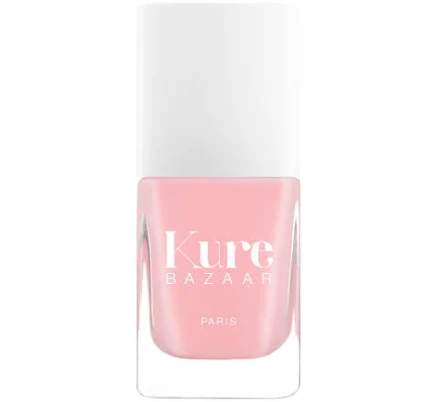
Kure Bazaar · Nail Polish & Top Coat
Rose Milk Glow Nail Polish
Insufficient public data; standard formula rarely discloses PFAS without transparency.
Kure Bazaar provides no PFAS disclosure for this polish and makes no free-from claims. Nail polish isn't a typical high-PFAS category, but brand ingredient transparency is absent online.
The better-graded swap
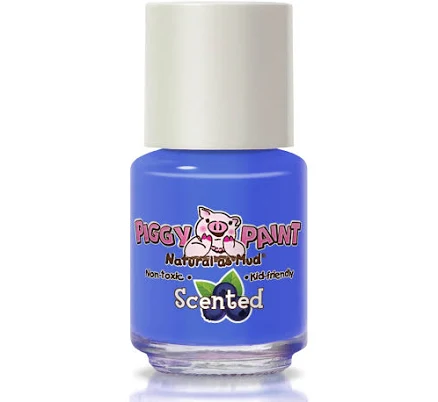
Piggy Paint
Nail Polish Piggy Paint
100/100 safety
Same rubric that flunked this product. The swap earned Excellent.
Still want this one anyway? Check the price on Amazon. We’d swap it.
Material
Nail polish lacquer (typical nitrocellulose, resins, plasticizers)
Brand disclosure
Brand is silent on PFAS
Lab data
No public lab test
Is Rose Milk Glow Nail Polish non-toxic? What it is made of
Rose Milk Glow is a typical nitrocellulose-based nail lacquer, the industry standard for decades. The formula likely contains resins (tosylamide-formaldehyde resin or camphor resin) for hardness, plasticizers (dibutyl phthalate or alternatives) for flexibility, and solvents (xylene, toluene, ethyl acetate) for application. These materials are well-regulated in cosmetics; the main concern is inhalation of volatile organic compounds (VOCs) during application, not dermal absorption after drying.
What’s concerning
Category baseline
The starting point for this type of product, before anything specific to this product is counted.
No PFAS disclosure
No public statement from the brand about PFAS in this product.
Volatile Organic Compounds (VOCs) inhalation
Typical nail lacquer solvents (toluene, xylene, ethyl acetate) evaporate during and shortly after application. Acute exposure in unventilated spaces may cause headache or dizziness; chronic occupational exposure (e.g., salon workers) carries higher risk. Kure Bazaar does not publish solvent composition, so individual VOC loads cannot be assessed.
Phthalate plasticizers (mainly dibutyl phthalate or replacements)
Standard nail polish formulas use plasticizers for chip resistance; dibutyl phthalate (DBP) is still used in many brands despite reproductive health concerns. Kure Bazaar does not publicly state whether this product is phthalate-free. Dermal absorption from dried polish is negligible, but inhalation of aerosolized particles during application is the theoretical route.
Formaldehyde / VOCs
Tosylamide-formaldehyde resin is a common hardening agent in nail polish. The resin is chemically bound in dried film and does not leach into skin; however, inhalation of fine particles during removal (especially acetone soaking) may occur. No specific data on Rose Milk Glow's resin choice is publicly available.
Source, ATSDR ↗Microplastic shedding over time
All synthetic nail polishes shed microscopic flakes as they degrade and chip. Ingestion risk is low with hand-to-mouth contact post-application; environmental accumulation is a broader concern. This hazard is universal to the category and not specific to Kure Bazaar.
What’s reassuring
Base material not linked to PFAS
The main material recorded for this product is not one associated with PFAS.
Contact sensitization from fragrance or colorants
Rose Milk Glow includes a fragrance component (likely rose or floral note) and iron oxides or mica for color. No documented allergic reactions or sensitization reports are on record for this product. Standard patch testing is unnecessary unless personal fragrance sensitivity is known.
The full breakdown
The brand's record and disclosure
Kure Bazaar is a French indie brand focused on non-toxic positioning but provides limited third-party certification or published safety data sheets for individual products. The brand does not publicly disclose PFAS testing or declare absence of common hazard materials like phthalates or formaldehyde resins. No recalls or safety controversies are on record for this specific product. Transparency on ingredient sourcing remains below major beauty brands' standards.
How it compares in its category
Rose Milk Glow occupies the mid-tier non-toxic nail polish market alongside brands like Ella+Mila and Zoya, which offer three-free or five-free formulas. Kure Bazaar does not formally certify 'free from' claims on this product, whereas competitors often highlight removal of toluene, dibutyl phthalate, and formaldehyde. Prices are similar; the main differentiation is brand marketing rather than independently verified safety margins.
If you buy it
Apply in a well-ventilated space or outdoors to minimize VOC inhalation during the 5-10 minute application window. Allow full cure time (48-72 hours) before heavy hand use to prevent chipping and repeated reapplication. Replace the polish every 1-2 years or when consistency becomes thick (solvent evaporation over time); old polish tends to shed microflakes. Avoid contact with skin, eyes, and mouth; wash hands after application and before eating.
What we don’t know
- Basis
- Model estimate, 45% confidence, not a lab result
- Lab test
- None on record for this exact product
- Brand statement
- Kure Bazaar has made none
Formulations change between production runs, so check the current label. How we grade.
Better-graded alternatives in Nail Polish & Top Coat
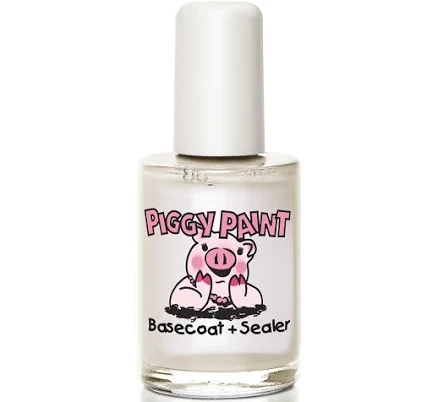
Piggy Paint
Basecoat & Sealer Nail Polish
- Water-based organic pigments and plant-derived resins
- The brand calls it PFAS-free, which we have not verified
- Heavy metals
3 hazards checked on this product. See all of them.
Piggy Paint
Nail Polish Piggy Paint
- water-based pigmented lacquer
- The brand calls it PFAS-free, which we have not verified
- Volatile organic compounds (VOCs) from resins and solvents
3 hazards checked on this product. See all of them.
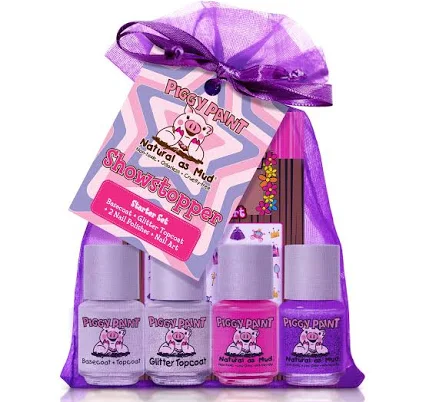
Piggy Paint
Showstopper Nail Polish Set
- organic pigments, plant-based resins, water-based lacquer
- The brand calls it PFAS-free, which we have not verified
- Volatile organic compounds (VOCs)
2 hazards checked on this product. See all of them.
More nail polish & top coat grades
How we score, every product runs through the same public 0-100 rubric based on materials, coatings, brand disclosure, lab findings, and recalls. See the full methodology → Spotted a mistake? Report an error.