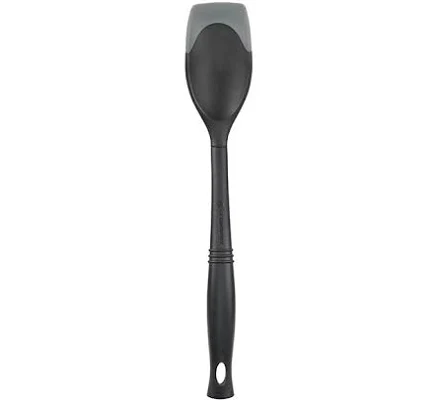
Le Creuset · Non-Stick Kitchen Gadgets
Le Creuset Revolution Bi-Material Saute Spoon, Is It Non-Toxic?
Unknown coating on spoon head, Le Creuset discloses no PFAS information.
Le Creuset doesn't specify the coating on the spoon head of this bi-material utensil. The brand provides zero public information about PFAS status or materials.
The better-graded swap
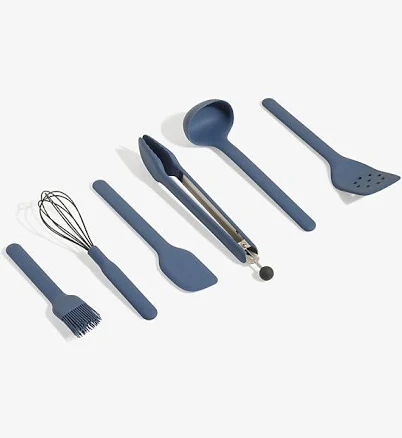
Our Place
Our Place Utensil Essentials 6-Piece Silicone Utensil Set
90/100 safety
Same rubric that flunked this product. The swap earned Excellent.
Still want this one anyway? Check the price on Amazon. We’d swap it.
Material
Bi-material handle (unspecified coating on utensil head)
Lab data
No public lab test
You may also be interested in
Top-graded picks in the categories readers replace first, every one scored on the same rubric.

- polypropylene filter housing, carbon/sediment cartridge
- We found no PFAS statement from the brand
- Bacterial growth in spent cartridges
3 hazards checked on this product, all on its full breakdown.

Aquasure
Premier Series 75 GPD Under Sink Reverse Osmosis Water Filtration System
- RO membrane, carbon filters, stainless steel housing
- We found no PFAS statement from the brand
- Bacterial and microbial growth in housing and filters
4 hazards checked on this product, all on its full breakdown.

Avocado
Vegan Mattress
- organic cotton, natural latex, coconut coir, recycled steel coils
- The brand calls it PFAS-free, which we have not verified
- Heavy metals
2 hazards checked on this product, all on its full breakdown.
Is Le Creuset Revolution Saute Spoon non-toxic? What it is made of
Le Creuset Revolution spoons use a bi-material design, the bowl/head is typically nylon or silicone (heat-resistant synthetics), and the handle is unspecified in available product literature. The critical unknown is what coating or finish sits on the spoon head itself; Le Creuset has not publicly disclosed whether this uses Teflon-type coating (Teflon-like) or other non-stick polymers. Without transparency, you cannot confirm the spoon will not release fumes if accidentally overheated or degraded.
What’s concerning
Category baseline
The starting point for this type of product, before anything specific to this product is counted.
No PFAS disclosure
No public statement from the brand about PFAS in this product.
Non-stick, chemistry undisclosed
Marketed as non-stick without stating the coating chemistry.
Teflon-type coating fume risk (unspecified coating)
Le Creuset does not disclose whether the spoon head contains Teflon-type coating or similar Teflon-family coating. If present and coating is damaged or overheated above 500F, Teflon-type coating fume inhalation (polymer fume fever) is a risk. Absence of disclosure makes this unquantifiable.
Synthetic polymer leaching (nylon/silicone head)
Nylon and silicone utensil heads can leach oligomers (short-chain polymer fragments) into hot foods or acidic sauces; risk increases with degradation, abrasion, or improper storage. Silicone is generally more inert than nylon in this regard, but Le Creuset has not specified which material is used in the Revolution spoon head.
Coating degradation over time
Bi-material utensils commonly show spoon-head coating wear within 1-2 years of regular use, especially in dishwashers. Once coating fails, you lose temperature resistance and increase exposure to underlying polymer. Le Creuset does not publish expected lifespan or warranty for the spoon coating.
Volatile organic compound (VOC) off-gassing from handle
If the unspecified bi-material handle uses rubberized coatings or adhesives to bond materials, initial off-gassing of organic solvents is possible during the first few weeks. This is typical of kitchen utensils but not documented in Le Creuset's safety materials.
What’s reassuring
Lead
No recalls or testing reports document lead/cadmium in Le Creuset Revolution spoon handles. However, if the handle incorporates any enameled or glazed metal component, independent verification would be required; Le Creuset provides no such testing data.
Source, ATSDR ↗How is this PFAS grade calculated?
The brand's record and disclosure
Le Creuset is known for heritage cast-iron cookware and enamelware but has been notably silent on PFAS use across their product lines, including utensils. The brand does not publish materials safety data sheets or disclose non-stick coating chemistry for silicone or nylon utensil heads. This contrasts with competitors who voluntarily disclose PFAS-free certifications; silence here suggests either unexamined formulations or a deliberate avoidance of transparency.
How it compares in its category
Spoon alternatives from OXO, Silpat, and GreenPan explicitly market PFAS-free silicone or wood handles and disclosed coatings. Le Creuset's Revolution line sits in the mid-to-premium segment but offers less transparency than brands targeting health-conscious consumers. For a cookware utensil, you are paying for brand cachet rather than proven safety certification or material clarity.
If you buy it
Keep this spoon below 400F (204C) to avoid stress-degradation of any coating; avoid direct contact with acidic foods for extended periods, as acids can degrade synthetic spoon heads over time. Inspect monthly for visible wear, peeling, or discoloration of the spoon bowl. Replace immediately if the coating shows cracks, cloudiness, or pitting. Hand-wash only; dishwasher cycling accelerates coating breakdown in bi-material utensils.
What is not known about PFAS in this product?
- Basis
- Model estimate, 35% confidence, not a lab result
- Lab test
- None on record for this exact product
- Brand statement
- Le Creuset has made a specific claim
Formulations change between production runs, so check the current label. How we grade.
What are the PFAS-free alternatives to Le Creuset Revolution Bi-Material Saute Spoon?
- Silicone utensils, no coating
- The brand calls it PFAS-free, which we have not verified
- Microplastic generation
2 hazards checked on this product, all on its full breakdown.
- Stainless steel utensils
- The brand calls it PFAS-free, which we have not verified
- Nickel leaching from stainless steel
2 hazards checked on this product, all on its full breakdown.
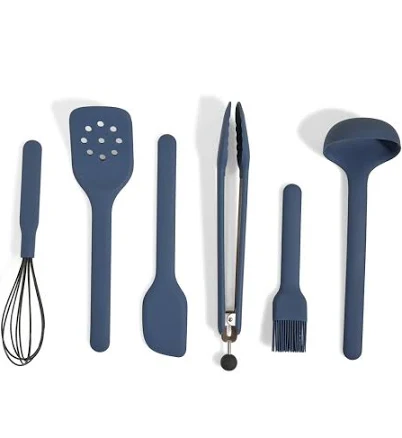
- Stainless steel utensils, material unclear
- The brand calls it PFAS-free, which we have not verified
- Handle material degradation (if present)
2 hazards checked on this product, all on its full breakdown.
More non-stick kitchen gadgets grades
How we score, every product runs through the same public 0-100 rubric based on materials, coatings, brand disclosure, lab findings, and recalls. See the full methodology → Spotted a mistake? Report an error.