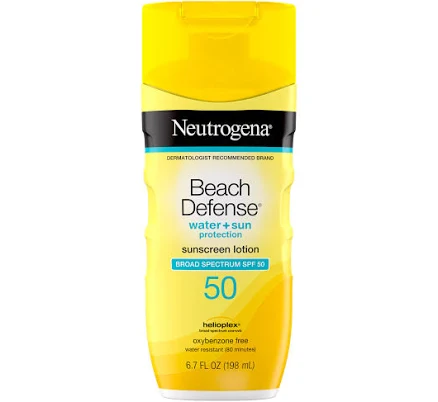
Neutrogena Beach Defense SPF 50 Sunscreen Lotion
Sunscreen with no fluorinated ingredient on record, and no PFAS statement from the brand.
Neutrogena has no PFAS statement on record for this sunscreen. Our record does not include an ingredient-level check, so look for fluorinated ingredients such as Teflon-type coating on the label.
We flunk more products than we pass. This one earned its grade. How we grade
Material
water-resistant lotion with mineral UV filters
Lab data
No public lab test
You may also be interested in
Top-graded picks in the categories readers replace first, every one scored on the same rubric.

- polypropylene filter housing, carbon/sediment cartridge
- We found no PFAS statement from the brand
- Bacterial growth in spent cartridges
3 hazards checked on this product, all on its full breakdown.

Aquasure
Premier Series 75 GPD Under Sink Reverse Osmosis Water Filtration System
- RO membrane, carbon filters, stainless steel housing
- We found no PFAS statement from the brand
- Bacterial and microbial growth in housing and filters
4 hazards checked on this product, all on its full breakdown.

Avocado
Vegan Mattress
- organic cotton, natural latex, coconut coir, recycled steel coils
- The brand calls it PFAS-free, which we have not verified
- Heavy metals
2 hazards checked on this product, all on its full breakdown.
What Neutrogena Beach Defense Sunscreen Lotion is made of, ingredients and materials
Neutrogena Beach Defense uses mineral (physical) UV filters, typically zinc oxide or titanium dioxide, rather than chemical absorbers. These sit on the skin surface and reflect UV rather than penetrating tissue, which is why mineral sunscreens are often chosen by those concerned about systemic absorption. The lotion base is water-resistant, meaning it binds to skin and clothing better than non-resistant formulas, extending protection during swimming or sweating. No fluorinated Teflon-type coating or PFAS compounds appear on the ingredient list or in public safety records for this product.
What’s concerning
Category baseline
The starting point for this type of product, before anything specific to this product is counted.
No PFAS disclosure
No public statement from the brand about PFAS in this product.
Fragrance allergens
Sunscreen lotions often contain fragrance blends (not typically disclosed individually on labels). Individuals with fragrance sensitivity may experience contact dermatitis; patch testing is advised if history of reaction exists. Neutrogena does not publish allergen-specific breakdowns for fragrance components.
Parabens
Water-resistant lotions require preservatives to prevent bacterial growth in the emulsion. Common preservatives in sunscreens (methylisothiazolinone, parabens) can trigger contact sensitization in a subset of users. This product's preservative system is not listed as a recalled concern but should be reviewed on the full label for personal sensitivities.
Source, FDA ↗Skin irritation from inorganic mineral film
Mineral sunscreens, especially lotion bases with high zinc oxide or titanium dioxide loading, can cause white cast, clogged pores, or irritation in acne-prone or very sensitive skin. This is a cosmetic tolerance issue rather than a toxicity hazard but affects wearability for some users.
What’s reassuring
Base material not linked to PFAS
The main material recorded for this product is not one associated with PFAS.
Heavy metals
FDA-regulated mineral filters are pharmaceutical-grade and tested for elemental purity. No recalls or contamination reports on record for Neutrogena Beach Defense mineral content; risk of heavy metal impurities is minimal under normal topical use.
Source, FDA ↗Photocatalytic activity of titanium dioxide nanoparticles (if present)
If the formulation uses nano-scale titanium dioxide, theoretical concern exists over free radical generation under UV; however, FDA-approved sunscreen TiO2 is typically coated or non-nano and regulated. No public adverse events or skin damage reports for Neutrogena Beach Defense lotions under normal use.
How is this PFAS grade calculated?
The brand's record and disclosure
Neutrogena (Johnson & Johnson subsidiary) is a major sunscreen manufacturer with decades of market history and FDA oversight. The brand has no widely documented recalls specific to Beach Defense SPF 50 for contaminants or undisclosed ingredients. Neutrogena does not publish a formal PFAS avoidance statement, but mineral sunscreen formulations do not require fluorinated chemistry. The company operates under FDA New Drug Application (NDA) rules for sunscreens, meaning UV filter identity and concentration are regulated and disclosed.
How it compares in its category
Mineral sunscreens like this one have lower systemic absorption risk than chemical sunscreen alternatives (such as oxybenzone or avobenzone), though absorption of minerals themselves is negligible. Water-resistant lotion formulations are standard in consumer beach sunscreens; this product sits in the mainstream category rather than a premium or budget tier. Compared to spray sunscreens, lotions avoid inhalation risk and offer more predictable coverage. Price and UVA/UVB coverage are typical for the Neutrogena mid-market position.
If you buy it
Apply generously 15 minutes before sun exposure and reapply every 2 hours or immediately after swimming, as no sunscreen is 100 percent waterproof despite labeling. Store below 30°C (86°F) to prevent separation or degradation of the mineral filters. Perform a patch test on inner arm if you have sensitive skin or a history of reaction to titanium dioxide or zinc oxide. Lotions sitting in beach bags or cars in direct sun for weeks may separate; discard and replace annually or if appearance changes.
What is not known about PFAS in this product?
- Basis
- Model estimate, 55% confidence, not a lab result
- Lab test
- None on record for this exact product
- Brand statement
- Neutrogena has made a specific claim
Formulations change between production runs, so check the current label. How we grade.
What are the PFAS-free alternatives to Neutrogena Beach Defense SPF 50 Sunscreen Lotion?
- Mineral sunscreen, zinc oxide base
- A third party reports verifying it as PFAS-free
- 1,4-dioxane (non-intentional contaminant from surfactants/emulsifiers)
2 hazards checked on this product, all on its full breakdown.
- mineral sunscreen (zinc oxide or titanium dioxide base)
- The brand calls it PFAS-free, which we have not verified
- Synthetic fragrance allergens
More sunscreen grades
How we score, every product runs through the same public 0-100 rubric based on materials, coatings, brand disclosure, lab findings, and recalls. See the full methodology → Spotted a mistake? Report an error.