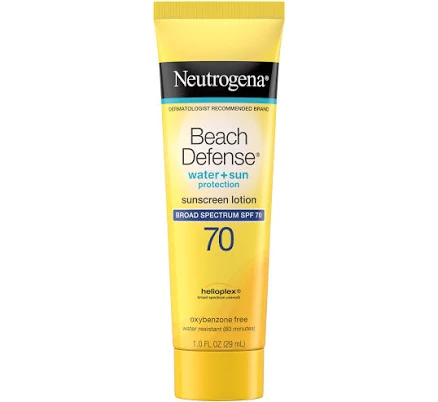
Neutrogena Beach Defense SPF 70 Sunscreen Lotion
Sunscreen with no fluorinated ingredient on record, and no PFAS statement from the brand.
Neutrogena has no PFAS statement on record for this sunscreen. Our record does not include an ingredient-level check, so look for fluorinated ingredients such as Teflon-type coating on the label.
We flunk more products than we pass. This one earned its grade. How we grade
Material
Water-resistant lotion emulsion with mineral and organic UV filters
Lab data
No public lab test
You may also be interested in
Top-graded picks in the categories readers replace first, every one scored on the same rubric.

- polypropylene filter housing, carbon/sediment cartridge
- We found no PFAS statement from the brand
- Bacterial growth in spent cartridges
3 hazards checked on this product, all on its full breakdown.

Aquasure
Premier Series 75 GPD Under Sink Reverse Osmosis Water Filtration System
- RO membrane, carbon filters, stainless steel housing
- We found no PFAS statement from the brand
- Bacterial and microbial growth in housing and filters
4 hazards checked on this product, all on its full breakdown.

Avocado
Vegan Mattress
- organic cotton, natural latex, coconut coir, recycled steel coils
- The brand calls it PFAS-free, which we have not verified
- Heavy metals
2 hazards checked on this product, all on its full breakdown.
What Neutrogena Beach Defense Sunscreen Lotion is made of, ingredients and materials
Beach Defense SPF 70 is a water-resistant lotion emulsion combining mineral UV filters (likely titanium dioxide and/or zinc oxide) with organic filters to achieve broad-spectrum protection. The lotion base contains emulsifiers, humectants, and preservatives typical of consumer sunscreen formulations. No fluorinated compounds (PFAS precursors or finished polymers) appear on the ingredient list, and no PFAS-containing water-resistance agents have been disclosed by Neutrogena for this product.
What’s concerning
Category baseline
The starting point for this type of product, before anything specific to this product is counted.
No PFAS disclosure
No public statement from the brand about PFAS in this product.
Organic UV filter photodegradation and residual efficacy
Organic filters (e.g., octinoxate, oxybenzone, avobenzone) in lotion formulations degrade when exposed to heat and sunlight during storage and use. Efficacy loss over time is expected; expiration dates and storage conditions matter, but no specific stability data for this product formulation is on public record.
Preservative or fragrance contact sensitivity
Sunscreen lotions typically contain preservatives and fragrance agents; while not disclosed as hyperallergenic risk on labeling, some users report contact dermatitis from common preservatives like methylchloroisothiazolinone or fragrance compounds in lotion-based sunscreens. Individual sensitivity varies.
Mineral filter whitening or residue on skin/clothing
Titanium dioxide and zinc oxide can leave a white or chalky film, especially at high SPF; this is cosmetic rather than a health hazard but may reduce compliance with reapplication. Lotion formulations typically minimize this compared to cream or paste formulations.
Endocrine disruptors
In vitro and animal studies have raised questions about hormonal effects of some organic filters, particularly oxybenzone. Human risk remains uncertain and is outside FDA approval thresholds for topical use; regulatory agencies have not restricted these ingredients in sunscreen. Presence and concentration of specific filters in this formulation are not independently verified here.
Source, NIEHS ↗What’s reassuring
Base material not linked to PFAS
The main material recorded for this product is not one associated with PFAS.
Titanium dioxide or zinc oxide inhalation risk from powder form
This product is a lotion emulsion, not a spray or powder, so inhalation risk during application is absent. Mineral filters are embedded in the liquid matrix and do not become airborne during normal use.
How is this PFAS grade calculated?
The brand's record and disclosure
Neutrogena (Johnson & Johnson consumer division) has not published a formal PFAS commitment or phaseout timeline, though J&J has acknowledged PFAS issues in some personal-care contexts. The brand maintains FDA compliance for sunscreen ingredients and does not market this product as PFAS-free. Ingredient transparency on the label is standard; third-party certifications (reef-safe, hypoallergenic) are not prominently claimed on this specific variant.
How it compares in its category
Mineral-organic hybrid sunscreens like this are mid-range in the category. Pure mineral sunscreens avoid organic filter concerns but may leave white cast; pure organic formulas risk fewer mineral residues but depend on photostability. Beach Defense's combination approach targets broad appeal and water resistance without relying on fluorinated polymers, which distinguishes it from some legacy water-resistant sunscreen formulas that used Teflon-type coating or polyfluoroalkyl coatings on packaging or in emulsions.
If you buy it
Apply generously and reapply every 2 hours or immediately after swimming; water resistance typically holds for 80 minutes per label claim, not indefinitely. Store below 25°C (77°F) away from direct sunlight to preserve filter stability; heat and UV exposure can degrade organic filters over months. Discontinue if skin irritation or rash develops; patch-test on a small area first if you have sensitive skin. Do not ingest; keep away from eyes and rinse thoroughly if contact occurs.
What is not known about PFAS in this product?
- Basis
- Model estimate, 42% confidence, not a lab result
- Lab test
- None on record for this exact product
- Brand statement
- Neutrogena has made a specific claim
Formulations change between production runs, so check the current label. How we grade.
What are the PFAS-free alternatives to Neutrogena Beach Defense SPF 70 Sunscreen Lotion?
- Mineral sunscreen, zinc oxide base
- A third party reports verifying it as PFAS-free
- 1,4-dioxane (non-intentional contaminant from surfactants/emulsifiers)
2 hazards checked on this product, all on its full breakdown.
- mineral sunscreen (zinc oxide or titanium dioxide base)
- The brand calls it PFAS-free, which we have not verified
- Synthetic fragrance allergens
More sunscreen grades
How we score, every product runs through the same public 0-100 rubric based on materials, coatings, brand disclosure, lab findings, and recalls. See the full methodology → Spotted a mistake? Report an error.