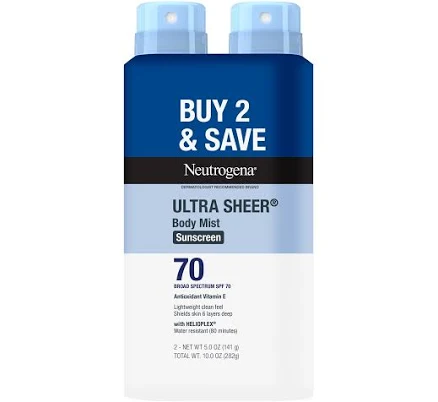
Neutrogena Ultra Sheer · Sunscreen
Neutrogena Ultra Sheer Body Mist Sunscreen Spray SPF
Lower concern; sunscreen sprays rarely require PFAS, but propellants warrant confirmation.
This sunscreen spray lacks known PFAS applications and uses mineral or organic UV filters rather than PFAS coatings. Aerosol propellants can sometimes contain PFAS, but the brand has not disclosed propellant chemistry.
We flunk more products than we pass. This one earned its grade. How we grade
Material
Water-based spray emulsion (propellant aerosol)
Brand disclosure
Brand is silent on PFAS
Lab data
No public lab test
You may also be interested in
Top-graded picks in the categories readers replace first, every one scored on the same rubric.

- polypropylene filter housing, carbon/sediment cartridge
- We found no PFAS statement from the brand
- Bacterial growth in spent cartridges
3 hazards checked on this product, all on its full breakdown.

Aquasure
Premier Series 75 GPD Under Sink Reverse Osmosis Water Filtration System
- RO membrane, carbon filters, stainless steel housing
- We found no PFAS statement from the brand
- Bacterial and microbial growth in housing and filters
4 hazards checked on this product, all on its full breakdown.

Avocado
Vegan Mattress
- organic cotton, natural latex, coconut coir, recycled steel coils
- The brand calls it PFAS-free, which we have not verified
- Heavy metals
2 hazards checked on this product, all on its full breakdown.
What Neutrogena Ultra Sheer Body Mist Spray SPF is made of, ingredients and materials
Neutrogena Ultra Sheer Body Mist is a water-based aerosol emulsion designed for rapid absorption and a lightweight feel. The active ingredient is likely avobenzone, octinoxate, or oxybenzone (typical for Neutrogena formulations), suspended in water with emulsifiers, glycerin, and dimethicone. The propellant system is the primary unknown, hydrocarbon (isobutane/propane) or hydrofluorocarbon aerosol propellants are standard in this product class, and some formulations use hydrofluoroolefin (HFO) propellants that may contain trace fluorinated compounds.
What’s concerning
Category baseline
The starting point for this type of product, before anything specific to this product is counted.
No PFAS disclosure
No public statement from the brand about PFAS in this product.
PFAS
Neutrogena has not disclosed whether Ultra Sheer uses hydrocarbon, HFC, or HFO propellants. HFO propellants sometimes contain trace fluorinated compounds; confirmation from manufacturer is recommended before purchase if PFAS avoidance is a priority.
Source, ATSDR ↗UV filter skin penetration and bioaccumulation (oxybenzone/octinoxate)
Conventional chemical UV absorbers in Neutrogena formulations have been detected in blood and urine in FDA and independent studies. While acute toxicity is not established at typical sunscreen doses, systemic absorption is documented and ongoing research continues; mineral (zinc/titanium) alternatives exist if this is a concern.
Inhalation exposure to aerosolized particles and propellants
Spray application creates an inhalation risk for both emulsion particles and propellant vapors. Pulmonary irritation or aspiration is rare but documented in cosmetic aerosol literature; avoid spraying toward face and use in open air when possible.
What’s reassuring
Base material not linked to PFAS
The main material recorded for this product is not one associated with PFAS.
Formaldehyde / VOCs
Neutrogena formulations typically use benzisothiazole or phenoxyethanol preservatives; no established contamination or formaldehyde-release hazard is on record for this product line, though individual sensitivities to fragrance or emulsifiers are possible.
Source, ATSDR ↗Lead
No recalls or third-party testing has identified heavy-metal contamination in Neutrogena Ultra Sheer sunscreens. Chemical UV filters and water-based emulsions carry lower risk than mineral formulations, which occasionally show trace metal impurities.
Source, ATSDR ↗How is this PFAS grade calculated?
The brand's record and disclosure
Neutrogena (Johnson & Johnson subsidiary) has not publicly disclosed PFAS presence or absence in aerosol sunscreen formulations, though the brand maintains broad safety certifications and does not appear on environmental or consumer PFAS watchlists for cosmetics. The brand has faced historical scrutiny over oxybenzone and octinoxate (now partially phased out in favor of mineral filters in some lines), but Ultra Sheer formulations continue to use conventional UV absorbers. No recalls or confirmed heavy-metal contamination have been documented for this specific product line.
How it compares in its category
Aerosol sunscreen sprays occupy a contentious middle ground, convenient application but propellant opacity and potential inhalation risk distinguish them from pump or squeeze bottles. Neutrogena Ultra Sheer is mainstream-market positioned and less likely to contain PFAS-heavy propellants than budget aerosols, but lacks the transparency of mineral-only brands (e.g., Blue Lizard, Badger) or pump-bottle alternatives. Compared to stick or lotion formats, spray sunscreens inherently pose greater propellant uncertainty.
If you buy it
Apply in a well-ventilated space and avoid inhalation of spray mist, especially near face and children. Do not apply over eyes or mouth directly; use hands to spread after spraying on palms. Store upright in a cool place away from heat sources to prevent propellant pressure buildup. Reapply every 2 hours after water exposure or sweating, following label instructions; do not rely on spray formulation alone for adequate UVA/UVB coverage without rubbing in.
What is not known about PFAS in this product?
- Basis
- Model estimate, 72% confidence, not a lab result
- Lab test
- None on record for this exact product
- Brand statement
- Neutrogena Ultra Sheer has made none
Formulations change between production runs, so check the current label. How we grade.
What are the PFAS-free alternatives to Neutrogena Ultra Sheer Body Mist Sunscreen Spray SPF?
- Mineral sunscreen, zinc oxide base
- A third party reports verifying it as PFAS-free
- 1,4-dioxane (non-intentional contaminant from surfactants/emulsifiers)
2 hazards checked on this product, all on its full breakdown.
- mineral sunscreen (zinc oxide or titanium dioxide base)
- The brand calls it PFAS-free, which we have not verified
- Synthetic fragrance allergens
More sunscreen grades
How we score, every product runs through the same public 0-100 rubric based on materials, coatings, brand disclosure, lab findings, and recalls. See the full methodology → Spotted a mistake? Report an error.