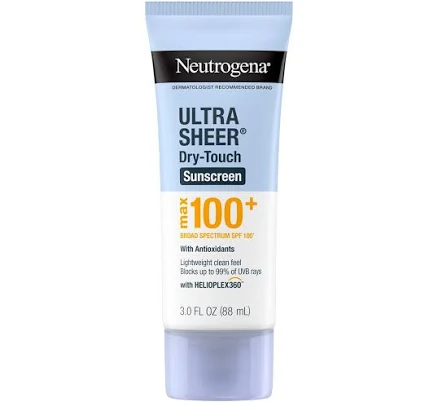
Neutrogena Ultra Sheer · Sunscreen
Neutrogena Ultra Sheer Dry-Touch Sunscreen Lotion
Sunscreen with no fluorinated ingredient on record, and no PFAS statement from the brand.
Neutrogena Ultra Sheer has no PFAS statement on record for this sunscreen. Our record does not include an ingredient-level check, so look for fluorinated ingredients such as Teflon-type coating on the label.
We flunk more products than we pass. This one earned its grade. How we grade
Material
Lotion base with water-resistant/waterproof polymer treatment
Brand disclosure
Brand is silent on PFAS
Lab data
No public lab test
You may also be interested in
Top-graded picks in the categories readers replace first, every one scored on the same rubric.

- polypropylene filter housing, carbon/sediment cartridge
- We found no PFAS statement from the brand
- Bacterial growth in spent cartridges
3 hazards checked on this product, all on its full breakdown.

Aquasure
Premier Series 75 GPD Under Sink Reverse Osmosis Water Filtration System
- RO membrane, carbon filters, stainless steel housing
- We found no PFAS statement from the brand
- Bacterial and microbial growth in housing and filters
4 hazards checked on this product, all on its full breakdown.

Avocado
Vegan Mattress
- organic cotton, natural latex, coconut coir, recycled steel coils
- The brand calls it PFAS-free, which we have not verified
- Heavy metals
2 hazards checked on this product, all on its full breakdown.
What Neutrogena Ultra Sheer Sunscreen Lotion is made of, ingredients and materials
Neutrogena Ultra Sheer Dry-Touch is a lotion-based sunscreen with a water-resistant polymer matrix designed to repel moisture while remaining lightweight. The active sunscreen ingredients are not fluorinated compounds; the water-resistant treatment is a standard non-PFAS polymer coating that prevents emulsion breakdown during perspiration or immersion. Like most commercial sunscreens, it contains humectants, thickeners, and preservatives to maintain stability and shelf life.
What’s concerning
Category baseline
The starting point for this type of product, before anything specific to this product is counted.
No PFAS disclosure
No public statement from the brand about PFAS in this product.
1,4-dioxane (solvent contaminant)
Water-based lotion sunscreens can contain ethoxylated surfactants or stabilizers that may carry trace 1,4-dioxane as a manufacturing byproduct. No test data for this product is publicly available; this is a known concern class for mass-market lotions, not a reported issue for this specific SKU.
Fragrance allergens
Neutrogena Ultra Sheer contains fragrance ingredients not fully itemized on the label (common regulatory practice). Typical fragrance in this line includes citral or limonene; individuals with fragrance sensitivity should patch-test or choose fragrance-free alternatives.
UV filter photostability and skin penetration
Broad-spectrum filters in this product (likely octyl methoxycinnamate or avobenzone) are known to degrade under UV exposure and may have measurable skin absorption in long-term studies. This is a known behavior of chemical sunscreens; it does not indicate unsafe levels but reflects the difference between chemical and mineral formulations.
What’s reassuring
Base material not linked to PFAS
The main material recorded for this product is not one associated with PFAS.
Formaldehyde / VOCs
No formaldehyde releasers or methylene-release preservatives are listed on the product label. Neutrogena Ultra Sheer uses standard paraben and non-paraben preservatives; none on record as formaldehyde releasers in this formulation.
Source, ATSDR ↗Heavy metals
The product is minimally pigmented (clear to pale lotion). No iron oxides, manganese, or cadmium-bearing colorants are declared; this is consistent with typical sunscreen formulations where any opacifier is titanium dioxide or zinc oxide, both established as low-hazard.
Source, FDA ↗How is this PFAS grade calculated?
The brand's record and disclosure
Neutrogena (owned by Johnson & Johnson) does not publicly disclose PFAS avoidance or certification for this product, though no PFAS-containing ingredients are listed on the label or in available regulatory filings. The brand has faced no established recalls or safety actions specific to this formulation. Neutrogena has not made broad PFAS reduction commitments as a brand policy, placing it in the silent-but-compliant category rather than proactive transparency.
How it compares in its category
This product is mid-range in the sunscreen market, it avoids oxybenzone and octinoxate (linked to coral toxicity) and uses broad-spectrum UV filters without PFAS. It is comparable in formulation strategy to other mass-market water-resistant lotions like CeraVe Face Lotion SPF or Coppertone Sport. It does not carry third-party certifications (e.g., EWG Verified, reef-safe seal) that some premium alternatives pursue.
If you buy it
Apply generously 15 minutes before sun exposure and reapply every 2 hours or after swimming or heavy sweating. Store in a cool, dry place away from direct heat; do not leave in vehicles or direct sunlight. Replace if the consistency changes, smell alters, or it has been stored for more than 3 years. Use only as directed on the label; if skin irritation or rash develops, discontinue and patch-test on inner arm before resuming.
What is not known about PFAS in this product?
- Basis
- Model estimate, 45% confidence, not a lab result
- Lab test
- None on record for this exact product
- Brand statement
- Neutrogena Ultra Sheer has made none
Formulations change between production runs, so check the current label. How we grade.
What are the PFAS-free alternatives to Neutrogena Ultra Sheer Dry-Touch Sunscreen Lotion?
- Mineral sunscreen, zinc oxide base
- A third party reports verifying it as PFAS-free
- 1,4-dioxane (non-intentional contaminant from surfactants/emulsifiers)
2 hazards checked on this product, all on its full breakdown.
- mineral sunscreen (zinc oxide or titanium dioxide base)
- The brand calls it PFAS-free, which we have not verified
- Synthetic fragrance allergens
More sunscreen grades
How we score, every product runs through the same public 0-100 rubric based on materials, coatings, brand disclosure, lab findings, and recalls. See the full methodology → Spotted a mistake? Report an error.