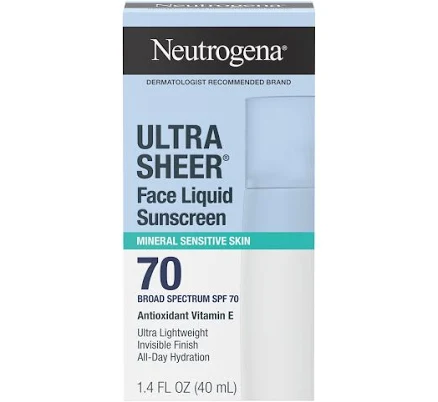
Neutrogena Ultra Sheer · Sunscreen
Neutrogena Ultra Sheer Face Liquid Mineral Sunscreen
Lower concern; mineral sunscreens typically avoid PFAS, but brand makes no disclosure.
This mineral sunscreen uses zinc oxide and titanium dioxide, which are not inherently associated with PFAS. The brand does not publicly disclose PFAS presence or absence.
We flunk more products than we pass. This one earned its grade. How we grade
Material
mineral sunscreen (zinc oxide/titanium dioxide)
Brand disclosure
Brand is silent on PFAS
Lab data
No public lab test
You may also be interested in
Top-graded picks in the categories readers replace first, every one scored on the same rubric.

- polypropylene filter housing, carbon/sediment cartridge
- We found no PFAS statement from the brand
- Bacterial growth in spent cartridges
3 hazards checked on this product, all on its full breakdown.

Aquasure
Premier Series 75 GPD Under Sink Reverse Osmosis Water Filtration System
- RO membrane, carbon filters, stainless steel housing
- We found no PFAS statement from the brand
- Bacterial and microbial growth in housing and filters
4 hazards checked on this product, all on its full breakdown.

Avocado
Vegan Mattress
- organic cotton, natural latex, coconut coir, recycled steel coils
- The brand calls it PFAS-free, which we have not verified
- Heavy metals
2 hazards checked on this product, all on its full breakdown.
What Neutrogena Ultra Sheer Face Sunscreen is made of, ingredients and materials
This product uses zinc oxide and/or titanium dioxide as UV blockers, which sit on skin rather than absorbing into it, making them chemically inert once applied. Mineral sunscreens in this class have a long safety history and do not require the synthetic hormone-mimicking filters (oxybenzone, avobenzone) found in chemical alternatives. The 'liquid' formulation likely contains silicones, glycerin, or water as carriers to achieve a non-greasy texture, none of which pose established hazards at typical use levels.
What’s concerning
Category baseline
The starting point for this type of product, before anything specific to this product is counted.
No PFAS disclosure
No public statement from the brand about PFAS in this product.
Fragrance allergens and sensitivizers
Sunscreen formulations often include fragrance to mask mineral odor or improve user appeal. Neutrogena does not publicly list fragrance components; if present, undisclosed fragrance blends may include contact sensitizers affecting sensitive skin or those with fragrance allergies.
Parabens
Liquid sunscreens require preservatives to prevent bacterial and fungal growth in water-based or silicone formulations. Neutrogena's label does not explicitly disclose preservative type; if parabens are used, exposure is low but some individuals report sensitivity; modern alternatives like phenoxyethanol are generally recognized as safer.
Source, FDA ↗Silicone accumulation in sensitive or compromised skin
Liquid mineral formulations commonly use cyclopentasiloxane or dimethicone for spreadability. In normal skin, silicones are inert; however, they may trap moisture in acne-prone or eczema-affected areas if not properly cleansed, though this is a cosmetic rather than toxicological concern.
What’s reassuring
Base material not linked to PFAS
The main material recorded for this product is not one associated with PFAS.
Titanium dioxide or zinc oxide particle inhalation (spray formulations)
This is a liquid, not a spray, so inhalation risk is absent. Liquid mineral sunscreens applied by hand do not create aerosol exposure to nanoparticles.
Lead
Titanium dioxide and zinc oxide used in FDA-compliant sunscreens are subject to purity standards. No recalls or testing reports of excessive heavy metals in Neutrogena sunscreens are on record; however, the brand does not publish third-party heavy metal assay results, leaving safety unverified independently.
Source, ATSDR ↗How is this PFAS grade calculated?
The brand's record and disclosure
Neutrogena is owned by Johnson & Johnson and operates under established cosmetic safety standards. The brand has no major recalled sunscreen products in recent years and complies with FDA OTC monograph requirements for sunscreen ingredients. However, Neutrogena makes no public statement on PFAS avoidance or third-party ingredient testing, leaving mineral sunscreen claims unverified beyond label ingredients. The brand's silence on transparency is typical for mass-market cosmetics but falls short of certified clean beauty standards.
How it compares in its category
Mineral sunscreens as a class are considered lower-hazard than chemical alternatives because they avoid synthetic absorbers linked to hormone disruption and reef damage. Among mineral options, Neutrogena's liquid formulation is mainstream; specialty brands like Blue Lizard or Badger offer third-party certifications (reef-safe, non-GMO) that Neutrogena does not pursue. Price and texture are comparable; the trade-off is that mineral formulations may leave visible white cast or feel heavier, though 'ultra sheer' versions attempt to minimize this.
If you buy it
Apply generously and reapply every two hours, or immediately after water exposure; mineral blockers sit on skin and wash off faster than chemical filters. Store in a cool, dry place away from direct heat, as liquids in plastic bottles can degrade if left in hot vehicles. Check the cap and nozzle for cracks or leaks before purchase; damaged packaging may allow bacterial contamination. Replace annually or when the product separates, thickens, or shows discoloration, as mineral formulations can settle or oxidize over time.
What is not known about PFAS in this product?
- Basis
- Model estimate, 72% confidence, not a lab result
- Lab test
- None on record for this exact product
- Brand statement
- Neutrogena Ultra Sheer has made none
Formulations change between production runs, so check the current label. How we grade.
What are the PFAS-free alternatives to Neutrogena Ultra Sheer Face Liquid Mineral Sunscreen?
- Mineral sunscreen, zinc oxide base
- A third party reports verifying it as PFAS-free
- 1,4-dioxane (non-intentional contaminant from surfactants/emulsifiers)
2 hazards checked on this product, all on its full breakdown.
- mineral sunscreen (zinc oxide or titanium dioxide base)
- The brand calls it PFAS-free, which we have not verified
- Synthetic fragrance allergens
More sunscreen grades
How we score, every product runs through the same public 0-100 rubric based on materials, coatings, brand disclosure, lab findings, and recalls. See the full methodology → Spotted a mistake? Report an error.