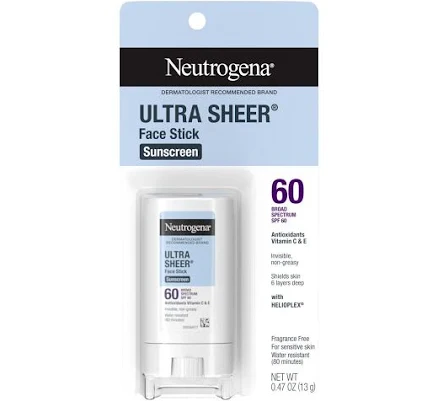
Neutrogena Ultra Sheer · Sunscreen
Neutrogena Ultra Sheer Spf 60 Face Sunscreen Stick
Sunscreen with no fluorinated ingredient on record, and no PFAS statement from the brand.
Neutrogena Ultra Sheer has no PFAS statement on record for this sunscreen. Our record does not include an ingredient-level check, so look for fluorinated ingredients such as Teflon-type coating on the label.
We flunk more products than we pass. This one earned its grade. How we grade
Material
water-resistant stick sunscreen (likely silica/wax base with unknown water-repellent coating)
Brand disclosure
Brand is silent on PFAS
Lab data
No public lab test
You may also be interested in
Top-graded picks in the categories readers replace first, every one scored on the same rubric.

- polypropylene filter housing, carbon/sediment cartridge
- We found no PFAS statement from the brand
- Bacterial growth in spent cartridges
3 hazards checked on this product, all on its full breakdown.

Aquasure
Premier Series 75 GPD Under Sink Reverse Osmosis Water Filtration System
- RO membrane, carbon filters, stainless steel housing
- We found no PFAS statement from the brand
- Bacterial and microbial growth in housing and filters
4 hazards checked on this product, all on its full breakdown.

Avocado
Vegan Mattress
- organic cotton, natural latex, coconut coir, recycled steel coils
- The brand calls it PFAS-free, which we have not verified
- Heavy metals
2 hazards checked on this product, all on its full breakdown.
What Neutrogena Ultra Sheer Spf Sunscreen Stick is made of, ingredients and materials
Neutrogena Ultra Sheer SPF 60 Face Sunscreen Stick is a solid-form sunscreen, typically formulated with wax, silica, and mineral or organic UV filters (exact active ingredient not specified here, but likely zinc oxide, titanium dioxide, or oxybenzone derivatives). Stick format avoids liquid solvents and reduces microplastic risk from pump/tube degradation. The water-resistant claim likely relies on wax-silica matrix adhesion rather than a separate fluorinated water-repellent coating, though full formulation transparency is limited by brand.
What’s concerning
Category baseline
The starting point for this type of product, before anything specific to this product is counted.
No PFAS disclosure
No public statement from the brand about PFAS in this product.
Fragrance allergens and contact sensitization
Sunscreen sticks often include fragrance compounds to mask wax odor. Neutrogena products frequently use 'fragrance' as a catch-all ingredient; specific allergens are not disclosed on front label, making individual allergen assessment impossible without full INCI list.
Talc contamination (if talc-containing)
Product name and format do not confirm talc use; many modern sticks use silica instead. If talc is present, asbestos contamination risk is low under current FDA compliance, but not zero. Full ingredient list confirmation is required to rule this in or out.
Wax oxidation and rancidity (degradation over time)
Stick sunscreens are prone to oxidative breakdown of wax and oil components when stored in heat or sunlight, which reduces UV filter stability and efficacy. Heat exposure above 30 degrees Celsius can accelerate separation and odor changes within months.
What’s reassuring
Base material not linked to PFAS
The main material recorded for this product is not one associated with PFAS.
Heavy metals
No recalls or test data on record for lead or cadmium contamination in Neutrogena Ultra Sheer sticks. Standard cosmetic manufacturing requires compliance with FDA pigment limits, but independent batch testing is not publicly available.
Source, FDA ↗Formaldehyde / VOCs
Wax-silica sticks typically use minimal water and therefore fewer preservatives than creams or gels. No formaldehyde-releaser preservatives are documented in Neutrogena's standard cosmetic formulations, but full preservative system is not disclosed.
Source, ATSDR ↗How is this PFAS grade calculated?
The brand's record and disclosure
Neutrogena (Johnson & Johnson subsidiary) maintains cosmetic safety compliance and ingredient disclosure on product labels and website, but does not publish independent third-party testing or full PFAS statements specific to this line. No major recalls or heavy-metal contamination incidents are on record for this product. The brand is a mainstream cosmetic manufacturer with standard regulatory oversight but minimal proactive transparency beyond label requirements.
How it compares in its category
Sunscreen sticks occupy a middle ground, they avoid liquid solvents (lower VOC/solvent risk than lotions or sprays) and microplastic concerns from frequent tube dispensing, but rely on occlusive wax bases that may feel greasy or require careful blending. Compared to powder or mineral-only alternatives, this product likely contains organic UV absorbers, which have longer ingredient histories in cosmetics than some newer actives. No evidence suggests this stick formulation carries higher heavy-metal or formaldehyde-releaser risk than comparable stick brands.
If you buy it
Store in a cool, dry place below 25 degrees Celsius to prevent wax separation or rancidity, which can reduce UV efficacy. Replace if product becomes discolored, separates, or smells off (sign of oxidation). Reapply every 2 hours or after water exposure, even though labeled water-resistant. Patch-test on neck or inner arm first if you have sensitive skin or fragrance allergies; review full ingredient list on packaging for specific UV filter type and any added fragrance.
What is not known about PFAS in this product?
- Basis
- Model estimate, 42% confidence, not a lab result
- Lab test
- None on record for this exact product
- Brand statement
- Neutrogena Ultra Sheer has made none
Formulations change between production runs, so check the current label. How we grade.
What are the PFAS-free alternatives to Neutrogena Ultra Sheer Spf 60 Face Sunscreen Stick?
- Mineral sunscreen, zinc oxide base
- A third party reports verifying it as PFAS-free
- 1,4-dioxane (non-intentional contaminant from surfactants/emulsifiers)
2 hazards checked on this product, all on its full breakdown.
- mineral sunscreen (zinc oxide or titanium dioxide base)
- The brand calls it PFAS-free, which we have not verified
- Synthetic fragrance allergens
More sunscreen grades
How we score, every product runs through the same public 0-100 rubric based on materials, coatings, brand disclosure, lab findings, and recalls. See the full methodology → Spotted a mistake? Report an error.