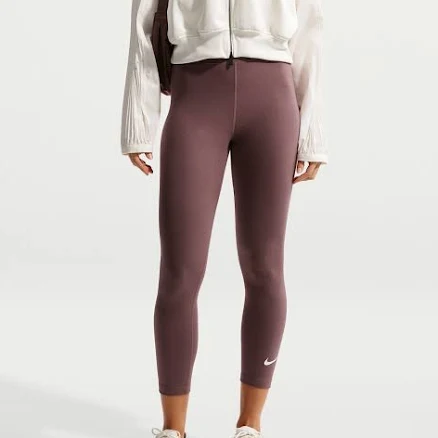
Nike Women's Sportswear Classic High-Waisted 7/8 Leggings
Lower concern. Polyester blend leggings with no water-repellent coating on record.
This legging is made from a polyester blend with nylon and spandex. No water-repellent finish or stain-resistant coating is listed in product information. Nike has no PFAS statement on record for this product.
Still want this one anyway? Check the price on Amazon. We’d swap it.
Material
Polyester blend (nylon/spandex mix)
Lab data
No public lab test
You may also be interested in
Top-graded picks in the categories readers replace first, every one scored on the same rubric.

- polypropylene filter housing, carbon/sediment cartridge
- We found no PFAS statement from the brand
- Bacterial growth in spent cartridges
3 hazards checked on this product, all on its full breakdown.

Aquasure
Premier Series 75 GPD Under Sink Reverse Osmosis Water Filtration System
- RO membrane, carbon filters, stainless steel housing
- We found no PFAS statement from the brand
- Bacterial and microbial growth in housing and filters
4 hazards checked on this product, all on its full breakdown.

Avocado
Vegan Mattress
- organic cotton, natural latex, coconut coir, recycled steel coils
- The brand calls it PFAS-free, which we have not verified
- Heavy metals
2 hazards checked on this product, all on its full breakdown.
What Nike Women's Sportswear Classic Leggings is made of, ingredients and materials
These leggings are a polyester-nylon-spandex blend, the industry standard for stretch activewear. Polyester itself is chemically inert when worn, but the dyes, finishes, and spandex component can introduce processing residues. Nylon is stable in normal wear; spandex (polyurethane elastomer) does not leach under typical body-temperature conditions. No water-repellent coating is listed, which eliminates a major vector for legacy PFAS chemicals in performance apparel.
What’s concerning
Category baseline
The starting point for this type of product, before anything specific to this product is counted.
No PFAS disclosure
No public statement from the brand about PFAS in this product.
Azo dyes and processing residues
Polyester leggings are conventionally dyed with reactive or disperse dyes; untested batches may contain unreacted dye molecules or heavy metals from dye catalysts. Pre-wash removes most surface residues. Nike does not publish dye chemistry or heavy-metal limits for basic apparel.
Spandex degradation products (from heat or sweat)
Spandex is polyurethane; prolonged body heat, chlorine (pool wear), or acidic sweat can hydrolyze small amounts of the polymer backbone. This is typically minimal in casual wear but accelerates with washing in hot water or gym chlorine exposure. No reported skin reactions specific to Nike leggings, but sensitive individuals may want to rinse immediately after pool use.
Microplastic shedding from wear and washing
All synthetic fiber garments shed microfibers when washed or worn. Polyester leggings are not worse than competitors; shedding increases with washing frequency and turbulence. Use a microfiber catch filter in the washing machine or air-dry to minimize environmental release. This does not pose a direct skin hazard but is an ecological concern.
What’s reassuring
Base material not linked to PFAS
The main material recorded for this product is not one associated with PFAS.
Formaldehyde / VOCs
Standard polyester blends do not require formaldehyde-based wrinkle finish; Nike does not advertise easy-care or permanent-press treatments on this basic legging. No public recalls or testing results suggest formaldehyde contamination in Nike's standard activewear.
Source, ATSDR ↗Antimony in polyester
Antimony trioxide is used as a catalyst in polyester synthesis and can remain as trace residue. Concentrations in finished fabric are typically below regulatory limits (e.g., OEKO-TEX 100 <0.05 mg/kg). Nike does not disclose antimony testing for basic leggings; no industry-wide recalls have named Nike as a source of excess antimony.
How is this PFAS grade calculated?
The brand's record and disclosure
Nike has committed to eliminating PFOAs and related long-chain PFAS from its apparel supply chain by 2025, though transparency on individual product testing is limited. The brand does not publish detailed chemical disclosures for most basic activewear lines. Nike is not known for major chemical-related recalls on standard leggings, and third-party testing of comparable Nike activewear has not flagged acute contamination concerns.
How it compares in its category
This is a conventional polyester-blend high-waisted legging without advertised water resistance, stain treatment, or advanced finishes. It sits in the middle of the activewear spectrum, with lower concern than water-repellent performance tights (which historically used PFAS) but with fewer certifications than organic-cotton or GOTS-certified alternatives. Most major brands (Adidas, Lululemon, On) use similar polyester blends for basic leggings; Nike's version has no known hazard premium or discount.
If you buy it
Wash before first wear to remove loose dyes and processing residues; use cold or warm water, not hot (spandex degrades above 40C, releasing potential breakdown products). Avoid fabric softeners, which can trap residues. Replace when elastic loses shape or pilling is heavy, typically 1-2 years with regular use. Dry flat or low heat; high heat accelerates polyester degradation and can degrade spandex integrity.
What is not known about PFAS in this product?
- Basis
- Model estimate, 72% confidence, not a lab result
- Lab test
- None on record for this exact product
- Brand statement
- Nike has made a specific claim
Formulations change between production runs, so check the current label. How we grade.
More activewear grades
How we score, every product runs through the same public 0-100 rubric based on materials, coatings, brand disclosure, lab findings, and recalls. See the full methodology → Spotted a mistake? Report an error.