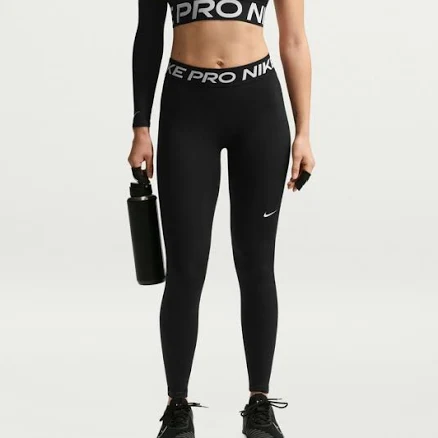
Women's Leggings Nike Pro 365
Lower concern, standard athletic leggings with no known PFAS-treatment triggers.
Nike Pro 365 leggings are primarily polyester and elastane with no advertised water-repellent, stain-resistant, or Teflon-family coating coatings. Nike has not publicly disclosed PFAS use or avoidance.
Still want this one anyway? Check the price on Amazon. We’d swap it.
Material
Polyester blend (primary); elastane/spandex
Lab data
No public lab test
You may also be interested in
Top-graded picks in the categories readers replace first, every one scored on the same rubric.

- polypropylene filter housing, carbon/sediment cartridge
- We found no PFAS statement from the brand
- Bacterial growth in spent cartridges
3 hazards checked on this product, all on its full breakdown.

Aquasure
Premier Series 75 GPD Under Sink Reverse Osmosis Water Filtration System
- RO membrane, carbon filters, stainless steel housing
- We found no PFAS statement from the brand
- Bacterial and microbial growth in housing and filters
4 hazards checked on this product, all on its full breakdown.

Avocado
Vegan Mattress
- organic cotton, natural latex, coconut coir, recycled steel coils
- The brand calls it PFAS-free, which we have not verified
- Heavy metals
2 hazards checked on this product, all on its full breakdown.
What Women's Leggings Nike Pro 365 is made of, ingredients and materials
Nike Pro 365 leggings are primarily polyester blend with elastane (spandex) for stretch and moisture-wicking. Polyester itself is chemically inert when worn and does not leach into skin under normal conditions. The elastane component can degrade over time with repeated washing and heat exposure, potentially fragmenting into microfibers, though this is a durability issue rather than an acute toxicity concern. The blend is typical for performance apparel and carries no known chemical hazards beyond standard synthetic fiber considerations.
What’s concerning
Category baseline
The starting point for this type of product, before anything specific to this product is counted.
No PFAS disclosure
No public statement from the brand about PFAS in this product.
Microplastics
Synthetic leggings shed microfibers during washing and wear, a known phenomenon not specific to Nike. Elastane degradation accelerates with heat and agitation. This is a durability and environmental issue rather than direct toxicity; primary concern is laundering environmental impact.
Source, EPA ↗Antimony in polyester fibers
Antimony trioxide is used as a catalyst in polyester production and may remain as trace residue in finished fiber. Levels are typically very low and not considered a dermal hazard during wear. Ingestion risk (e.g., children chewing clothing) is theoretical but not documented as a concern for this product.
What’s reassuring
Base material not linked to PFAS
The main material recorded for this product is not one associated with PFAS.
Azo dyes and colorfast synthetic dyes
Nike enforces RSL standards that prohibit most carcinogenic azo dyes in athletic apparel. No documented cases of restricted azo dyes in Pro line products. Color bleeding into skin or with sweat is rare with modern textile finishing.
Heavy metals
Nike RSL restricts cadmium, lead, and chromium in dye stocks. No reports of excessive heavy metal content in Pro 365 products. Standard commercial testing would flag any breach.
Source, FDA ↗How is this PFAS grade calculated?
The brand's record and disclosure
Nike has published sustainability and manufacturing standards including restricted substance lists (RSLs) that address formaldehyde, heavy metals, and dyes in apparel production. The company does not publicly disclose routine third-party lab certifications for individual SKUs, but maintains supplier auditing programs. No specific recalls or safety controversies have been documented for Nike Pro line leggings. Nike's silence on PFAS in athletic lines is consistent with industry practice for non-water-repellent activewear, where PFAS application is not standard.
How it compares in its category
Nike Pro 365 sits in the mainstream performance segment alongside Lululemon, Allbirds, and Adidas. Compared to budget polyester leggings, Nike's manufacturing oversight and RSL enforcement are more rigorous. Premium brands like Lululemon publish more granular chemical transparency, while Nike's approach is industry-standard for large-scale athletic manufacturers. Hazard profile is equivalent to or slightly lower than direct competitors in the same price and quality tier.
If you buy it
Wash in cool water (under 30°C / 86°F) and air dry to minimize elastane degradation and microfiber shedding. Avoid high heat, bleach, and fabric softeners, which can weaken synthetic fibers and increase breakdown over time. Replace when elastane loses recovery (fabric no longer returns to original shape after stretching), typically after 100-150 wash cycles with proper care. Store in a cool, dry place and do not expose to prolonged direct sunlight, which yellows polyester and degrades elastic fibers.
What is not known about PFAS in this product?
- Basis
- Model estimate, 72% confidence, not a lab result
- Lab test
- None on record for this exact product
- Brand statement
- Nike has made a specific claim
Formulations change between production runs, so check the current label. How we grade.
More activewear grades
How we score, every product runs through the same public 0-100 rubric based on materials, coatings, brand disclosure, lab findings, and recalls. See the full methodology → Spotted a mistake? Report an error.