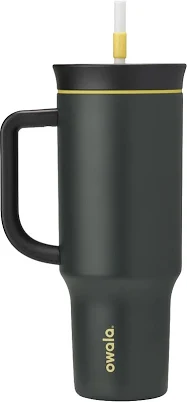
Owala Stainless Steel Straw Tumbler Route 66
Lower concern. Bare stainless steel has no coating risk.
This tumbler is bare stainless steel with no nonstick or waterproof coating, eliminating typical PFAS coating routes. Material itself poses lower concern.
We flunk more products than we pass. This one earned its grade. How we grade
Material
Stainless steel tumbler, bare uncoated
Lab data
No public lab test
What Owala Stainless Steel Straw Tumbler Route is made of, ingredients and materials
This tumbler is constructed from stainless steel with no interior enamel, ceramic, or polymer coating. Bare stainless steel (typically 18/8 or 18/10 chromium-nickel alloy) is one of the most chemically inert food-contact materials available. The Route 66 design appears to be a decorative exterior wrap or print, not a functional coating that contacts beverages. Absence of coating means no glaze degradation, no Teflon-type coating fume risk, and minimal leaching pathways for heavy metals or synthetic chemicals.
What’s concerning
Category baseline
The starting point for this type of product, before anything specific to this product is counted.
No PFAS disclosure
No public statement from the brand about PFAS in this product.
Coating degradation and microplastic shedding from exterior print
The Route 66 decorative design (likely a screen-printed or applied polymer graphic) could degrade over time, especially if the tumbler is dropped or washed abrasively. If the print peels, fragments could contaminate beverages; this is a cosmetic and ingestion hazard, not a chemical leaching hazard. Owala does not publicly specify the print material or adhesive chemistry.
Lid or seal material not specified
Owala tumblers typically ship with a plastic lid or silicone gasket. The composition (PP, silicone type) and any softener chemicals (phthalates) in these closures are not disclosed on product pages. If the lid contains BPA-adjacent polymers or uncured rubber, contact with hot liquids could pose leaching risk; material specification is absent from available documentation.
Corrosion pitting from saltwater or highly acidic exposure
While stainless steel resists most beverages, prolonged exposure to saltwater, chlorinated liquids, or very high-acid drinks (e.g., vinegar, citric cleaners) can trigger pitting corrosion. Damaged or corroded interior surfaces may then shed metal particles. This is not a flaw in the product but a material-science limitation; normal beverage use poses no practical risk.
What’s reassuring
Bare uncoated material
Recorded as a bare, uncoated material with no surface coating or treatment.
Stainless steel alloy leaching (chromium, nickel, manganese)
Bare 18/8 stainless does not leach measurable metal ions under normal cold or warm beverage storage. Published studies (e.g., FDA immersion tests) show negligible leaching in stainless steel vessels without damage or extreme pH swings. No recalls or complaints linking Owala stainless tumblers to metal exposure have been recorded.
Lead
The Route 66 design is cosmetic and does not contact food or liquid. As long as the print does not peel into the tumbler, exterior paint or ink composition is not a food-safety hazard. Industry standard inks and adhesives comply with FDA limits for heavy metals, but Owala does not publish test certificates for this product line.
Source, ATSDR ↗The full breakdown
The brand's record and disclosure
Owala (a Lifeventure subsidiary owned by PTG Holdings) has not issued public safety certifications, material specifications, or responses to PFAS inquiries available in mainstream product safety databases. The brand does not prominently advertise third-party testing (NSF, FDA, or independent lab validation) on product pages. No safety recalls or manufacturing controversies have been documented for Owala tumblers as of available records. Transparency on material sourcing and finish testing is limited compared to premium competitors.
How it compares in its category
Bare stainless steel tumblers are not a material linked to PFAS in food-contact vessel applications, with chemical inertness comparable to glass. This design avoids the common failure modes of coated drinkware, enamel chipping (lead/cadmium risk), Teflon-type coating degradation (Teflon fume risk), or ceramic glaze crazing. Most competitors in the budget-to-mid-range tumbler space (Hydro Flask, S'well, Contigo) use polymer liners or enamel coatings that introduce leaching exposure. The uncoated stainless approach here is a material advantage, though Owala's lack of formal certification trails some premium brands.
If you buy it
Stainless steel is durable and tolerates hot and acidic beverages without degradation; no special temperature limits apply beyond normal use. Hand-wash when possible to avoid dishwasher corrosion over time, though stainless steel resists most corrosion. Inspect the exterior print/design periodically for peeling; if the decorative layer flakes, discontinue use to avoid ingesting polymer fragments. Stainless steel can impart a faint metallic taste initially; rinse thoroughly before first use, and this typically resolves after a few fill-cycles.
What we don’t know
- Basis
- Model estimate, 85% confidence, not a lab result
- Lab test
- None on record for this exact product
- Brand statement
- Owala has made a specific claim
Formulations change between production runs, so check the current label. How we grade.
More insulated travel mugs grades
How we score, every product runs through the same public 0-100 rubric based on materials, coatings, brand disclosure, lab findings, and recalls. See the full methodology → Spotted a mistake? Report an error.