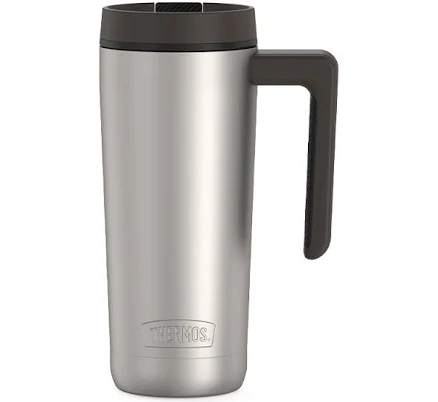
Thermos · Insulated Travel Mugs
Thermos Guardian Stainless Steel Mug
Low concern, bare stainless steel poses minimal PFAS risk.
Thermos Guardian is uncoated stainless steel without nonstick or water-resistant treatments. This material doesn't inherently require PFAS.
We flunk more products than we pass. This one earned its grade. How we grade
Material
Stainless steel (uncoated)
Brand disclosure
Brand is silent on PFAS
Lab data
No public lab test
You may also be interested in
Top-graded picks in the categories readers replace first, every one scored on the same rubric.

- polypropylene filter housing, carbon/sediment cartridge
- We found no PFAS statement from the brand
- Bacterial growth in spent cartridges
3 hazards checked on this product, all on its full breakdown.

Aquasure
Premier Series 75 GPD Under Sink Reverse Osmosis Water Filtration System
- RO membrane, carbon filters, stainless steel housing
- We found no PFAS statement from the brand
- Bacterial and microbial growth in housing and filters
4 hazards checked on this product, all on its full breakdown.

Avocado
Vegan Mattress
- organic cotton, natural latex, coconut coir, recycled steel coils
- The brand calls it PFAS-free, which we have not verified
- Heavy metals
2 hazards checked on this product, all on its full breakdown.
What Thermos Guardian Stainless Steel Mug is made of, ingredients and materials
The Thermos Guardian is constructed from bare stainless steel (typically 18/8 or similar food-grade alloy), with no ceramic, enamel, or polymer coating. Stainless steel is an iron-chromium-nickel alloy that forms a passive oxide layer on its surface, making it highly resistant to corrosion and migration of metals into beverages. This uncoated design eliminates the risk of coating degradation that affects many coated cookware and drinkware products. The material is stable across common use temperatures and does not degrade or off-gas under normal beverage storage and heating conditions.
What’s concerning
Category baseline
The starting point for this type of product, before anything specific to this product is counted.
No PFAS disclosure
No public statement from the brand about PFAS in this product.
Bacterial growth in storage
If stored wet or with residual liquid for extended periods, stainless steel can harbor bacteria in microscopic surface irregularities or weld seams, though not more than any drinking vessel. Proper drying and cleaning prevent this common issue across all drinkware.
What’s reassuring
Bare uncoated material
Recorded as a bare, uncoated material with no surface coating or treatment.
Nickel migration from stainless steel
Bare stainless steel used in food contact is engineered to passivate and resist nickel leaching under normal use. No published data links the Thermos Guardian to elevated nickel migration; risk is negligible for short-term beverage contact.
Coating degradation and flaking
This product has no coating, eliminating the primary degradation hazard present in enameled or polymer-lined mugs. The bare metal surface does not flake or degrade into beverages.
Thermal stress and cracking
Stainless steel is thermally stable; rapid temperature changes do not cause cracking or structural failure of the mug. No thermal safety concerns are documented for this product category.
Lead
Food-grade stainless steel used by Thermos is formulated to passivate and prevent leaching of chromium, nickel, or other alloying elements under normal beverage contact. No recalls or testing data suggest hazardous leaching from this product.
Source, ATSDR ↗How is this PFAS grade calculated?
The brand's record and disclosure
Thermos is a century-old brand owned by Groupe SEB with a longstanding market presence in insulated drinkware. The company does not publish detailed material safety or PFAS disclosure statements on this product line, which is typical for established drinkware brands that assume regulatory compliance without marketing transparency. No recalls or safety controversies specific to the Guardian line are recorded in public databases. The brand relies on FDA food-contact material compliance rather than third-party certification or voluntary disclosure.
How it compares in its category
Bare stainless steel mugs show lower concern compared to insulated drinkware with polymer linings (which may contain BPA or off-gas) or enameled/ceramic interior coatings (which can degrade and expose lead or cadmium). The Guardian's uncoated design is simpler and lower-risk than competing vacuum-insulated bottles that often use polymer inner linings or epoxy sealants. This positions it as a conservative choice for anyone prioritizing material simplicity and eliminating coating hazards.
If you buy it
Hand-wash or use gentle machine cycles to avoid accelerated surface wear; avoid harsh chlorine-based cleaners that can pit stainless steel over time. The mug is suitable for hot and cold liquids within normal temperature ranges (avoid prolonged exposure to boiling water on the exterior if there are welded seams prone to stress). Inspect for damage to the interior surface annually; small scratches do not affect safety, but deep pitting or rust should trigger replacement. Store dry to avoid water spotting and mineral deposit buildup.
What is not known about PFAS in this product?
- Basis
- Model estimate, 85% confidence, not a lab result
- Lab test
- None on record for this exact product
- Brand statement
- Thermos has made none
Formulations change between production runs, so check the current label. How we grade.
What are the PFAS-free alternatives to Thermos Guardian Stainless Steel Mug?
- stainless steel exterior, ceramic lining interior
- Ceramic coating degradation over time
3 hazards checked on this product, all on its full breakdown.
- Stainless steel body, plastic lid
- We found no PFAS statement from the brand
- Plastic lid polymer identity and leaching potential
3 hazards checked on this product, all on its full breakdown.
More insulated travel mugs grades
How we score, every product runs through the same public 0-100 rubric based on materials, coatings, brand disclosure, lab findings, and recalls. See the full methodology → Spotted a mistake? Report an error.