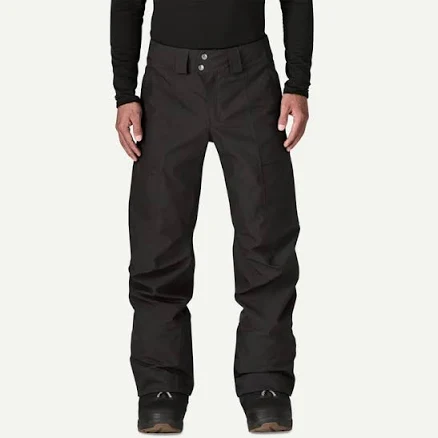
Patagonia Men's Storm Shift Pants
A water-repellent or grease-resistant treatment of unstated chemistry, with a brand PFAS statement we have not verified.
Patagonia says 100% of its new products from Spring 2025 are made without intentionally added PFAS. We record that as an unverified brand claim. Its record describes a water-repellent or grease-resistant treatment of unstated chemistry, which is still counted.
Brand says: “Patagonia says 100% of its new products from Spring 2025 are made without intentionally added PFAS.”
Still want this one anyway? Check the price on Amazon. We’d swap it.
Material
Nylon blend with water-repellent coating treatment (likely fluorocarbon-based)
Brand disclosure
Brand claims PFAS-free
Lab data
No public lab test
You may also be interested in
Top-graded picks in the categories readers replace first, every one scored on the same rubric.

- polypropylene filter housing, carbon/sediment cartridge
- We found no PFAS statement from the brand
- Bacterial growth in spent cartridges
3 hazards checked on this product, all on its full breakdown.

Aquasure
Premier Series 75 GPD Under Sink Reverse Osmosis Water Filtration System
- RO membrane, carbon filters, stainless steel housing
- We found no PFAS statement from the brand
- Bacterial and microbial growth in housing and filters
4 hazards checked on this product, all on its full breakdown.

Avocado
Vegan Mattress
- organic cotton, natural latex, coconut coir, recycled steel coils
- The brand calls it PFAS-free, which we have not verified
- Heavy metals
2 hazards checked on this product, all on its full breakdown.
What Patagonia Men's Storm Shift Pants is made of, ingredients and materials
These pants are constructed from a nylon blend treated with a water-repellent coating (water-repellent coating) finish. The water-repellent coating treatment is the critical component, while Patagonia claims PFAS-free chemistry, the specific water-repellent coating agent is not publicly disclosed on product labels or readily available technical sheets. Nylon itself is a synthetic polyamide that does not leach monomers under normal wear; the hazard profile centers entirely on the water-repellent coating and any dyes or finishing chemicals applied during manufacture.
What’s concerning
Category baseline
The starting point for this type of product, before anything specific to this product is counted.
Waterproof / stain-resistant treatment
Water-repellent coating treatments have historically used PFAS.
PFAS
Brand claims PFAS-free but does not disclose the specific water-repellent coating agent used. If a fluorocarbon-based water-repellent coating was applied, microfiber shedding during washing could release trace PFAS; however, without product-specific testing or material safety data, this remains unconfirmed. Patagonia's track record of PFAS phase-out suggests lower risk than legacy competitors, but transparency is incomplete.
Source, ATSDR ↗Microplastic shedding from nylon during laundering
Nylon garments shed microfibers during washing. This is a universal issue for synthetic textiles and not specific to Patagonia, but repeated laundering will release small plastic particles into wastewater. Use a microfiber-catching laundry bag or wash less frequently to minimize. This hazard is environmental and cumulative, not acutely toxic to the wearer.
water-repellent coating degradation and re-application chemical exposure
When water-repellent coating wears out and is reapplied using commercial spray treatments (widely recommended), consumers are briefly exposed to aerosolized chemicals. Most third-party water-repellent coating sprays are formulated to minimize PFAS and toxins, but product selection matters. Use in well-ventilated areas and follow label directions closely.
What’s reassuring
Brand-stated PFAS-free
The brand states this product is PFAS-free. We have not verified the claim.
Formaldehyde / VOCs
Nylon garments can carry formaldehyde-releasing resins used in dye fixation. No recalls or reports tie Patagonia snow pants to formaldehyde excess. Modern EU and US supply chains typically control for this; Patagonia's manufacturing standards (detailed in sustainability reports) suggest compliance, but product-specific testing is not published.
Source, ATSDR ↗Azo dyes (restricted in EU, less regulated in US)
Snow pants are often dyed dark colors. Patagonia does not disclose dye chemistry by product. Azo dyes banned in the EU are rare in US-sold apparel from major brands, but Patagonia does not guarantee azo-free dyes on individual SKUs. Risk is low given brand size and supply chain oversight, but not independently verified for this model.
How is this PFAS grade calculated?
The brand's record and disclosure
Patagonia has made a public commitment to reduce PFAS in its product line and has published a sustainability roadmap. However, the company has not independently verified the PFAS status of all products, and third-party testing of specific items like this model is not publicly available. The brand does not list water-repellent coating chemistry on product pages, which limits consumer ability to cross-check the PFAS-free claim. This gap between stated intention and transparent disclosure is the primary concern.
How it compares in its category
Most snow pants in this price range use either fluorocarbon-based water-repellent coating (industry standard until recently, contains PFAS) or newer fluorocarbon-free alternatives (PFC-free treatments, less durable but improving). Patagonia's stated direction toward PFAS-free is ahead of many competitors, but without independent verification of this specific model, it occupies a middle ground, better intent than legacy brands, but less transparent than competitors offering third-party certification (such as Bluesign or GOTS with explicit water-repellent coating supplier disclosure).
If you buy it
Wash in cool water with mild detergent; avoid dry cleaning and high heat (nylon degrades above 140°C/284°F). water-repellent coating treatments degrade with use and laundering; re-application every 1-2 years with commercial water-repellent coating sprays is normal. Do not tumble dry on high heat. If the water repellency fails noticeably before 2-3 years of regular use, the water-repellent coating has worn out naturally and the garment can be retreated or retired as needed. Store dry to prevent mildew.
What is not known about PFAS in this product?
- Basis
- Model estimate, 45% confidence, not a lab result
- Lab test
- None on record for this exact product
- Brand statement
- Patagonia has made a specific claim
Formulations change between production runs, so check the current label. How we grade.
More snow pants grades
How we score, every product runs through the same public 0-100 rubric based on materials, coatings, brand disclosure, lab findings, and recalls. See the full methodology → Spotted a mistake? Report an error.