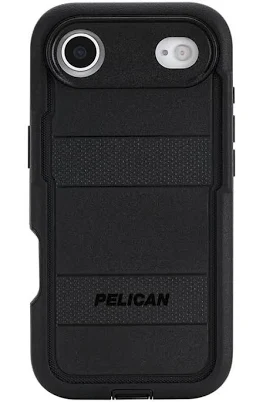
Pelican · Waterproof Smartphone Cases
Pelican Protector MagSafe Case iPhone 17
No coating described, and no PFAS statement from the brand.
The product information we reviewed describes thermoplastic elastomer (TPE) or polycarbonate blend, with no water-repellent coating named. Water resistance on products like this usually comes from the material and its seals rather than a surface treatment. The brand has published no PFAS statement for it.
We flunk more products than we pass. This one earned its grade. How we grade
Material
Thermoplastic elastomer (TPE) or polycarbonate blend
Lab data
No public lab test
You may also be interested in
Top-graded picks in the categories readers replace first, every one scored on the same rubric.

- polypropylene filter housing, carbon/sediment cartridge
- We found no PFAS statement from the brand
- Bacterial growth in spent cartridges
3 hazards checked on this product, all on its full breakdown.

Aquasure
Premier Series 75 GPD Under Sink Reverse Osmosis Water Filtration System
- RO membrane, carbon filters, stainless steel housing
- We found no PFAS statement from the brand
- Bacterial and microbial growth in housing and filters
4 hazards checked on this product, all on its full breakdown.

Avocado
Vegan Mattress
- organic cotton, natural latex, coconut coir, recycled steel coils
- The brand calls it PFAS-free, which we have not verified
- Heavy metals
2 hazards checked on this product, all on its full breakdown.
What Pelican Protector MagSafe Case iPhone 17 is made of, ingredients and materials
This case uses a thermoplastic elastomer (TPE) and polycarbonate blend, two common polymers chosen for shock absorption and rigidity. TPE is a rubber-like plastic that softens under moderate heat but remains stable at normal use temperatures; polycarbonate adds scratch resistance and structural integrity. Neither material is known to leach significant chemicals into food or skin contact under normal phone-case conditions, and the sealed design prevents direct material contact with your device or skin for extended periods.
What’s concerning
Category baseline
The starting point for this type of product, before anything specific to this product is counted.
No PFAS disclosure
No public statement from the brand about PFAS in this product.
Off-gassing or volatile organic compounds (VOCs)
Any polymer case can emit trace VOCs when new or exposed to heat, though TPE and polycarbonate blends produce far less off-gassing than cheaper PVC alternatives. Airing the case out for a few hours after purchase and storing it away from direct sunlight and heat will minimize any odor or emission exposure.
Degradation of seals or gaskets over time
Rubber and TPE seals in waterproof cases can degrade with age, UV exposure, or repeated thermal cycling, reducing water resistance but not creating acute chemical hazards. Regular inspection of the seal and gasket condition is more relevant to functional performance than to safety, but replacement may be needed within 2-3 years of heavy use.
Microabrasion or microplastic shedding from friction
Over extended use, TPE and polycarbonate surfaces may shed microscopic particles due to wear against your phone or other objects. The quantity is low and unlikely to pose a direct health risk, but users concerned about microplastic accumulation should consider rotating cases or cleaning the interior periodically.
What’s reassuring
Base material not linked to PFAS
The main material recorded for this product is not one associated with PFAS.
BPA & bisphenols
Modern TPE and polycarbonate formulations used in protective cases typically do not rely on phthalate plasticizers or BPA. No leaching incidents or regulatory findings specific to Pelican phone cases have been reported, and the material types used here are not associated with this hazard in established literature.
Source, FDA ↗Heavy metals
Pelican cases are typically injection-molded with standard colorants; no reports of lead, cadmium, or other heavy metals in phone case pigments from this brand exist. This hazard is more common in ceramics or painted coatings than in injection-molded plastics, and Pelican does not use enamel or ceramic coatings on phone cases.
Source, FDA ↗How is this PFAS grade calculated?
The brand's record and disclosure
Pelican is known for rugged, protective cases and gear with a long track record in professional and consumer markets. The brand has not made explicit public statements about PFAS, BPA, or chemical compliance in its phone cases, which is typical for mainstream case manufacturers but leaves buyers without third-party certification reassurance. No major recalls or contamination incidents involving Pelican phone cases have been publicly reported. The lack of transparency is neither unusual nor a red flag for this product category, but it does mean you are relying on general material safety standards rather than brand commitment.
How it compares in its category
Waterproof phone cases typically rely on seals and material density rather than chemical coatings to achieve water resistance, and this product follows that pattern. TPE and polycarbonate are mainstream choices in mid-to-premium protective cases; they are less prone to off-gassing than some cheaper PVC-based alternatives. Many competitors use similar material blends without additional transparency, so Pelican sits in the middle of the category on both safety profile and disclosure practices. Silicone-based cases may feel slightly softer but offer comparable chemical safety; hard polycarbonate-only cases are more rigid but less shock-absorbing.
If you buy it
Keep the case away from prolonged direct heat above 60°C (140°F), as TPE can soften and polycarbonate may warp. Clean with mild soap and water; avoid solvents or harsh chemicals that could degrade the material bond. If the seal or case body shows cracks, peeling, or discoloration after heavy use, replacement is warranted to maintain waterproof protection. Store in a cool, dry place; UV exposure over months or years can gradually make polycarbonate brittle, though this is a durability issue rather than a chemical safety concern.
What is not known about PFAS in this product?
- Basis
- Model estimate, 42% confidence, not a lab result
- Lab test
- None on record for this exact product
- Brand statement
- Pelican has made a specific claim
Formulations change between production runs, so check the current label. How we grade.
More waterproof smartphone cases grades
How we score, every product runs through the same public 0-100 rubric based on materials, coatings, brand disclosure, lab findings, and recalls. See the full methodology → Spotted a mistake? Report an error.