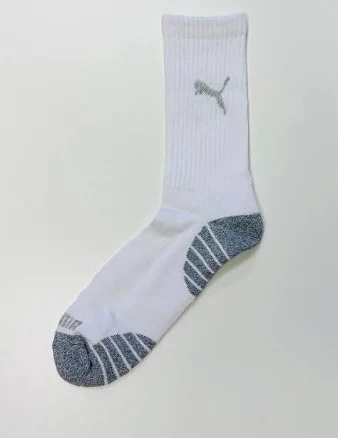
Puma · Sports Performance Undergarments
PUMA Men's DryCell Crew Socks (8 Pair)
Lower concern socks. No known PFAS risk in standard construction.
Basic crew socks with moisture-wicking finish have no water-repellent or stain-resistant claims typically requiring PFAS. Puma doesn't disclose PFAS practices for this product.
Still want this one anyway? Check the price on Amazon. We’d swap it.
Material
Cotton/polyester blend, DryCell moisture-wicking treatment
Lab data
No public lab test
You may also be interested in
Top-graded picks in the categories readers replace first, every one scored on the same rubric.

- polypropylene filter housing, carbon/sediment cartridge
- We found no PFAS statement from the brand
- Bacterial growth in spent cartridges
3 hazards checked on this product, all on its full breakdown.

Aquasure
Premier Series 75 GPD Under Sink Reverse Osmosis Water Filtration System
- RO membrane, carbon filters, stainless steel housing
- We found no PFAS statement from the brand
- Bacterial and microbial growth in housing and filters
4 hazards checked on this product, all on its full breakdown.

Avocado
Vegan Mattress
- organic cotton, natural latex, coconut coir, recycled steel coils
- The brand calls it PFAS-free, which we have not verified
- Heavy metals
2 hazards checked on this product, all on its full breakdown.
What PUMA Men's DryCell Crew Socks (8 Pair) is made of, ingredients and materials
PUMA DryCell crew socks are a cotton-polyester blend, with the polyester component providing durability and the cotton offering comfort and breathability. The DryCell treatment is a moisture-wicking finish applied to move sweat away from skin; this is a mechanical/physical property rather than a chemical coating with known toxicity concerns. Polyester in apparel carries theoretical risk of antimony catalysts and azo dyes, but textiles at this price point typically use standard, regulated dyes in major markets.
What’s concerning
Category baseline
The starting point for this type of product, before anything specific to this product is counted.
No PFAS disclosure
No public statement from the brand about PFAS in this product.
Azo dyes and colorfast stability
Polyester-cotton blend socks are conventionally dyed; regulated azo dyes are permitted in US and EU apparel, but quality control varies by factory. No specific recall or contamination reported for PUMA DryCell socks.
Antimony in polyester
Antimony trioxide is a common catalyst in polyester production. Consumer-grade socks contain residual antimony in trace amounts; exposure risk through skin contact is considered minimal by regulatory bodies but not zero.
Dye migration and skin irritation
Dark-colored cotton-polyester socks can release unfixed dyes in early washes, especially in warm or chlorinated water. This is a comfort/contact issue rather than systemic toxicity.
What’s reassuring
Base material not linked to PFAS
The main material recorded for this product is not one associated with PFAS.
Formaldehyde / VOCs
DryCell moisture-wicking finish is not marketed as a formaldehyde-releasing resin. No evidence of formaldehyde use in this product line's standard manufacturing.
Source, ATSDR ↗Microfiber shedding from polyester
Polyester apparel sheds microfibers during wear and washing, but socks shed less than typical fleece or synthetic jackets. No specific hazard data for PUMA DryCell sock microfiber composition.
How is this PFAS grade calculated?
The brand's record and disclosure
PUMA does not publicly disclose detailed chemical composition or independent third-party certifications (e.g., OEKO-TEX, Bluesign) for this standard athletic sock line, which is typical for mass-market sportswear. The brand has faced scrutiny on labor and supply-chain transparency but no major chemical safety recalls or warnings specific to DryCell socks. PUMA maintains general compliance with EU and US apparel regulations but does not volunteer full restricted substance lists for individual products.
How it compares in its category
Standard cotton-polyester athletic socks like these sit in the mainstream safety tier. Certified organic cotton or OEKO-TEX certified alternatives (e.g., some Smartwool or specialty brands) offer higher chemical transparency but cost more. PUMA DryCell socks are materially similar to competitors at the same price point (Nike, Adidas, Under Armour basic athletic socks) with no documented safety advantage or disadvantage.
If you buy it
Wash in cool to warm water before first wear to reduce any loose dye or finishes. Avoid chlorine bleach, which can degrade polyester and may interact with finishing treatments. Replace when elastic fails or material pilling accelerates (typically 1-2 years of regular use). Dry normally; high heat is not necessary and can stress polyester fibers.
What is not known about PFAS in this product?
- Basis
- Model estimate, 72% confidence, not a lab result
- Lab test
- None on record for this exact product
- Brand statement
- Puma has made a specific claim
Formulations change between production runs, so check the current label. How we grade.
More sports performance undergarments grades
How we score, every product runs through the same public 0-100 rubric based on materials, coatings, brand disclosure, lab findings, and recalls. See the full methodology → Spotted a mistake? Report an error.