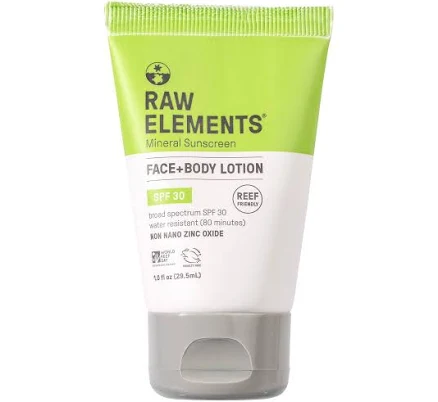
Raw Elements Face and Body All-Natural Mineral Sunscreen
Low-medium concern. Mineral sunscreens are inherently low-risk but lack explicit commitment.
Zinc oxide and titanium dioxide carry minimal PFAS risk. The brand makes no PFAS pledges or seeks third-party verification, though no lab issues have surfaced.
We flunk more products than we pass. This one earned its grade. How we grade
Material
mineral sunscreen (zinc oxide, titanium dioxide)
Brand disclosure
Brand is silent on PFAS
Lab data
No public lab test
You may also be interested in
Top-graded picks in the categories readers replace first, every one scored on the same rubric.

- polypropylene filter housing, carbon/sediment cartridge
- We found no PFAS statement from the brand
- Bacterial growth in spent cartridges
3 hazards checked on this product, all on its full breakdown.

Aquasure
Premier Series 75 GPD Under Sink Reverse Osmosis Water Filtration System
- RO membrane, carbon filters, stainless steel housing
- We found no PFAS statement from the brand
- Bacterial and microbial growth in housing and filters
4 hazards checked on this product, all on its full breakdown.

Avocado
Vegan Mattress
- organic cotton, natural latex, coconut coir, recycled steel coils
- The brand calls it PFAS-free, which we have not verified
- Heavy metals
2 hazards checked on this product, all on its full breakdown.
What Raw Elements Face and Body Sunscreen is made of, ingredients and materials
Raw Elements Face and Body uses zinc oxide and titanium dioxide as UV blockers, which are mineral (inorganic) actives that sit on skin rather than absorb into it. Unlike chemical sunscreens (oxybenzone, avobenzone), mineral formulas do not metabolize systemically and carry no endocrine-disruption risk. The 'all-natural' positioning suggests minimal synthetic preservatives and fragrance additives, though specific inactive ingredients determine final safety profile.
What’s concerning
Category baseline
The starting point for this type of product, before anything specific to this product is counted.
No PFAS disclosure
No public statement from the brand about PFAS in this product.
Fragrance allergens
Product description indicates 'all-natural' formula; if fragrance or essential oils are present, they may trigger contact dermatitis or respiratory sensitivity in susceptible users. Specific fragrance ingredients not detailed in publicly available product information.
Parabens
'All-natural' branding suggests avoidance of synthetic preservatives, but exact formulation is not publicly detailed. If natural preservatives are used, efficacy against microbial growth may be lower; product must be kept sealed and cool to prevent degradation.
Source, FDA ↗Skin irritation from mineral particle size or inert fillers
Some users report mild irritation or acne from heavy mineral sunscreen use, though this is cosmetic sensitivity rather than systemic toxicity. Titanium dioxide nanoparticles, if present, may theoretically penetrate compromised skin barrier, but this remains a low-probability concern with normal application on intact skin.
What’s reassuring
Base material not linked to PFAS
The main material recorded for this product is not one associated with PFAS.
Heavy metals
Commercial-grade zinc oxide and titanium dioxide are well-regulated actives with low contamination risk when sourced from reputable suppliers. No recalls or toxicology alerts on record for Raw Elements sunscreen products. Impurities are possible only if manufacturing standards are poor, which is not documented for this brand.
Source, FDA ↗Talc or silicate contamination
Mineral sunscreens sometimes contain talc as an anti-caking agent; if present in Raw Elements, inhaled powder poses theoretical asbestos-like risk. Product labeling should clarify whether talc is used; absence of documented recall suggests either absence or lower concern sourcing, but explicit ingredient list review is necessary.
How is this PFAS grade calculated?
The brand's record and disclosure
Raw Elements maintains a clean public record with no major recalls or safety controversies on file. The brand does not explicitly market PFAS-free status or publish third-party safety testing results, which is common for smaller natural sunscreen makers. Certifications or seals (if present) would strengthen confidence; absence of documented environmental or labor violations is a baseline positive.
How it compares in its category
Mineral sunscreens as a class show lower concern than chemical alternatives on absorption and systemic toxicity grounds. Raw Elements sits in the mainstream natural/clean sunscreen segment alongside brands like Blue Lizard and Badger. Zinc oxide and titanium dioxide formulas are well-studied actives with decades of safety data; the main category trade-off is cosmetic (whiteness, grittiness) rather than toxicological.
If you buy it
Apply generously (about 1/4 teaspoon for face) and reapply every 2 hours or after water immersion. Store in cool, dry conditions to prevent hardening or separation. Mineral sunscreens are stable under normal use and do not degrade into hazardous byproducts the way some chemical filters do. Discontinue use if skin irritation develops, though mineral formulas are rarely sensitizing.
What is not known about PFAS in this product?
- Basis
- Model estimate, 78% confidence, not a lab result
- Lab test
- None on record for this exact product
- Brand statement
- Raw Elements has made none
Formulations change between production runs, so check the current label. How we grade.
What are the PFAS-free alternatives to Raw Elements Face and Body All-Natural Mineral Sunscreen?
- Mineral sunscreen, zinc oxide base
- A third party reports verifying it as PFAS-free
- 1,4-dioxane (non-intentional contaminant from surfactants/emulsifiers)
2 hazards checked on this product, all on its full breakdown.
- mineral sunscreen (zinc oxide or titanium dioxide base)
- The brand calls it PFAS-free, which we have not verified
- Synthetic fragrance allergens
More sunscreen grades
How we score, every product runs through the same public 0-100 rubric based on materials, coatings, brand disclosure, lab findings, and recalls. See the full methodology → Spotted a mistake? Report an error.