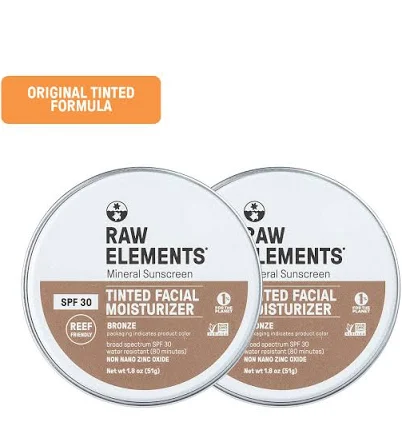
Raw Elements Tinted Face Moisturizer SPF 30
Low-medium concern. Mineral SPF rarely needs PFAS, but brand silence leaves some uncertainty.
Mineral UV filters don't typically need fluorochemical coatings or water-repellent treatments. The brand offers no PFAS claims or verification, though no public concerns exist.
We flunk more products than we pass. This one earned its grade. How we grade
Material
mineral sunscreen (zinc oxide/titanium dioxide), water-based moisturizer
Brand disclosure
Brand is silent on PFAS
Lab data
No public lab test
You may also be interested in
Top-graded picks in the categories readers replace first, every one scored on the same rubric.

- polypropylene filter housing, carbon/sediment cartridge
- We found no PFAS statement from the brand
- Bacterial growth in spent cartridges
3 hazards checked on this product, all on its full breakdown.

Aquasure
Premier Series 75 GPD Under Sink Reverse Osmosis Water Filtration System
- RO membrane, carbon filters, stainless steel housing
- We found no PFAS statement from the brand
- Bacterial and microbial growth in housing and filters
4 hazards checked on this product, all on its full breakdown.

Avocado
Vegan Mattress
- organic cotton, natural latex, coconut coir, recycled steel coils
- The brand calls it PFAS-free, which we have not verified
- Heavy metals
2 hazards checked on this product, all on its full breakdown.
What Raw Elements Tinted Face Moisturizer SPF is made of, ingredients and materials
Raw Elements Tinted Face Moisturizer SPF 30 uses zinc oxide and titanium dioxide as UV filters, both mineral actives that sit on skin rather than absorb into it, making systemic toxicity unlikely. The water-based moisturizer base avoids common synthetic UV absorbers (avobenzone, oxybenzone) that carry endocrine-disruption concerns. Mineral sunscreens of this type have a long safety history and do not require PFAS-based water-repellent additives, though absence of PFAS certification from the brand leaves sourcing slightly opaque.
What’s concerning
Category baseline
The starting point for this type of product, before anything specific to this product is counted.
No PFAS disclosure
No public statement from the brand about PFAS in this product.
Fragrance allergens
Product labeling does not explicitly state 'fragrance-free' status; if essential oils or synthetic fragrance are present, they may trigger contact dermatitis in sensitive individuals. This is a minor concern specific to facial use and formulation transparency rather than a systemic hazard.
What’s reassuring
Base material not linked to PFAS
The main material recorded for this product is not one associated with PFAS.
Heavy metals
Iron oxides used for tint in this formula are FDA-approved colorants with no established contamination history in reputable manufacturers. Raw Elements has not disclosed third-party heavy metal testing of their tinted product, leaving a small data gap; however, iron oxide-based tints are among the lowest-risk pigment options.
Source, FDA ↗Mineral UV filter particle size and respiratory risk
Zinc oxide and titanium dioxide in sunscreen formulas are not classified as inhaled hazards at cosmetic use scale (applied topically, not aerosolized). No particle-size specifications are published by Raw Elements, but nano-sized particles, if present, would not pose significant dermal absorption risk given the occlusive nature of mineral filters.
Formaldehyde / VOCs
No formaldehyde-donors (e.g., imidazolidinyl urea, dmdm hydantoin) are listed in available product ingredient disclosures for this moisturizer base. Preservative system is not detailed publicly, leaving a minor transparency gap, but standard water-based moisturizers rarely rely on formaldehyde releasers.
Source, ATSDR ↗Coating damage and zinc oxide migration over time
This is a topical moisturizer, not cookware or food-contact equipment; zinc oxide does not leach into food or bloodstream from skin application. Stability of the tinted formula over shelf life is not publicly tested, but mineral sunscreens are chemically stable and do not degrade into hazardous byproducts.
How is this PFAS grade calculated?
The brand's record and disclosure
Raw Elements is a smaller, natural-focused sunscreen brand with no major recalls or established safety violations on record. The brand does not publish third-party testing results or formal certifications (e.g., EWG Verified, NSF), and has not publicly committed to PFAS-free sourcing, which limits independent verification of ingredient supply chains. No documented controversies or formulation changes exist in publicly available safety databases. The lack of proactive transparency is typical of mid-market natural brands but differs from market leaders in sunscreen safety communication.
How it compares in its category
Mineral-only sunscreens like this sit in the lower-hazard segment; they avoid systemic absorption issues tied to chemical UV absorbers and do not typically require PFAS water-repellents. Most mineral SPF 30 moisturizers carry similar safety profiles; Raw Elements' tinted formula adds iron oxides for color, a cosmetic pigment with no established safety concern in this use. This product has a lower hazard profile compared to combination (hybrid) sunscreens that blend mineral and chemical actives, and a comparable hazard profile to other mineral-only alternatives.
If you buy it
Store in a cool, dry place away from direct heat; mineral sunscreens are stable but tinted formulas with iron oxides may separate if overheated. Use the full recommended amount (about 1/4 teaspoon for face) for labeled SPF protection; underapplication is a common usage error that undermines efficacy. Reapply every two hours if swimming or sweating, or after towel drying. Discontinue use if rash, redness, or irritation develops, though allergic reactions to zinc oxide or titanium dioxide are rare.
What is not known about PFAS in this product?
- Basis
- Model estimate, 72% confidence, not a lab result
- Lab test
- None on record for this exact product
- Brand statement
- Raw Elements has made none
Formulations change between production runs, so check the current label. How we grade.
What are the PFAS-free alternatives to Raw Elements Tinted Face Moisturizer SPF 30?
- Mineral sunscreen, zinc oxide base
- A third party reports verifying it as PFAS-free
- 1,4-dioxane (non-intentional contaminant from surfactants/emulsifiers)
2 hazards checked on this product, all on its full breakdown.
- mineral sunscreen (zinc oxide or titanium dioxide base)
- The brand calls it PFAS-free, which we have not verified
- Synthetic fragrance allergens
More sunscreen grades
How we score, every product runs through the same public 0-100 rubric based on materials, coatings, brand disclosure, lab findings, and recalls. See the full methodology → Spotted a mistake? Report an error.