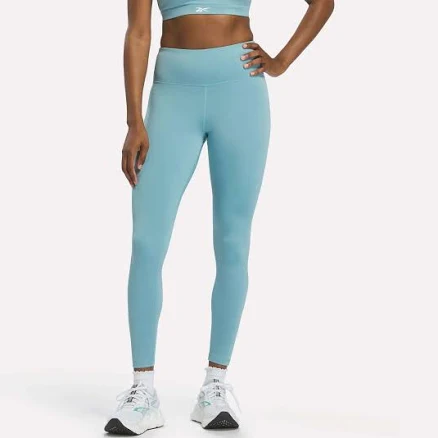
Reebok Women's Core High-Rise Leggings
Lower concern. Standard athletic leggings without waterproof coating.
Reebok's core leggings are nylon/polyester blend without advertised water-repellent treatment. No PFAS claims or third-party verification available, but material composition suggests lower risk than water-repellent coating-treated athletic wear.
Still want this one anyway? Check the price on Amazon. We’d swap it.
Material
Nylon/polyester blend, no noted water-repellent coating treatment
Lab data
No public lab test
You may also be interested in
Top-graded picks in the categories readers replace first, every one scored on the same rubric.

- polypropylene filter housing, carbon/sediment cartridge
- We found no PFAS statement from the brand
- Bacterial growth in spent cartridges
3 hazards checked on this product, all on its full breakdown.

Aquasure
Premier Series 75 GPD Under Sink Reverse Osmosis Water Filtration System
- RO membrane, carbon filters, stainless steel housing
- We found no PFAS statement from the brand
- Bacterial and microbial growth in housing and filters
4 hazards checked on this product, all on its full breakdown.

Avocado
Vegan Mattress
- organic cotton, natural latex, coconut coir, recycled steel coils
- The brand calls it PFAS-free, which we have not verified
- Heavy metals
2 hazards checked on this product, all on its full breakdown.
What Reebok Women's Core High-Rise Leggings is made of, ingredients and materials
Reebok's Core High-Rise Leggings use a nylon/polyester blend, a conventional choice in athletic wear that balances stretch, durability, and moisture management. Neither material inherently poses significant chemical risk in finished garments when manufactured to standard; nylon is inert once polymerized, and polyester does not leach plastic monomers under normal body-temperature wear. The lack of noted water-repellent (water-repellent coating) finish means no fluorinated compounds are used for stain resistance, reducing PFAS exposure compared to treated performance gear. No glazes, coatings, or specialty finishes are typical for basic athletic leggings, limiting degradation pathways.
What’s concerning
Category baseline
The starting point for this type of product, before anything specific to this product is counted.
No PFAS disclosure
No public statement from the brand about PFAS in this product.
Formaldehyde / VOCs
Basic athletic leggings may contain trace formaldehyde-based resins used in fabric finishing for wrinkle resistance or crease-setting during manufacturing. Reebok does not disclose finish chemistry; standard practice suggests low concentrations, but uncoated nylon/polyester blends typically require minimal resin treatment, keeping risk low.
Source, ATSDR ↗Azo dyes and colorfast agents
The dye chemistry for any colored Reebok leggings is not publicly specified. Standard azo dyes in athletic wear are tested for carcinogenic breakdown products, but non-certified manufacturers may not restrict the most problematic azo classes; pre-wash is a reasonable precaution.
Antimony in polyester
Polyester fibers are sometimes polymerized using antimony trioxide as a catalyst. Finished polyester fabric does not shed antimony under normal wear, but legacy manufacturing or cost-cutting suppliers may use higher antimony levels; Reebok's supplier practices are not transparent.
Microplastic shedding
All polyester/nylon blends shed microfibers during washing, a known environmental concern rather than direct wearer hazard. Reebok Core leggings are standard in this respect; use a microfiber-catching laundry bag to reduce environmental release.
What’s reassuring
Base material not linked to PFAS
The main material recorded for this product is not one associated with PFAS.
Heavy metals
No documented cases of excessive lead or cadmium in Reebok legging elastic or seam reinforcements. Synthetic elastane and polyester trim are low-risk for metal accumulation in typical brands meeting basic apparel standards.
Source, FDA ↗How is this PFAS grade calculated?
The brand's record and disclosure
Reebok (owned by Authentic Brands Group as of 2022) does not maintain a publicly visible chemical disclosure framework or restricted substances list comparable to some competitors. The brand has not faced major documented recalls or chemical safety controversies specific to basic apparel lines. Industry data suggests Reebok's Asian manufacturing chain meets baseline OEKO-TEX or similar compliance, but transparency on dye chemistry, formaldehyde resins, or antimony content in polyester is not voluntarily published. For consumers seeking detailed supply-chain safety, Reebok offers less visibility than premium brands.
How it compares in its category
Reebok Core leggings represent the mainstream athletic wear segment, functional, uncoated, and chemically straightforward. They compare favorably to waterproofed or flame-retardant performance fabrics, which introduce PFAS or brominated additives. Versus organic/certified alternatives (GOTS cotton blends, OEKO-TEX certified nylon), standard Reebok leggings lack third-party chemical certification, introducing slightly higher residual uncertainty around dye or finishing residues. Price-wise and concern-wise, they occupy the reasonable middle, no premium price, but no documented red flags either.
If you buy it
Wash in cool water before first wear to remove any residual manufacturing dust or finishes. Machine wash cold on gentle cycles; polyester and nylon tolerate regular laundering without chemical release. Avoid high heat (dryers above 130F) as prolonged heat can degrade nylon slightly, though leggings are not designed for extreme conditions. Replace when elastic loses recovery or seams fray; typical lifespan is 2-3 years with normal gym use. No special handling required beyond standard athletic care.
What is not known about PFAS in this product?
- Basis
- Model estimate, 72% confidence, not a lab result
- Lab test
- None on record for this exact product
- Brand statement
- Reebok has made a specific claim
Formulations change between production runs, so check the current label. How we grade.
More activewear grades
How we score, every product runs through the same public 0-100 rubric based on materials, coatings, brand disclosure, lab findings, and recalls. See the full methodology → Spotted a mistake? Report an error.