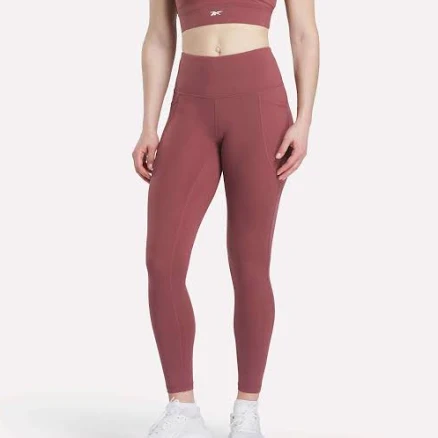
Reebok Women's High-Rise Leggings
Standard leggings, lower concern without special treatments.
Basic polyester-nylon leggings with no reported waterproof or stain-resistant coating. No public PFAS claims or third-party verification available.
Still want this one anyway? Check the price on Amazon. We’d swap it.
Material
polyester nylon blend, standard construction
Lab data
No public lab test
You may also be interested in
Top-graded picks in the categories readers replace first, every one scored on the same rubric.

- polypropylene filter housing, carbon/sediment cartridge
- We found no PFAS statement from the brand
- Bacterial growth in spent cartridges
3 hazards checked on this product, all on its full breakdown.

Aquasure
Premier Series 75 GPD Under Sink Reverse Osmosis Water Filtration System
- RO membrane, carbon filters, stainless steel housing
- We found no PFAS statement from the brand
- Bacterial and microbial growth in housing and filters
4 hazards checked on this product, all on its full breakdown.

Avocado
Vegan Mattress
- organic cotton, natural latex, coconut coir, recycled steel coils
- The brand calls it PFAS-free, which we have not verified
- Heavy metals
2 hazards checked on this product, all on its full breakdown.
What Reebok Women's High-Rise Leggings is made of, ingredients and materials
Reebok Women's High-Rise Leggings are polyester-nylon blend fabric, a common synthetic combination chosen for stretch, durability, and moisture-wicking properties. Polyester is a plastic polymer that does not degrade readily in wear, and nylon adds elasticity without requiring heavy elastic threading at waistbands. Neither material inherently off-gasses formaldehyde or volatile organics at body-temperature wear, both are thermally stable unless subjected to high heat (above 140°C/284°F during care). The blend itself carries lower chemical processing burden than some natural-fiber dyes or finishes.
What’s concerning
Category baseline
The starting point for this type of product, before anything specific to this product is counted.
No PFAS disclosure
No public statement from the brand about PFAS in this product.
Azo dyes and colorant allergens
Polyester textiles are typically fiber-reactive or disperse dyed; disperse dyes can occasionally trigger contact dermatitis in sensitive skin, though no specific sensitization recalls for Reebok leggings are on record. Standard washing reduces this risk significantly.
Microplastic shedding
Polyester-nylon blends shed microfibers during washing and wear; this is a known environmental concern, not a direct wearer hazard, but repeated washing in warm/hot water accelerates fiber loss and potential inhalation during dryer use.
Cadmium
Dark-colored synthetic textiles may use heavy-metal-containing pigments in some supply chains; Reebok does not publicly disclose pigment sourcing, so cadmium or lead presence cannot be ruled out but is not known to be a problem in their product line specifically.
Source, ATSDR ↗What’s reassuring
Base material not linked to PFAS
The main material recorded for this product is not one associated with PFAS.
Formaldehyde / VOCs
Polyester does not require formaldehyde-based wrinkle-resist finishes like cotton does. No evidence of formaldehyde treatment in Reebok's standard athletic leggings; this hazard class is low concern for this material type.
Source, ATSDR ↗Antimony in polyester
Antimony is occasionally used as a polymerization catalyst in polyester production, but remains bound in the finished fiber matrix and does not leach into skin or wash water under normal wear conditions. No specific antimony contamination reports for Reebok apparel exist.
How is this PFAS grade calculated?
The brand's record and disclosure
Reebok has not published detailed chemical disclosure policies or certifications (such as OEKO-TEX or bluesign) for this product line as publicly available information. The brand has faced occasional labor and sustainability criticism over the years, but no major chemical safety recalls or exposures specific to apparel have been widely documented. Reebok is owned by Authentic Brands Group (following Adidas divestment) and does not actively trumpet restricted-substance commitments the way some competitors do, indicating a silent-on-disclosure posture rather than a 'transparent-best-practice' one.
How it compares in its category
Standard polyester-nylon leggings are the norm in mass-market athletic wear and carry similar chemical profiles across brands (Nike, Lululemon, Gymshark). Premium brands often add certifications or flame-retardant disclaimers; Reebok's lack of visible certification means it likely uses baseline dyes and finishes without premium additive scrutiny. The material choice itself is neither above nor below industry average for safety, making this a typical mid-market product with no standout chemical advantage or disadvantage versus comparable competitors.
If you buy it
Wash in cool water (below 40°C/104°F) and avoid high-heat dryers, as synthetic blends can degrade and shed microfibers more readily with thermal stress. Do not dry-clean; standard machine washing is sufficient and presents lower concern. Inspect seams and elastic panels after 50-100 wears for pilling, thinning, or degradation that would warrant replacement. If worn against sensitive skin, first wash before wearing to reduce any residual dyes or finishes; no special treatment is needed beyond standard athletic-wear care.
What is not known about PFAS in this product?
- Basis
- Model estimate, 72% confidence, not a lab result
- Lab test
- None on record for this exact product
- Brand statement
- Reebok has made a specific claim
Formulations change between production runs, so check the current label. How we grade.
More activewear grades
How we score, every product runs through the same public 0-100 rubric based on materials, coatings, brand disclosure, lab findings, and recalls. See the full methodology → Spotted a mistake? Report an error.