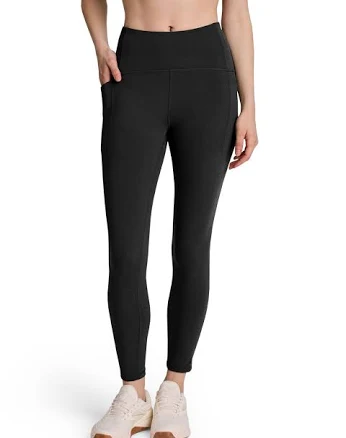
Reebok Women's Reflex High Rise 7/8 Legging
Lower concern. Standard athletic legging with no waterproofing or coatings.
Reebok's high-rise legging is a polyester-spandex blend with no disclosed water-resistant or stain treatments. No PFAS claims or third-party verification available, but typical base materials carry lower PFAS risk than coated apparel.
Still want this one anyway? Check the price on Amazon. We’d swap it.
Material
polyester, spandex blend
Lab data
No public lab test
You may also be interested in
Top-graded picks in the categories readers replace first, every one scored on the same rubric.

- polypropylene filter housing, carbon/sediment cartridge
- We found no PFAS statement from the brand
- Bacterial growth in spent cartridges
3 hazards checked on this product, all on its full breakdown.

Aquasure
Premier Series 75 GPD Under Sink Reverse Osmosis Water Filtration System
- RO membrane, carbon filters, stainless steel housing
- We found no PFAS statement from the brand
- Bacterial and microbial growth in housing and filters
4 hazards checked on this product, all on its full breakdown.

Avocado
Vegan Mattress
- organic cotton, natural latex, coconut coir, recycled steel coils
- The brand calls it PFAS-free, which we have not verified
- Heavy metals
2 hazards checked on this product, all on its full breakdown.
What Reebok Women's Reflex High Rise Legging is made of, ingredients and materials
This legging is a polyester-spandex blend, the industry standard for stretch athletic wear. Polyester itself is chemically stable and does not leach into skin under normal wear. Spandex (elastane) adds stretch recovery and is also inert in finished garments. The primary manufacturing concern for this material class is residual chemicals from production and finishing, not the polymers themselves once the garment is complete and washed.
What’s concerning
Category baseline
The starting point for this type of product, before anything specific to this product is counted.
No PFAS disclosure
No public statement from the brand about PFAS in this product.
Azo dyes and residual dye chemicals
Black and dark-colored polyester garments may contain azo dyes, some of which can release carcinogenic amines under prolonged sweat or heat exposure. No specific test data is published for this product, but the risk is inherent to dark polyester dyeing. Pre-wash mitigates initial dye bleed.
Formaldehyde / VOCs
Polyester fabric finishes sometimes use formaldehyde-based resins for wrinkle resistance or color fastness. The garment is unlikely to off-gas significantly after manufacture and washing, but residual formaldehyde in new clothing is a known possible exposure in polyester knits. This product carries no third-party test certification ruling it out.
Source, ATSDR ↗Spandex degradation and microfiber shedding
Repeated washing and wear break down spandex fibers, releasing microfibers into wash water and the environment. This is a material-class issue affecting all synthetic leggings, not unique to Reebok. The health impact on the wearer from shedding is negligible; environmental persistence is the primary concern.
What’s reassuring
Base material not linked to PFAS
The main material recorded for this product is not one associated with PFAS.
Antimony in polyester (catalyst residue)
Antimony is used as a catalyst during polyester polymerization and can remain as trace residue. Skin contact with finished garments poses minimal risk because antimony is not absorbed through intact skin, and no recall or hazard report targets Reebok leggings specifically.
Heavy metals
Some industrial dyes contain lead or cadmium, though use has declined in compliant manufacturers. No published test data or recall implicates this product in heavy-metal contamination. Reebok's sourcing practices are not publicly transparent on this metric.
Source, FDA ↗How is this PFAS grade calculated?
The brand's record and disclosure
Reebok (owned by Authentic Brands Group as of 2021) has no publicly documented chemical disclosures or certifications (such as Bluesign, GOTS, or OEKO-TEX) for this specific product line. The brand's stance on PFAS and other restricted substances is not prominently transparent in public statements. No significant recalls or toxicity allegations involving Reebok athletic leggings are on record in consumer safety databases.
How it compares in its category
Polyester-spandex leggings are the norm across athletic brands (Nike, Lululemon, Gymshark). This product sits in the mid-market segment without specialized certifications that some premium competitors (Patagonia, Allbirds) emphasize. The lack of special coatings, waterproofing, or antimicrobial finishes actually reduces hazard surface compared to some performance-enhanced alternatives.
If you buy it
Wash before first wear to remove any residual finish and dye particles. Machine wash warm (not hot) to preserve the spandex elasticity, and avoid fabric softeners which can degrade stretch fibers. Air dry to prevent heat-induced shrinkage and elastane breakdown. Replace when the fabric loses shape or shows pilling, typically after 50-100 wears depending on care; spandex degrades gradually and cannot be restored.
What is not known about PFAS in this product?
- Basis
- Model estimate, 72% confidence, not a lab result
- Lab test
- None on record for this exact product
- Brand statement
- Reebok has made a specific claim
Formulations change between production runs, so check the current label. How we grade.
More activewear grades
How we score, every product runs through the same public 0-100 rubric based on materials, coatings, brand disclosure, lab findings, and recalls. See the full methodology → Spotted a mistake? Report an error.