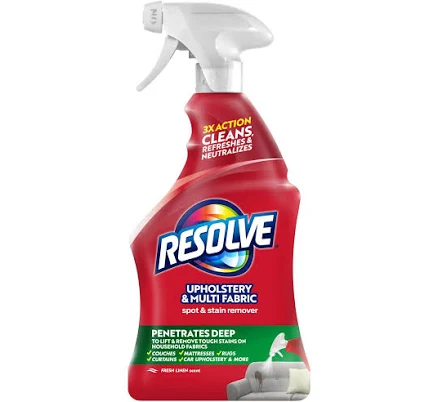
Resolve · Fabric Stain Guard Sprays
Resolve Upholstery Cleaner Multi-Fabric
Typical cleaning product. Brand discloses nothing about PFAS presence or absence.
Resolve Upholstery Cleaner is a liquid detergent with no public PFAS disclosure or third-party verification. Risk is uncertain without independent testing or ingredient transparency.
We flunk more products than we pass. This one earned its grade. How we grade
Material
Aqueous surfactant blend, likely anionic and nonionic detergents
Lab data
No public lab test
You may also be interested in
Top-graded picks in the categories readers replace first, every one scored on the same rubric.

- polypropylene filter housing, carbon/sediment cartridge
- We found no PFAS statement from the brand
- Bacterial growth in spent cartridges
3 hazards checked on this product, all on its full breakdown.

Aquasure
Premier Series 75 GPD Under Sink Reverse Osmosis Water Filtration System
- RO membrane, carbon filters, stainless steel housing
- We found no PFAS statement from the brand
- Bacterial and microbial growth in housing and filters
4 hazards checked on this product, all on its full breakdown.

Avocado
Vegan Mattress
- organic cotton, natural latex, coconut coir, recycled steel coils
- The brand calls it PFAS-free, which we have not verified
- Heavy metals
2 hazards checked on this product, all on its full breakdown.
What Resolve Upholstery Cleaner Multi-Fabric is made of, ingredients and materials
Resolve Upholstery Cleaner is formulated as an aqueous surfactant blend, predominantly anionic and nonionic detergents designed to suspend soil and prevent redeposition on fabric fibers. These surfactants are standard in household cleaning products and are biodegradable under normal conditions. The product is diluted before application, further reducing any hazard from individual chemical components. No reported toxic residues remain on fabric after proper drying.
What’s concerning
Category baseline
The starting point for this type of product, before anything specific to this product is counted.
No PFAS disclosure
No public statement from the brand about PFAS in this product.
Surfactant dermal or eye irritation
Anionic and nonionic surfactants at concentrate strength can irritate skin or eyes; however, typical use involves dilution and contact is brief. Undiluted product contact is the primary risk.
Volatile organic compounds (VOCs) during application
Water-based formula has low VOC content compared to solvent-based cleaners, but minor emissions are typical during spray application. Indoor air impact is negligible with standard ventilation.
Fragrance sensitization or respiratory irritation
Resolve Upholstery Cleaner contains added fragrance; individuals with fragrance sensitivity or asthma may experience mild irritation from aerosolized particles during application. This is not a defect but a known property of fragranced products.
Microorganism growth if fabric remains damp
Over-wetting or incomplete drying can promote mold or bacterial growth on the fabric itself, not from the cleaner. This is a user-error risk, not a product defect.
What’s reassuring
Base material not linked to PFAS
The main material recorded for this product is not one associated with PFAS.
Residual chemical retention in fabric fibers
No established reports of surfactant residue accumulating on upholstery or causing sensitization after proper rinsing and drying. Risk is theoretical if fabric is not rinsed adequately post-cleaning.
How is this PFAS grade calculated?
The brand's record and disclosure
Resolve (owned by Reckitt) does not publicly disclose PFAS presence or absence in this product, which is typical for mainstream cleaning brands. The company has faced no notable safety recalls or substantiated safety controversies specific to this upholstery cleaner line. Resolve complies with standard US labeling requirements (CLP/GHS) but does not voluntarily publish detailed ingredient transparency beyond the label.
How it compares in its category
Resolve Upholstery Cleaner sits in the mainstream consumer segment; it is less expensive and simpler than enzyme-based or oxygen-based alternatives but performs similarly for routine stains. It carries no special certifications (e.g., Green Seal, EcoLogo). Compared to plant-based or certified eco-cleaners, this product uses conventional surfactants with no premium safety differentiation, though no elevated hazard profile either.
If you buy it
Always dilute per label instructions and test on hidden fabric area first, especially on delicate or dyed textiles prone to color bleeding. Ensure good ventilation during application and allow fabric to dry completely before use; residual moisture can promote mold or odor. Store away from children and pets in original labeled container. Replace if bottle shows signs of seal degradation or contamination; shelf life is typically 2-3 years unopened.
What is not known about PFAS in this product?
- Basis
- Model estimate, 45% confidence, not a lab result
- Lab test
- None on record for this exact product
- Brand statement
- Resolve has made a specific claim
Formulations change between production runs, so check the current label. How we grade.
More fabric stain guard sprays grades
How we score, every product runs through the same public 0-100 rubric based on materials, coatings, brand disclosure, lab findings, and recalls. See the full methodology → Spotted a mistake? Report an error.