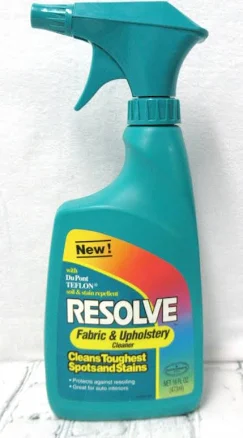
Resolve · Fabric Stain Guard Sprays
Vintage Resolve Fabric And Upholstery Cleaner 16oz Green Bottle 90%
Lower concern as a typical cleaner, but no explicit disclosure.
This water-based detergent solution contains no known Teflon-family coating, nonstick, or water-repellent coating coatings that harbor PFAS. Rinse-off cleaners carry lower risk than water-resistant textiles or nonstick cookware.
We flunk more products than we pass. This one earned its grade. How we grade
Material
Aqueous surfactant-based cleaner solution
Lab data
No public lab test
You may also be interested in
Top-graded picks in the categories readers replace first, every one scored on the same rubric.

- polypropylene filter housing, carbon/sediment cartridge
- We found no PFAS statement from the brand
- Bacterial growth in spent cartridges
3 hazards checked on this product, all on its full breakdown.

Aquasure
Premier Series 75 GPD Under Sink Reverse Osmosis Water Filtration System
- RO membrane, carbon filters, stainless steel housing
- We found no PFAS statement from the brand
- Bacterial and microbial growth in housing and filters
4 hazards checked on this product, all on its full breakdown.

Avocado
Vegan Mattress
- organic cotton, natural latex, coconut coir, recycled steel coils
- The brand calls it PFAS-free, which we have not verified
- Heavy metals
2 hazards checked on this product, all on its full breakdown.
What Vintage Resolve Fabric Green Bottle 90% is made of, ingredients and materials
Vintage Resolve is an aqueous (water-based) surfactant formulation, meaning it relies on soap-like cleaning agents dissolved in water rather than organic solvents or emulsifiers that pose volatility risks. The 90% designation likely refers to the proportion of aqueous carrier and active ingredients relative to inactive components. Surfactant-based cleaners are generally lower hazard than solvent-based alternatives because they do not release volatile organic compounds (VOCs) during use or drying. On fabric, the risk profile depends on residue left after cleaning, which relates to rinsing thoroughness rather than the product chemistry itself.
What’s concerning
No PFAS disclosure
No public statement from the brand about PFAS in this product.
Category baseline
The starting point for this type of product, before anything specific to this product is counted.
Residual surfactant buildup on fabric
Incomplete rinsing can leave surfactant residues on upholstery, which may irritate sensitive skin or attract dirt over time. This is a usage concern rather than a formulation hazard; thorough water rinse mitigates the risk.
Dye or colorfast issues on certain fabrics
Aqueous cleaners can interact with some natural dyes or delicate synthetic fabrics, causing color bleeding or fading. This is fabric-dependent, not inherent to the cleaner formulation. Spot testing before full application is standard practice and mitigates this concern.
Mold or bacterial growth if moisture is not managed
The aqueous base requires thorough drying; excess water left on upholstery or in fabric fibers can promote microbial growth if ventilation is poor or drying time is prolonged. This is an application and storage issue, not a product defect.
What’s reassuring
Base material not linked to PFAS
The main material recorded for this product is not one associated with PFAS.
Fragrance allergens
The green bottle variant is identified as a fragrance-containing product in typical Resolve formulations, but no specific allergen alerts or volatile fragrance compounds are on record for this product. Contact dermatitis is possible in individuals with fragrance sensitivity, though uncommon.
Heavy metals
No reports of lead, cadmium, or other heavy metal contaminants in Resolve fabric cleaners. Aqueous surfactant formulations are not typical vehicles for metal accumulation unless raw materials are contaminated, which is not documented for this brand.
Source, FDA ↗How is this PFAS grade calculated?
The brand's record and disclosure
Resolve (owned by Reckitt Benckiser) does not publicly maintain detailed ingredient disclosures or third-party certifications specific to this fabric cleaner formulation. No major recalls or adverse health alerts are on record for this product. The brand has not made explicit commitments to disclose PFAS use in fabric treatments, though the aqueous base of this cleaner suggests lower likelihood of intentional PFAS inclusion compared to water-resistant fabric guards. Reckitt Benckiser operates under general product safety standards but does not appear to seek eco-label or dermatological certifications for this line.
How it compares in its category
Fabric cleaners in this category span solvent-based (higher VOC, faster drying) and aqueous-based (lower VOC, slower drying, more residue-dependent). Resolve's water-based approach places it in the lower-emission segment, comparable to brands like Folex or Grandma's Secret, though without their eco-certifications. Unlike specialized enzymatic or oxygen-based stain removers, Resolve relies on surfactant action, making it a middle-ground option, effective for routine stains but not specialty treatments. Most fabric cleaners in this price and formulation tier carry no established toxicological red flags if used properly.
If you buy it
Test on a hidden area of fabric first, as some dyes or delicate fibers may be affected. Spray lightly, allow dwell time as directed (usually 5-10 minutes), then blot with a clean cloth and rinse with cool water to remove residue. Do not oversaturate; excess moisture left on fabric can promote mold or mildew. Allow fabric to air dry fully before use. Keep away from children and pets during application, and ensure good ventilation even though VOC risk is low. Replace or discard if the bottle shows separation, cloudiness beyond normal, or is stored below 50F for extended periods, as emulsion breakdown can compromise cleaning performance.
What is not known about PFAS in this product?
- Basis
- Model estimate, 72% confidence, not a lab result
- Lab test
- None on record for this exact product
- Brand statement
- Resolve has made a specific claim
Formulations change between production runs, so check the current label. How we grade.
More fabric stain guard sprays grades
How we score, every product runs through the same public 0-100 rubric based on materials, coatings, brand disclosure, lab findings, and recalls. See the full methodology → Spotted a mistake? Report an error.