Revlon · Nail Polish & Top Coat
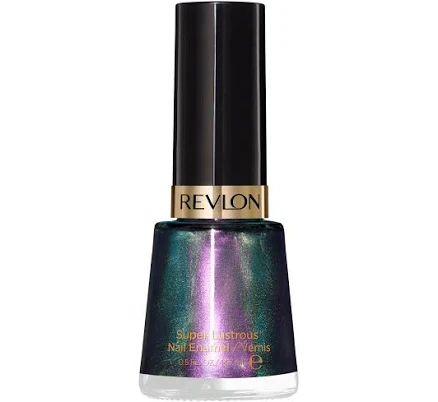
Revlon Holochrome Collection Nail Enamel Amethyst Smoke
Insufficient public data; standard nail enamel is lower-concern but Revlon has not disclosed PFAS avoidance.
Revlon's Holochrome uses conventional nitrocellulose-based lacquer unlikely to contain intentional PFAS, though no explicit brand disclosure or third-party testing exists. No government recalls or public lab detections link to this product.
The better-graded swap
Piggy Paint
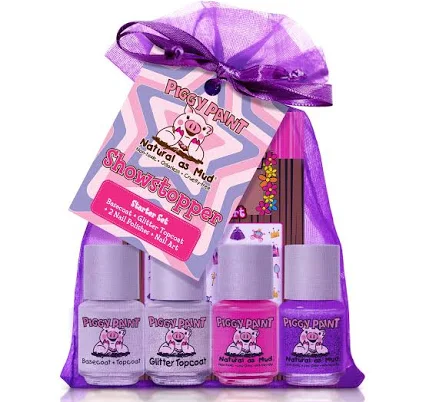
Piggy Paint Showstopper Nail Polish Set
100/100 safety
Same rubric that flunked this product. The swap earned Excellent.
Still want this one anyway? Check the price on Amazon. We’d swap it.
Material
nitrocellulose lacquer base (typical nail enamel)
Lab data
No public lab test
Is Revlon Holochrome Collection Nail Enamel non-toxic? What it is made of
Revlon Holochrome is a nitrocellulose-based lacquer typical of conventional nail polish, formulated with resins, plasticizers, and pigments to create color and durability. The 'holochrome' effect indicates specialized pigment technology (likely mica-based optical particles) rather than a fundamentally different chemistry. Nitrocellulose itself is not a toxicological concern at the concentrations in nail polish, but the solvent package (typically acetone or ethyl acetate) and any heavy metal content in pigments warrant brief scrutiny.
What’s concerning
Category baseline
The starting point for this type of product, before anything specific to this product is counted.
No PFAS disclosure
No public statement from the brand about PFAS in this product.
Volatile organic compounds (VOC) from solvent package
Acetone and other solvents in nail enamel release vapors during application and drying. Exposure is brief and localized but can cause headaches or dizziness in poorly ventilated spaces; standard precaution is cross-ventilation.
Phthalates
Conventional nail enamels often contain DBP as a plasticizer; Revlon does not disclose whether Holochrome is phthalate-free. Absorption through nail enamel is negligible during wear; skin contact during application is the minor exposure route.
Source, ATSDR ↗Coating degradation and chipping
As with all nitrocellulose polishes, Holochrome will eventually peel, chip, or separate from the nail. This is cosmetic and not a safety hazard unless fragments are ingested (unlikely); replacement timing is 2-3 weeks to months depending on wear.
What’s reassuring
Base material not linked to PFAS
The main material recorded for this product is not one associated with PFAS.
Lead
No recalls or public reports of elevated lead or cadmium in Revlon Holochrome. US EPA and FDA regulate color additives; Revlon's use of approved mica-based pigments for holochrome effect suggests low heavy metal risk, though Revlon does not provide test data.
Source, ATSDR ↗Formaldehyde / VOCs
Not a primary ingredient in nail lacquers; if present, levels would be minimal and exposure during application is not documented as a concern. Revlon does not claim formaldehyde-free status but no reported issue exists in this product.
Source, ATSDR ↗The full breakdown
The brand's record and disclosure
Revlon does not publicly disclose ingredient transparency, PFAS avoidance commitments, or third-party safety certifications for its nail lacquer line. The brand has faced no major recalls specific to nail enamel chemistry in recent years. As a large mass-market producer, Revlon's formulations comply with US FDA and EU regulations, but the company offers no voluntary safety assurance beyond legal baseline. Consumers seeking detailed ingredient lists or PFAS-free claims will find neither from Revlon's marketing.
How it compares in its category
Revlon Holochrome sits in the mainstream mass-market segment alongside OPI, Sally Hansen, and Essie. Like peers, it uses conventional nitrocellulose-resin chemistry and offers no documented differentiation in safety profile. Brands explicitly certifying '3-free' (excluding dibutyl phthalate, toluene, formaldehyde) or '5-free' exist (e.g. Ella+Mila, Zoya) and show lower concern regarding plasticizer content if you prioritize plasticizer avoidance, though Revlon polishes are not known to be higher-risk than category norms.
If you buy it
Apply in a well-ventilated space or use a fan to minimize inhalation of volatile organic compounds; acetone evaporation is the primary exposure during application and dry-down. Avoid skin contact and wash hands immediately after application; do not ingest or apply near the eyes or mouth. Replace polish every 2-3 years or if the formula thickens, becomes gummy, or separates, as aging solvents can become less volatile and coating adhesion may fail. Store in a cool, dark place away from direct heat or sunlight to minimize solvent evaporation and degradation.
What we don’t know
- Basis
- Model estimate, 45% confidence, not a lab result
- Lab test
- None on record for this exact product
- Brand statement
- Revlon has made a specific claim
Formulations change between production runs, so check the current label. How we grade.
Better-graded alternatives in Nail Polish & Top Coat
Piggy Paint
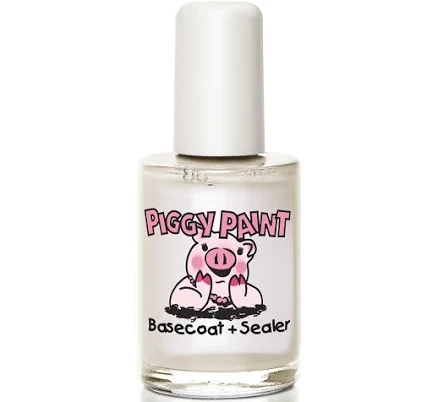
Basecoat & Sealer Nail Polish
- Water-based organic pigments and plant-derived resins
- The brand calls it PFAS-free, which we have not verified
- Heavy metals
3 hazards checked on this product. See all of them.
Piggy Paint
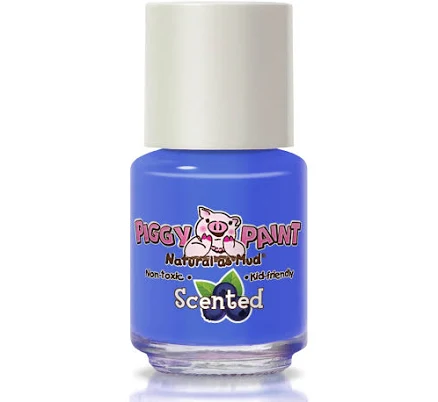
Nail Polish Piggy Paint
- water-based pigmented lacquer
- The brand calls it PFAS-free, which we have not verified
- Volatile organic compounds (VOCs) from resins and solvents
3 hazards checked on this product. See all of them.
Piggy Paint
Showstopper Nail Polish Set
- organic pigments, plant-based resins, water-based lacquer
- The brand calls it PFAS-free, which we have not verified
- Volatile organic compounds (VOCs)
2 hazards checked on this product. See all of them.
More nail polish & top coat grades
How we score, every product runs through the same public 0-100 rubric based on materials, coatings, brand disclosure, lab findings, and recalls. See the full methodology → Spotted a mistake? Report an error.