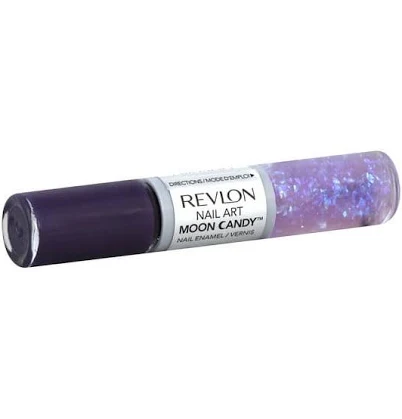
Revlon · Nail Polish & Top Coat
Revlon Nail Art Moon Candy
Lower PFAS concern for typical nail polish; no known fluorinated additives in standard formulas.
This standard cosmetic nail polish has no publicly disclosed PFAS ingredients or waterproofing treatments requiring fluorochemicals. Nail polish is not a high-risk product category for PFAS contamination.
We flunk more products than we pass. This one earned its grade. How we grade
Material
nail polish (organic pigments, resins, solvents)
Lab data
No public lab test
Is Revlon Nail Art Moon Candy non-toxic? What it is made of
Revlon Nail Art Moon Candy is a conventional nail lacquer containing organic pigments, film-forming resins (typically nitrocellulose), and volatile organic solvents (such as toluene, dibutyl phthalate, and xylene). These components are standard across most mass-market nail polish and evaporate during application and drying, limiting dermal and systemic exposure. The 'moon candy' formulation likely refers to color-shifting or shimmer pigments, which do not introduce unique toxicological concerns beyond typical polish chemistry.
What’s concerning
Category baseline
The starting point for this type of product, before anything specific to this product is counted.
No PFAS disclosure
No public statement from the brand about PFAS in this product.
Volatile organic solvents (toluene, xylene, dibutyl phthalate)
Standard nail polish solvents pose inhalation risk only with poor ventilation or repeated professional exposure; consumer single-application risk is low. Dibutyl phthalate (DBP) is a known phthalate but is widely used in nail lacquer and poses negligible risk during typical home use with evaporation.
Allergic contact dermatitis from resins or fragrance
Nail lacquer contains resins (tosylamide, formaldehyde resin historically, though less common now) that can trigger contact sensitization in susceptible individuals. Individuals with known cosmetic allergy should patch-test or avoid prolonged skin contact.
What’s reassuring
Base material not linked to PFAS
The main material recorded for this product is not one associated with PFAS.
Heavy metals
No recalls or test reports document lead, cadmium, or arsenic contamination in Revlon nail polish. Organic synthetic pigments used in nail lacquer are generally well-regulated under cosmetic ingredient standards.
Source, FDA ↗Formaldehyde / VOCs
Nail polish does not require formaldehyde as a preservative or hardener in current formulations. Revlon does not disclose formaldehyde presence; no public data suggests its use in this product.
Source, ATSDR ↗Microplastic shedding from coating
Nail polish does not shed microplastics during normal wear or removal. This is not a recognized hazard for lacquer-based products, though gel polishes pose different durability profiles.
The full breakdown
The brand's record and disclosure
Revlon does not prominently disclose detailed ingredient safety data or third-party certifications for nail polish lines. The company has faced no major recalls or established safety controversies specific to nail lacquer products. Revlon maintains manufacturing and safety compliance with FDA cosmetic regulations and does not publicly claim solvent-free or hypoallergenic formulations for this product line, indicating standard formulation expectations.
How it compares in its category
Revlon nail polish sits in the mainstream mass-market segment and is chemically comparable to competing brands (OPI, Sally Hansen, China Glaze) in solvent type and pigment composition. No independent testing has identified Revlon polishes as outliers for heavy metal contamination or solvent concentration. Some boutique and indie brands market 'toxin-free' or '7-free' formulations with reduced solvents, but standard polish safety is well-established across major brands.
If you buy it
Apply in a well-ventilated space or outdoors to minimize inhalation of volatile solvents during and immediately after application. Avoid prolonged contact with skin and nail beds; wear gloves during application if you have contact sensitivity. Store in a cool, dry place and keep the cap sealed tightly to prevent solvent evaporation and thickening. Replace polish after 12-18 months or if separation or odor changes indicate degradation; expired polish may separate or become difficult to apply.
What we don’t know
- Basis
- Model estimate, 72% confidence, not a lab result
- Lab test
- None on record for this exact product
- Brand statement
- Revlon has made a specific claim
Formulations change between production runs, so check the current label. How we grade.
Better-graded alternatives in Nail Polish & Top Coat
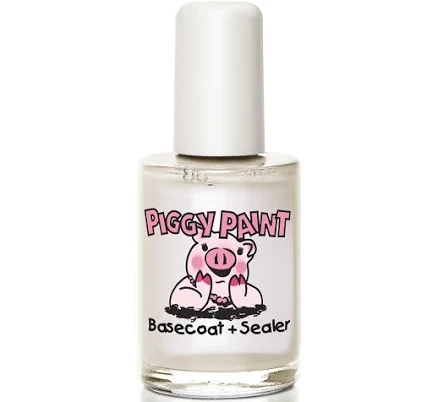
Piggy Paint
Basecoat & Sealer Nail Polish
- Water-based organic pigments and plant-derived resins
- The brand calls it PFAS-free, which we have not verified
- Heavy metals
3 hazards checked on this product. See all of them.
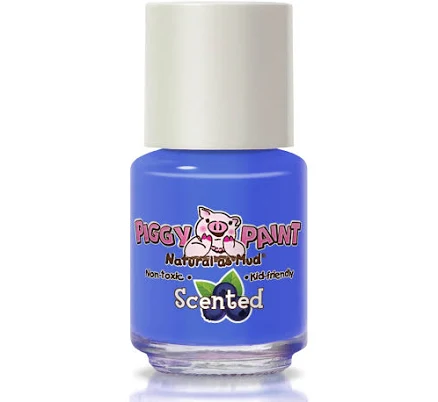
Piggy Paint
Nail Polish Piggy Paint
- water-based pigmented lacquer
- The brand calls it PFAS-free, which we have not verified
- Volatile organic compounds (VOCs) from resins and solvents
3 hazards checked on this product. See all of them.
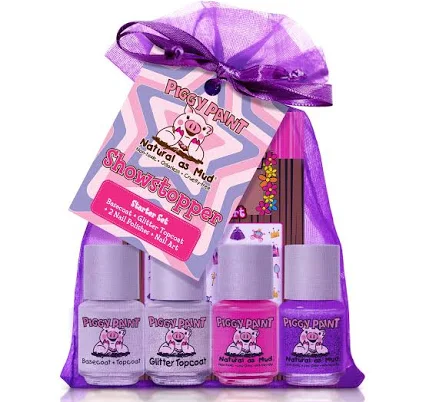
Piggy Paint
Showstopper Nail Polish Set
- organic pigments, plant-based resins, water-based lacquer
- The brand calls it PFAS-free, which we have not verified
- Volatile organic compounds (VOCs)
2 hazards checked on this product. See all of them.
More nail polish & top coat grades
How we score, every product runs through the same public 0-100 rubric based on materials, coatings, brand disclosure, lab findings, and recalls. See the full methodology → Spotted a mistake? Report an error.