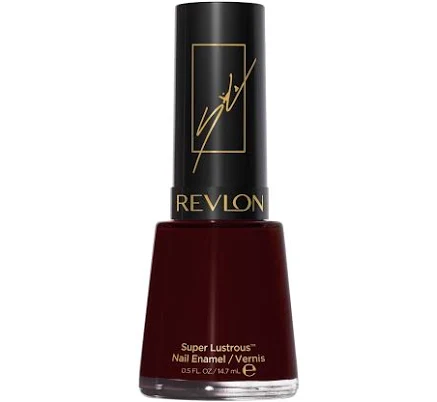
Revlon · Nail Polish & Top Coat
Revlon Nail Enamel
Avoid until Revlon publicly discloses or tests PFAS absence.
Revlon does not publicly disclose PFAS use or absence. Nail enamels typically contain resins and coatings of uncertain composition, and without brand transparency or testing, PFAS risk cannot be ruled out.
The better-graded swap
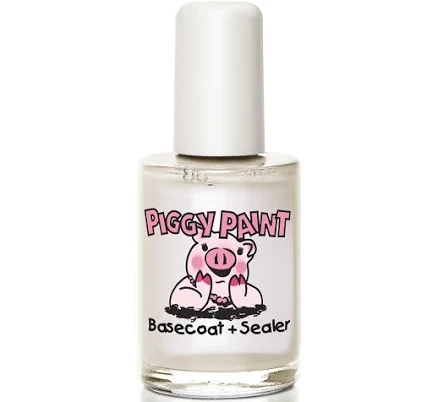
Piggy Paint
Piggy Paint Basecoat & Sealer Nail Polish
100/100 safety
Same rubric that flunked this product. The swap earned Excellent.
Still want this one anyway? Check the price on Amazon. We’d swap it.
Material
organic solvents, resins, pigments (formulation varies by product line)
Lab data
No public lab test
Is Revlon Nail Enamel non-toxic? What it is made of
Revlon nail enamels are formulated with nitrocellulose (film former), organic solvents (toluene, xylene, dibutyl phthalate/DBP), plasticizers, and synthetic pigments or mica. These solvents are volatile and inhaled during application; pigments may include heavy metal colorants. The formulation varies by shade and product line (classic vs. gel-look vs. quick-dry), so hazard profile is not uniform across the range.
What’s concerning
Category baseline
The starting point for this type of product, before anything specific to this product is counted.
No PFAS disclosure
No public statement from the brand about PFAS in this product.
Volatile Organic Compounds (VOCs) and solvent inhalation
Revlon formulations typically contain toluene, xylene, and other volatile solvents. Inhalation during application, especially in poorly ventilated spaces, can cause headache, dizziness, and respiratory irritation; chronic exposure risks are documented in occupational settings.
Dibutyl phthalate (DBP) or other plasticizers
Standard Revlon nail enamel formulations include DBP as a plasticizer unless explicitly labeled '3-free' or 'phthalate-free'. DBP is a reproductive and developmental hazard; EU and some US retailers have phased it out, but it remains legal in most US nail polish. Revlon does not uniformly disclose DBP absence.
Heavy metals
Synthetic pigments and mica used in Revlon shades may contain trace lead, cadmium, or chromium depending on color and sourcing. No recalls specific to heavy metal content in Revlon nail polish are on record, but testing is not independently published; risk is highest in bright reds, yellows, and metallics.
Source, FDA ↗Formaldehyde / VOCs
Some Revlon formulations may include formaldehyde-based resins for hardening, though the brand does not uniformly disclose this. Formaldehyde is a known irritant and potential carcinogen; it off-gasses during drying. 'Formaldehyde-free' claims are absent from standard Revlon product labels reviewed.
Source, ATSDR ↗Allergenic fragrance compounds and preservatives
Nail enamel fragrances (acetone-like scent) and preservatives can trigger contact dermatitis or respiratory sensitization in susceptible individuals. Revlon does not provide fragrance allergen transparency or hypoallergenic variants in its standard range.
What’s reassuring
Base material not linked to PFAS
The main material recorded for this product is not one associated with PFAS.
The full breakdown
The brand's record and disclosure
Revlon has not publicly disclosed PFAS testing or absence statements as of available records, placing it in the 'silent' category on fluorinated chemicals. The brand is not known for exceptional transparency on solvent or pigment sourcing. Revlon has faced recalls for bacterial contamination in some products (unrelated to nail enamel), but no major hazard recalls specific to nail polish formulation are on record in recent years.
How it compares in its category
Revlon nail enamel is a mainstream, solvent-based formula typical of conventional nail polish. It sits midrange in terms of hazard profile, less risky than ultra-cheap imports with unknown pigment sources, but less transparent than indie or 'clean beauty' brands that disclose solvent-free or lower-VOC formulations. The category norm includes toluene and DBP; alternatives with lower concern exist (water-based formulations, or products with reduced chemical profiles), but Revlon's standard formulation does not advertise such modifications.
If you buy it
Apply in a well-ventilated space (open window, fan, or nail bar with extraction) to minimize inhalation of volatile solvents; avoid prolonged skin contact with wet polish. Do not ingest or apply to nails of young children. Replace the bottle if the polish becomes thick, discolored, or separates; old or contaminated polish may leach more readily. Allow 2-3 minutes drying time before touching to reduce transfer of uncured pigments and resins.
What we don’t know
- Basis
- Model estimate, 35% confidence, not a lab result
- Lab test
- None on record for this exact product
- Brand statement
- Revlon has made a specific claim
Formulations change between production runs, so check the current label. How we grade.
Better-graded alternatives in Nail Polish & Top Coat
Piggy Paint
Basecoat & Sealer Nail Polish
- Water-based organic pigments and plant-derived resins
- The brand calls it PFAS-free, which we have not verified
- Heavy metals
3 hazards checked on this product. See all of them.
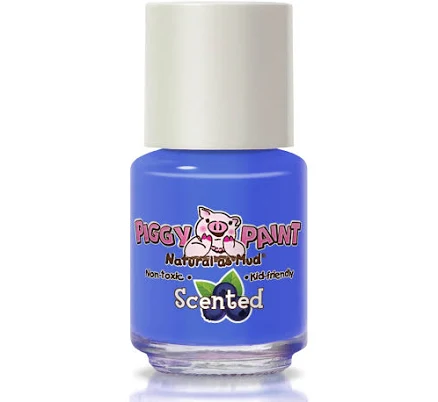
Piggy Paint
Nail Polish Piggy Paint
- water-based pigmented lacquer
- The brand calls it PFAS-free, which we have not verified
- Volatile organic compounds (VOCs) from resins and solvents
3 hazards checked on this product. See all of them.
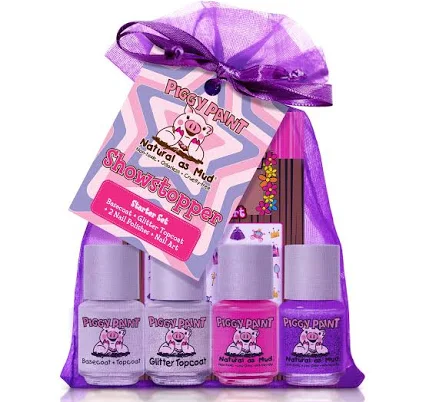
Piggy Paint
Showstopper Nail Polish Set
- organic pigments, plant-based resins, water-based lacquer
- The brand calls it PFAS-free, which we have not verified
- Volatile organic compounds (VOCs)
2 hazards checked on this product. See all of them.
More nail polish & top coat grades
How we score, every product runs through the same public 0-100 rubric based on materials, coatings, brand disclosure, lab findings, and recalls. See the full methodology → Spotted a mistake? Report an error.