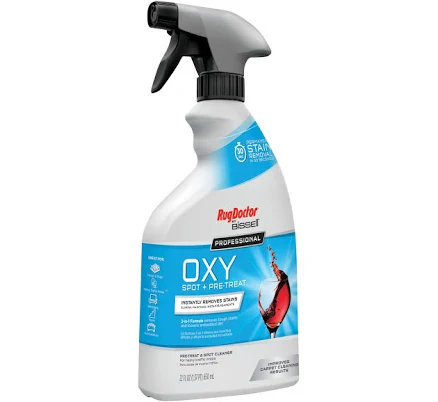
Rug Doctor · Fabric Stain Guard Sprays
Rug Doctor Spot & Pre-Treat Cleaner
Liquid cleaner product, lower PFAS concern than coated items.
Rug Doctor's spot cleaner is a liquid formula without known fluorochemical coatings or water-repellent treatments. No public PFAS disclosure appears from brand, but typical cleaners carry lower risk than treated textiles or nonstick cookware.
We flunk more products than we pass. This one earned its grade. How we grade
Material
aqueous cleaning solution, surfactants and water
Brand disclosure
Brand is silent on PFAS
Lab data
No public lab test
You may also be interested in
Top-graded picks in the categories readers replace first, every one scored on the same rubric.

- polypropylene filter housing, carbon/sediment cartridge
- We found no PFAS statement from the brand
- Bacterial growth in spent cartridges
3 hazards checked on this product, all on its full breakdown.

Aquasure
Premier Series 75 GPD Under Sink Reverse Osmosis Water Filtration System
- RO membrane, carbon filters, stainless steel housing
- We found no PFAS statement from the brand
- Bacterial and microbial growth in housing and filters
4 hazards checked on this product, all on its full breakdown.

Avocado
Vegan Mattress
- organic cotton, natural latex, coconut coir, recycled steel coils
- The brand calls it PFAS-free, which we have not verified
- Heavy metals
2 hazards checked on this product, all on its full breakdown.
What Rug Doctor Spot & Pre-Treat Cleaner is made of, ingredients and materials
Rug Doctor Spot & Pre-Treat is an aqueous cleaning solution, meaning it is primarily water-based with added surfactants (cleaning agents) and likely minor preservatives and fragrance components. This formulation avoids the polymer binders and heat-sensitive coatings that trigger concern in spray-applied stain guards on textiles; it works by chemical action rather than a durable topcoat. The liquid form means no aerosol propellant exposure during normal use, and dilution during application further reduces contact risk.
What’s concerning
Category baseline
The starting point for this type of product, before anything specific to this product is counted.
No PFAS disclosure
No public statement from the brand about PFAS in this product.
Surfactant irritation (skin/eye/respiratory)
Aqueous cleaners contain anionic or nonionic surfactants at concentrations typically 5-15%; direct skin contact or inhalation during spraying can cause mild irritation. No serious incidents are on record for this brand, but standard precautions (gloves, ventilation) are warranted for all users, especially those with sensitive skin or asthma.
Fragrance allergens
Many household cleaners include fragrance compounds; this product likely contains fragrance masking agents. Specific allergen content is not disclosed publicly. Individuals with fragrance sensitivity or multiple chemical sensitivity may experience headache or respiratory symptoms; patch testing on fabrics first is prudent.
Preservative-related contact sensitization
Water-based solutions require antimicrobial preservatives to prevent bacterial and mold growth in the bottle. Common preservatives in cleaners (e.g., methylisothiazolinone) have been linked to contact dermatitis in sensitive populations. The specific preservative system used in this product is not publicly detailed.
Ingestion risk (household members or pets)
Rug Doctor products, like all cleaners, carry standard poisoning risk if ingested by children or pets. The aqueous base does not eliminate this hazard; surfactants can cause gastrointestinal upset if swallowed. Safe storage and immediate medical contact in case of ingestion are essential.
What’s reassuring
Base material not linked to PFAS
The main material recorded for this product is not one associated with PFAS.
Formaldehyde / VOCs
No formaldehyde or formaldehyde-releasing preservatives have been identified in publicly available information on this product. Aqueous fabric cleaners do not typically require or use formaldehyde-based chemistry, making this a lower concern than in textile resins or finishes.
Source, ATSDR ↗How is this PFAS grade calculated?
The brand's record and disclosure
Rug Doctor is a well-known rental and consumer carpet-cleaning brand with a long market history, but public ingredient disclosure and third-party safety certifications for this product line are limited. No major recalls, acute toxicity incidents, or regulatory violations are on record for this specific cleaner. The brand does not publicly communicate PFAS avoidance strategy; however, the aqueous formulation itself carries inherently lower PFAS likelihood than wax-based or fluorocarbon stain guards.
How it compares in its category
Fabric spot cleaners in this category typically fall into two types, aqueous surfactant-based solutions (like this product) and solvent-based or fluorocarbon-enhanced stain guards. This product's water-based approach eliminates solvent inhalation risk and avoids legacy PFAS-linked stain-guard chemistry. Performance trade-offs are normal, aqueous cleaners excel on water-soluble stains but may be less durable on oily marks than solvent or fluorinated alternatives, though durability is not the primary function of a pre-treatment spray.
If you buy it
Test on a hidden fabric area first, as with any cleaner, to rule out dye bleeding or fiber damage. Use in ventilated spaces; do not spray near open flames or heat sources. Follow dilution and contact time instructions on the label to avoid over-saturation, which can promote mold or mildew in carpet backing. Store in a cool, sealed container away from children and pets, and replace if the solution separates or develops odor, which may indicate bacterial growth or preservative breakdown.
What is not known about PFAS in this product?
- Basis
- Model estimate, 72% confidence, not a lab result
- Lab test
- None on record for this exact product
- Brand statement
- Rug Doctor has made none
Formulations change between production runs, so check the current label. How we grade.
More fabric stain guard sprays grades
How we score, every product runs through the same public 0-100 rubric based on materials, coatings, brand disclosure, lab findings, and recalls. See the full methodology → Spotted a mistake? Report an error.