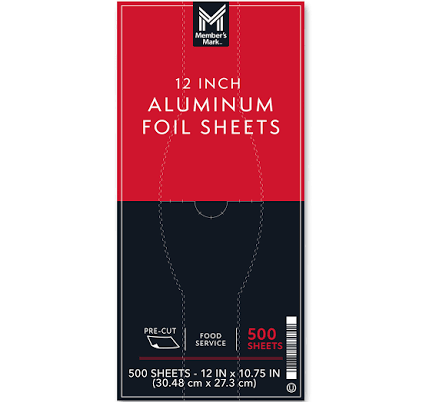
Member's Mark · Grease-Resistant Butcher & Deli Paper
Member's Mark Foil Sheets 9" x 10.75" 500 ct.
Standard foil with grease coating. PFAS possible but not disclosed.
Aluminum foil sheets with grease-resistant treatment typical in food packaging. Sam's Club says nothing about PFAS, though many food-contact foils use fluorinated coatings.
The better-graded swap
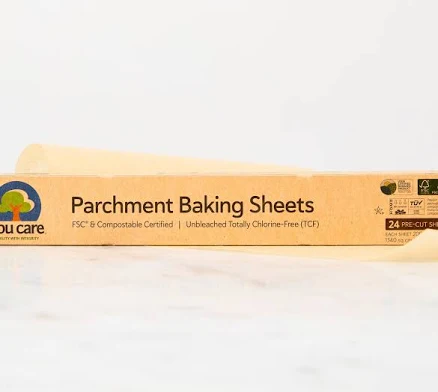
If You Care
If You Care Parchment Baking Paper
90/100 safety
Same rubric that flunked this product. The swap earned Excellent.
Still want this one anyway? Check the price on Amazon. We’d swap it.
Material
aluminum foil with grease-resistant coating
Brand disclosure
Brand is silent on PFAS
Lab data
No public lab test
You may also be interested in
Top-graded picks in the categories readers replace first, every one scored on the same rubric.

- polypropylene filter housing, carbon/sediment cartridge
- We found no PFAS statement from the brand
- Bacterial growth in spent cartridges
3 hazards checked on this product, all on its full breakdown.

Aquasure
Premier Series 75 GPD Under Sink Reverse Osmosis Water Filtration System
- RO membrane, carbon filters, stainless steel housing
- We found no PFAS statement from the brand
- Bacterial and microbial growth in housing and filters
4 hazards checked on this product, all on its full breakdown.

Avocado
Vegan Mattress
- organic cotton, natural latex, coconut coir, recycled steel coils
- The brand calls it PFAS-free, which we have not verified
- Heavy metals
2 hazards checked on this product, all on its full breakdown.
What Member's Mark Foil Sheets 9" x 10.75" ct. is made of, ingredients and materials
Member's Mark Foil Sheets are standard aluminum foil (typically 99.5% pure aluminum, ~0.016 inch thick) with an applied grease-resistant coating on one side to prevent food sticking and oil penetration. The coating composition is not disclosed by Sam's Club on packaging or marketing materials. Aluminum foil itself is inert and FDA-approved for food contact; the risk profile depends entirely on what that proprietary grease-resistant layer contains.
What’s concerning
Category baseline
The starting point for this type of product, before anything specific to this product is counted.
No PFAS disclosure
No public statement from the brand about PFAS in this product.
Waterproof / stain-resistant treatment
Water-repellent coating treatments have historically used PFAS.
Aluminum leaching (acidic food contact)
Aluminum foil can release small amounts of aluminum into acidic or salty foods over extended storage (days to weeks). Member's Mark foil provides no barrier coating disclosure, so leaching risk is standard for this product type. Risk is minimal for short-term wrapping but increases with prolonged direct contact.
Grease-resistant coating composition (undisclosed)
The proprietary grease-resistant layer is not identified on packaging or public documentation. While such coatings are FDA-approved in principle, Sam's Club has not confirmed whether this specific formulation is Teflon-type coating-free, silicone-based, or other. Absence of disclosure is the hazard, not confirmed toxicity.
Coating degradation and flaking
Low-cost foil coatings can flake or peel if foil is folded repeatedly or exposed to moisture during storage. Small amounts of coating may contact food if sheets are damaged. Member's Mark does not disclose coating durability specs.
What’s reassuring
Microplastics
No reports of foil sheets shedding plastic or synthetic particles into food. Aluminum foil is mechanically stable and does not degrade into microparticles under normal use conditions.
Source, EPA ↗Heavy metals
Foil coatings for food contact are not typically pigmented with heavy metals; aluminum itself is the substrate. No public record of lead or cadmium in Member's Mark foil coatings.
Source, FDA ↗How is this PFAS grade calculated?
The brand's record and disclosure
Sam's Club does not publish ingredient lists or supplier certifications for Member's Mark foil products, and has made no public commitment to PFAS avoidance in food packaging. The brand offers no third-party testing transparency or sustainability certifications specific to this SKU. This silence is typical for private-label foil producers but leaves end users unable to verify coating safety independently.
How it compares in its category
Standard aluminum foil sheets occupy the commodity tier of food wrapping. Member's Mark is competitively priced and functionally identical to Reynold's and generic store brands in terms of thickness and basic performance. Most major foil producers have not voluntarily disclosed grease-coating formulations, making this product comparable in concern to unbranded alternatives from other retailers.
If you buy it
Use foil for room-temperature and moderate-heat wrapping (under 400F) without concern; it performs identically to other consumer foils. Do not use for long-term storage of acidic foods (citrus, tomatoes, vinegar) as aluminum can leach slightly over weeks. Replace any foil sheets that show visible creasing, holes, or discoloration before reuse. Store in a cool, dry place to prevent moisture degradation of the coating.
What is not known about PFAS in this product?
- Basis
- Model estimate, 35% confidence, not a lab result
- Lab test
- None on record for this exact product
- Brand statement
- Member's Mark has made none
Formulations change between production runs, so check the current label. How we grade.
What are the PFAS-free alternatives to Member's Mark Foil Sheets 9" x 10.75" 500 ct.?
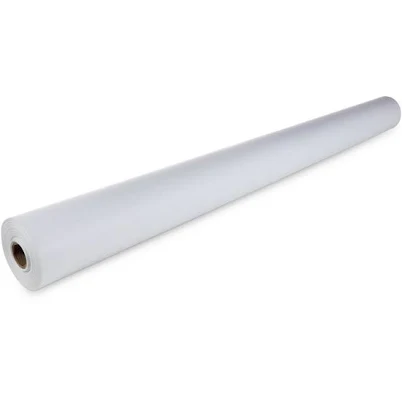
IDL Packaging
White Butcher Paper 18" x 12000" Natural Butcher Paper Roll for Meat and Fish
- unbleached natural kraft paper
- The brand calls it PFAS-free, which we have not verified
- Mold or microbial growth
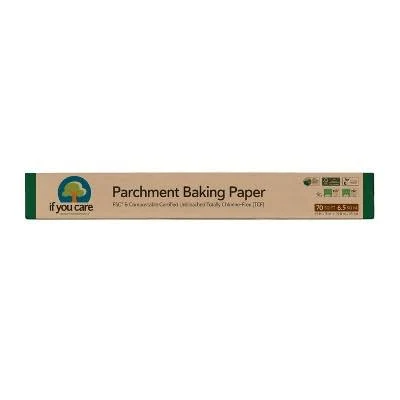
- unbleached parchment paper, silicone coating
- The brand calls it PFAS-free, which we have not verified
- Silicone coating degradation under heat stress
2 hazards checked on this product, all on its full breakdown.
- Silicone-coated parchment paper
- The brand calls it PFAS-free, which we have not verified
- Silicone coating degradation at high heat
More grease-resistant butcher & deli paper grades
How we score, every product runs through the same public 0-100 rubric based on materials, coatings, brand disclosure, lab findings, and recalls. See the full methodology → Spotted a mistake? Report an error.