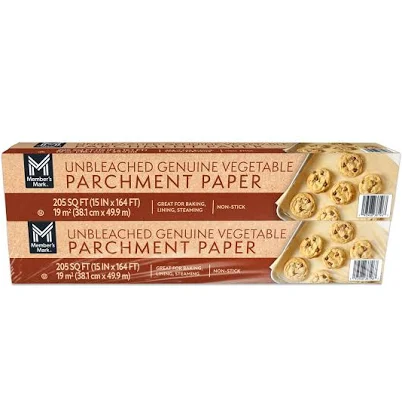
Member's Mark · Grease-Resistant Butcher & Deli Paper
Member's Mark Unbleached Parchment Paper 205 sq. ft. 2 pk.
Likely lower risk, but Sam's Club provides no PFAS disclosure.
Parchment paper normally uses silicone for heat resistance rather than Teflon-family coating. Sam's Club gives no PFAS statement, so contact them directly if this concerns you.
The better-graded swap
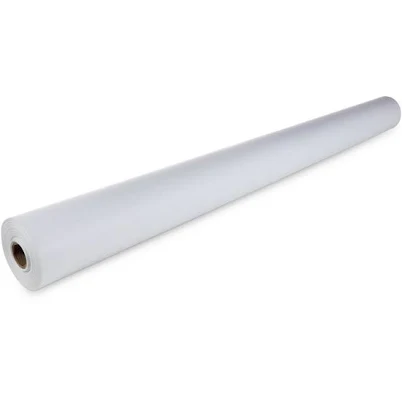
IDL Packaging
Idl Packaging White Butcher Paper 18" x 12000" Natural Butcher Paper Roll for Meat and Fish
95/100 safety
Same rubric that flunked this product. The swap earned Excellent.
Still want this one anyway? Check the price on Amazon. We’d swap it.
Material
Unbleached paper with silicone coating
Brand disclosure
Brand is silent on PFAS
Lab data
No public lab test
You may also be interested in
Top-graded picks in the categories readers replace first, every one scored on the same rubric.

- polypropylene filter housing, carbon/sediment cartridge
- We found no PFAS statement from the brand
- Bacterial growth in spent cartridges
3 hazards checked on this product, all on its full breakdown.

Aquasure
Premier Series 75 GPD Under Sink Reverse Osmosis Water Filtration System
- RO membrane, carbon filters, stainless steel housing
- We found no PFAS statement from the brand
- Bacterial and microbial growth in housing and filters
4 hazards checked on this product, all on its full breakdown.

Avocado
Vegan Mattress
- organic cotton, natural latex, coconut coir, recycled steel coils
- The brand calls it PFAS-free, which we have not verified
- Heavy metals
2 hazards checked on this product, all on its full breakdown.
What Member's Mark Unbleached Parchment pk. is made of, ingredients and materials
Member's Mark unbleached parchment is paper substrate coated with silicone, not plastic or wax. Unbleached means it skips chlorine-based bleaching agents that can leave chemical residues. Silicone coating provides the nonstick and heat-resistance properties without Teflon-family coating (Teflon-type coating). The paper itself is food-grade and designed to withstand oven temperatures up to roughly 420-450°F, making it suitable for baking and food wrapping applications.
What’s concerning
Category baseline
The starting point for this type of product, before anything specific to this product is counted.
No PFAS disclosure
No public statement from the brand about PFAS in this product.
Waterproof / stain-resistant treatment
Water-repellent coating treatments have historically used PFAS.
Silicone coating degradation over time and heat
Silicone coatings can degrade if exposed to prolonged heat above manufacturer specs or if physically damaged. No specific degradation reports for Member's Mark exist, but the generic risk for parchment is low if used as directed.
What’s reassuring
Bleaching residue or chlorine byproducts
This product is unbleached, so it avoids chlorine-based residues common in bleached parchment. No contamination reports exist for this product.
Microplastic shedding from coating
Silicone coatings do not shed microplastics in the manner of plastic wraps or films. Parchment paper is paper-based and does not contribute to microplastic accumulation in food.
Migration of coating constituents into food
Silicone is generally recognized as safe (GRAS) by the FDA for food contact. No reported leaching or migration incidents documented for unbleached parchment in normal use.
Unbleached paper impurities or contaminants
Unbleached paper can retain trace lignin and minerals from pulp, but food-grade unbleached parchment meets FDA food-contact standards. No contamination reports specific to Member's Mark.
How is this PFAS grade calculated?
The brand's record and disclosure
Sam's Club (owned by Walmart) does not publicly disclose PFAS testing or absence statements for parchment paper products, which is typical for the grocery/bulk retail sector. The brand has no major documented food-contact safety recalls for parchment paper. Sam's Club maintains general food-safety compliance but does not market premium certifications (FSC, compostability) for this product line, suggesting a cost-focused rather than transparency-focused positioning.
How it compares in its category
Unbleached silicone-coated parchment is a mainstream middle-market option. It avoids wax-coated papers (potential petroleum or microplastic concerns if heated unevenly) and plastic-lined alternatives. Compared to premium brands offering FSC certification or explicit PFAS-free labeling, Member's Mark offers no third-party verification, but unbleached + silicone is a chemically simpler formulation than bleached papers with synthetic coatings. Price-to-safety ratio is reasonable for routine home baking.
If you buy it
Use for oven baking up to the stated heat limit (typically 420-450°F); do not use directly over open flame or on stovetop burners. Replace the roll if coating appears visibly degraded, torn, or discolored, as silicone integrity is the primary barrier. Store in a cool, dry place to prevent moisture absorption and mold. Unbleached paper may show minor brown spots or speckling, which is normal and not a safety issue.
What is not known about PFAS in this product?
- Basis
- Model estimate, 65% confidence, not a lab result
- Lab test
- None on record for this exact product
- Brand statement
- Member's Mark has made none
Formulations change between production runs, so check the current label. How we grade.
What are the PFAS-free alternatives to Member's Mark Unbleached Parchment Paper 205 sq. ft. 2 pk.?
IDL Packaging
White Butcher Paper 18" x 12000" Natural Butcher Paper Roll for Meat and Fish
- unbleached natural kraft paper
- The brand calls it PFAS-free, which we have not verified
- Mold or microbial growth
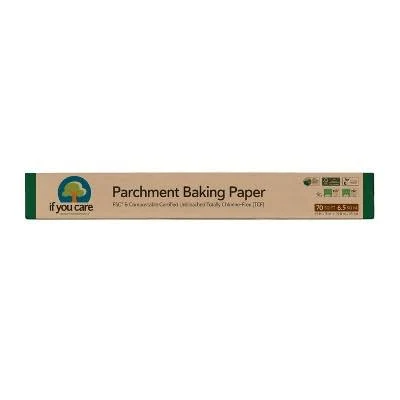
- unbleached parchment paper, silicone coating
- The brand calls it PFAS-free, which we have not verified
- Silicone coating degradation under heat stress
2 hazards checked on this product, all on its full breakdown.
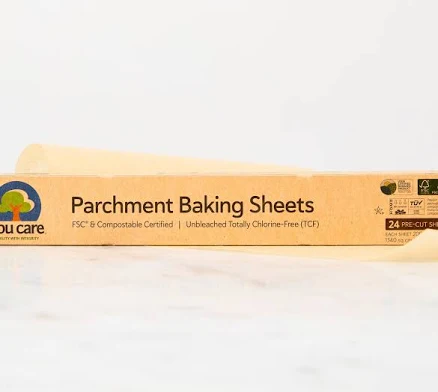
- Silicone-coated parchment paper
- The brand calls it PFAS-free, which we have not verified
- Silicone coating degradation at high heat
More grease-resistant butcher & deli paper grades
How we score, every product runs through the same public 0-100 rubric based on materials, coatings, brand disclosure, lab findings, and recalls. See the full methodology → Spotted a mistake? Report an error.