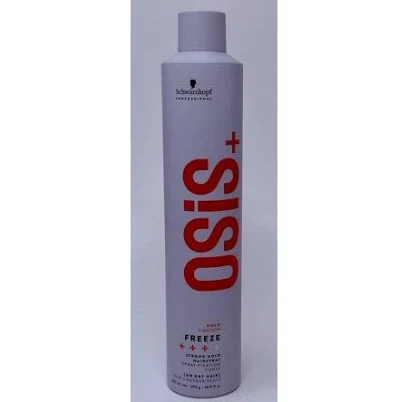
Schwarzkopf OSiS+ Freeze Finish 2 Hairspray
Avoid until Schwarzkopf reveals PFAS status; hairspray formulations often contain fluorinated silicones.
Schwarzkopf makes no public PFAS disclosure for this aerosolized product. Aerosol hairsprays commonly use fluorinated polymer additives for hold and water resistance, though specifics remain unknown.
The better-graded swap
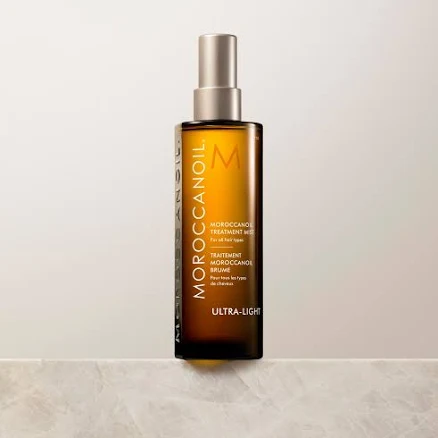
Moroccanoil
Moroccanoil Treatment Mist
75/100 safety
Same rubric that flunked this product. The swap earned Excellent.
Still want this one anyway? Check the price on Amazon. We’d swap it.
Material
aerosolized polymeric resins and propellants
Brand disclosure
Brand is silent on PFAS
Lab data
No public lab test
You may also be interested in
Top-graded picks in the categories readers replace first, every one scored on the same rubric.

- polypropylene filter housing, carbon/sediment cartridge
- We found no PFAS statement from the brand
- Bacterial growth in spent cartridges
3 hazards checked on this product, all on its full breakdown.

Aquasure
Premier Series 75 GPD Under Sink Reverse Osmosis Water Filtration System
- RO membrane, carbon filters, stainless steel housing
- We found no PFAS statement from the brand
- Bacterial and microbial growth in housing and filters
4 hazards checked on this product, all on its full breakdown.

Avocado
Vegan Mattress
- organic cotton, natural latex, coconut coir, recycled steel coils
- The brand calls it PFAS-free, which we have not verified
- Heavy metals
2 hazards checked on this product, all on its full breakdown.
What Schwarzkopf OSiS+ Freeze Finish Hairspray is made of, ingredients and materials
OSiS+ Freeze Finish 2 is an aerosol hairspray based on polymeric resins (likely acrylates or silicone-based) suspended in propellant gases. The product likely contains fluorinated silicone compounds to achieve water and humidity resistance, which is standard in professional-grade freeze sprays but introduces PFAS exposure during application and in residual particles. Aerosol delivery means inhalation risk is inherent to the format, not unique to this brand.
What’s concerning
Category baseline
The starting point for this type of product, before anything specific to this product is counted.
No PFAS disclosure
No public statement from the brand about PFAS in this product.
Inhalation of aerosolized polymeric resins and propellants
Aerosol hairsprays are known to deposit fine particles in the respiratory tract; occupational exposure in salons is well documented. OSiS+ Freeze Finish 2's polymer and propellant blend will follow this pattern; individual sensitivity varies.
PFAS
Professional freeze sprays commonly use fluorinated silicones for water repellency. Schwarzkopf has not disclosed PFAS-free reformulation; the product likely contains Teflon-type coating or similar fluorinated polymers at typical hairspray concentrations, though absolute levels are unknown.
Source, ATSDR ↗Volatile organic compounds (VOCs) in propellants and solvents
Hairsprays routinely contain hydrocarbons and alcohol propellants classified as VOCs. Acute symptoms (headache, dizziness) are possible during or immediately after use in enclosed spaces; no specific toxicity data for this formulation exists on record.
Fragrance allergen content (undisclosed)
Professional hairsprays often include synthetic fragrance blends; Schwarzkopf does not itemize these on the label. Individuals with fragrance sensitivity or contact dermatitis may react to airborne or residual fragrance compounds.
What’s reassuring
Base material not linked to PFAS
The main material recorded for this product is not one associated with PFAS.
Formaldehyde / VOCs
Aerosol formulations typically do not require aqueous preservatives; no evidence of formaldehyde-donors in hairspray category products. This hazard is not a concern for this format.
Source, ATSDR ↗How is this PFAS grade calculated?
The brand's record and disclosure
Schwarzkopf (Henkel subsidiary) has not publicly disclosed PFAS content or reformulation efforts specific to hairsprays, despite growing industry pressure. The brand holds multiple certifications (e.g., dermatological testing) but these do not address volatile organic compound (VOC) or PFAS disclosure. No recalls or established safety violations on record for this specific product, though hairspray category as a whole carries routine inhalation exposure concerns.
How it compares in its category
Professional hairsprays typically contain silicone-based or fluorinated polymers for durability; OSiS+ sits at the higher-performance end of the market. Many mass-market alternatives use simpler acrylate resins with fewer PFAS indicators, though Schwarzkopf's formulation is not notably worse than competitors at its price point. Brands explicitly PFAS-free or VOC-reduced (e.g., some indie aerosols) exist but may sacrifice hold strength.
If you buy it
Always apply in well-ventilated spaces; avoid inhalation of mist, especially during long styling sessions. Store away from heat sources; propellant cans are pressure vessels. Replace when the spray pattern weakens or sputters, indicating propellant depletion. Do not use on damp hair in poorly ventilated rooms, as this increases both aerosol inhalation and the residence time of PFAS-containing particles.
What is not known about PFAS in this product?
- Basis
- Model estimate, 35% confidence, not a lab result
- Lab test
- None on record for this exact product
- Brand statement
- Schwarzkopf has made none
Formulations change between production runs, so check the current label. How we grade.
More hair spray grades
How we score, every product runs through the same public 0-100 rubric based on materials, coatings, brand disclosure, lab findings, and recalls. See the full methodology → Spotted a mistake? Report an error.