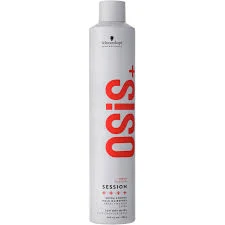
Schwarzkopf Osis+ Session Extreme Hold Hairspray
Avoid until the brand discloses or independent testing confirms safety; hairsprays historically rely on fluorinated polymers.
Schwarzkopf offers no public statement on PFAS in this aerosol product. Hairsprays commonly incorporate fluorinated acrylate or Teflon-family coating resins for hold and water resistance.
The better-graded swap
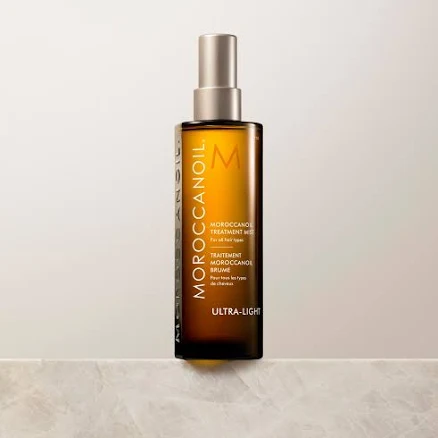
Moroccanoil
Moroccanoil Treatment Mist
75/100 safety
Same rubric that flunked this product. The swap earned Excellent.
Still want this one anyway? Check the price on Amazon. We’d swap it.
Material
Aerosol hairspray (resin/polymer suspension in propellant)
Brand disclosure
Brand is silent on PFAS
Lab data
No public lab test
You may also be interested in
Top-graded picks in the categories readers replace first, every one scored on the same rubric.

- polypropylene filter housing, carbon/sediment cartridge
- We found no PFAS statement from the brand
- Bacterial growth in spent cartridges
3 hazards checked on this product, all on its full breakdown.

Aquasure
Premier Series 75 GPD Under Sink Reverse Osmosis Water Filtration System
- RO membrane, carbon filters, stainless steel housing
- We found no PFAS statement from the brand
- Bacterial and microbial growth in housing and filters
4 hazards checked on this product, all on its full breakdown.

Avocado
Vegan Mattress
- organic cotton, natural latex, coconut coir, recycled steel coils
- The brand calls it PFAS-free, which we have not verified
- Heavy metals
2 hazards checked on this product, all on its full breakdown.
What Schwarzkopf Osis+ Session Hold Hairspray is made of, ingredients and materials
Osis+ Session is a polymer-resin aerosol suspension (typical for hold hairsprays) propelled by butane/isobutane mix. The resin binder creates the hold effect but is typically a Teflon-family coating or acrylic-based film former; Schwarzkopf does not publicly specify which, raising PFAS uncertainty. Aerosol propellants themselves are not toxic at use distances, but the polymer matrix and any volatile co-solvents (alcohols, water) are the primary inhalation concern during application.
What’s concerning
Category baseline
The starting point for this type of product, before anything specific to this product is counted.
No PFAS disclosure
No public statement from the brand about PFAS in this product.
Volatile organic compounds (VOC) and propellant inhalation
Butane/isobutane propellants and solvent alcohols in hairsprays are known respiratory irritants with acute inhalation risk during application. No specific testing published for this product, but category-wide concern in aerosol formulations.
PFAS
Schwarzkopf does not specify whether the hold-resin is fluorinated (PFAS-containing) or acrylic-based. Teflon-family coating are common in aerosol hairsprays for hold durability; absence of claim to non-fluorinated status suggests potential PFAS presence.
Source, ATSDR ↗Fragrance allergens and undisclosed ingredients
Hairsprays often contain fragrance blends that can trigger contact sensitivity or scalp/respiratory irritation in sensitive individuals. Schwarzkopf does not break down fragrance components on the label, typical of the category.
What’s reassuring
Base material not linked to PFAS
The main material recorded for this product is not one associated with PFAS.
Formaldehyde / VOCs
No independent testing or brand disclosure found linking Osis+ Session to formaldehyde releasers. Aerosol formulations typically use alternative preservatives (phenoxyethanol, parabens) rather than formaldehyde donors.
Source, ATSDR ↗Heavy metals
This is a clear/colorless or light-tinted aerosol; pigment-based heavy metals (lead, cadmium in dyes) are not a typical concern for colorless hairsprays. No recalls or testing flagged this hazard.
Source, FDA ↗How is this PFAS grade calculated?
The brand's record and disclosure
Schwarzkopf (Henkel subsidiary) maintains minimal public disclosure on PFAS content in hair-care products and has not signed transparency pledges common among competitors (e.g., ZDHC Gateway, Cradle to Cradle). The brand has no recent recalls or safety controversies tied to this specific product, but absence of disclosure is itself a red flag in a category where fluorinated polymers remain industry standard. Parent company Henkel has faced PFAS scrutiny in industrial contexts but has not proactively addressed cosmetic/personal-care PFAS.
How it compares in its category
Aerosol hairsprays occupy a higher-risk position than pump-spray or gel alternatives because inhalation exposure is harder to control. Osis+ Session is mid-market priced; competitors like Tresemme or drugstore aerosols face identical PFAS uncertainty, while premium brands (e.g., Bumble and bumble, some salon brands) occasionally disclose non-fluorinated polymers. No hairspray aerosol in this segment has definitively claimed PFAS-free status with third-party backing.
If you buy it
Use in well-ventilated spaces (bathroom exhaust on, window open) to minimize polymer and propellant inhalation. Apply at arm's length (8-12 inches from scalp) in short bursts rather than continuous spraying; do not inhale during or immediately after application. Replace every 6-12 months or when spray pattern weakens (sign of propellant loss or clog). Consider switching to pump-spray or gel hold products if concerned about aerosol inhalation exposure; contact Schwarzkopf directly to request PFAS disclosure or testing results.
What is not known about PFAS in this product?
- Basis
- Model estimate, 35% confidence, not a lab result
- Lab test
- None on record for this exact product
- Brand statement
- Schwarzkopf has made none
Formulations change between production runs, so check the current label. How we grade.
More hair spray grades
How we score, every product runs through the same public 0-100 rubric based on materials, coatings, brand disclosure, lab findings, and recalls. See the full methodology → Spotted a mistake? Report an error.