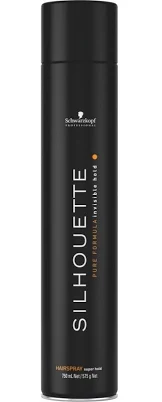
Schwarzkopf Silhouette Super Hold Hairspray 750ml
Avoid or verify independently; hairspray formulations stay opaque and Schwarzkopf provides no PFAS disclosure.
Schwarzkopf offers no PFAS-related claims or certifications for this product. Hairsprays use proprietary polymer and propellant blends, and without independent testing or brand transparency, risk assessment remains unreliable.
The better-graded swap
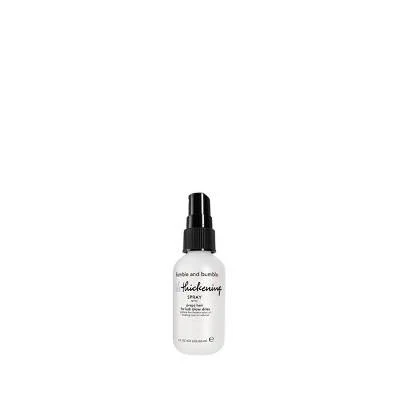
Bumble and bumble
Bumble and Bumble Thickening Spray
75/100 safety
Same rubric that flunked this product. The swap earned Excellent.
Still want this one anyway? Check the price on Amazon. We’d swap it.
Material
aerosolized polymers, propellants, solvents (typical hairspray formulation)
Brand disclosure
Brand is silent on PFAS
Lab data
No public lab test
You may also be interested in
Top-graded picks in the categories readers replace first, every one scored on the same rubric.

- polypropylene filter housing, carbon/sediment cartridge
- We found no PFAS statement from the brand
- Bacterial growth in spent cartridges
3 hazards checked on this product, all on its full breakdown.

Aquasure
Premier Series 75 GPD Under Sink Reverse Osmosis Water Filtration System
- RO membrane, carbon filters, stainless steel housing
- We found no PFAS statement from the brand
- Bacterial and microbial growth in housing and filters
4 hazards checked on this product, all on its full breakdown.

Avocado
Vegan Mattress
- organic cotton, natural latex, coconut coir, recycled steel coils
- The brand calls it PFAS-free, which we have not verified
- Heavy metals
2 hazards checked on this product, all on its full breakdown.
What Schwarzkopf Silhouette Hold Hairspray is made of, ingredients and materials
Schwarzkopf Silhouette Super Hold is an aerosolized polymer resin system (likely acrylic or polyquaternium-based fixatives) suspended in volatile organic solvents and pressurized propellants. The 'super hold' designation means higher polymer concentration, which increases the quantity of aerosolized particles deposited during application. Propellants in aerosol hairsprays are typically hydrocarbons (butane, isobutane, propane) or compressed gas; solvents include alcohols and acetone-class compounds that evaporate but create inhalation exposure during and immediately after spraying.
What’s concerning
Category baseline
The starting point for this type of product, before anything specific to this product is counted.
No PFAS disclosure
No public statement from the brand about PFAS in this product.
Volatile organic compound (VOC) inhalation from propellants and solvents
Aerosol hairsprays release butane, propane, alcohol, and acetone-class solvents into air and lung tissue during application. Acute exposure causes dizziness and respiratory irritation; chronic inhalation from daily use contributes to indoor air pollution and potential neurological effects with long-term exposure.
Particle inhalation from aerosolized polymer resins
The fine mist deposits acrylic or polyquaternium polymers deep into the respiratory tract. While the polymers themselves are not acutely toxic, repeated inhalation of high-dose aerosol particles may irritate airways and lung tissue, particularly in individuals with asthma or sensitivity to aerosol exposure.
PFAS
Schwarzkopf does not disclose PFAS content. Industry practice in premium and aerosol hairsprays sometimes includes fluorinated polymers or surfactants to improve shine and water resistance; confirmation requires independent testing or direct manufacturer inquiry.
Source, ATSDR ↗Fragrance allergens and irritants
Hairsprays commonly include synthetic fragrances that can trigger contact sensitization or respiratory irritation in individuals with olfactory sensitivity. Schwarzkopf does not break down fragrance components on standard labeling.
Residual buildup on scalp and hair
Repeated daily use without regular clarifying shampoo can lead to polymer and solvent residue accumulation on hair and scalp, causing irritation, flaking, or impaired hair health over weeks to months.
What’s reassuring
Base material not linked to PFAS
The main material recorded for this product is not one associated with PFAS.
How is this PFAS grade calculated?
The brand's record and disclosure
Schwarzkopf (Henkel subsidiary) does not publicly disclose PFAS content or provide transparent ingredient labeling beyond what EU/local regulations mandate. The brand has no widely documented sustainability certifications for personal care aerosols and maintains standard cosmetic registration without third-party safety audits specific to fluorinated compounds. No major recalls linked to this product line are on record, but the company's silence on PFAS in aerosol formulations reflects industry-wide opacity rather than verified absence.
How it compares in its category
Aerosol hairsprays uniformly present inhalation risk and PFAS opacity; Schwarzkopf is mid-market and offers no measurable advantage over mass-market alternatives in disclosure or formulation safety. Pump or gel-based hold products eliminate propellant inhalation entirely but sacrifice hold duration. Brands like Bumble and Bumble and some salon lines provide slightly more detail on solvent and polymer content, though PFAS disclosure remains sparse across the entire category.
If you buy it
Always spray in a well-ventilated bathroom or outdoors to minimize inhalation of propellant and solvent vapors, especially important for frequent use or in enclosed spaces. Do not spray near face or eyes; use brief trigger pulses rather than continuous misting to reduce particle load. Store away from heat sources and do not puncture or incinerate the can. If you use hairspray daily, consider rotating to a non-aerosol alternative one or two days weekly to lower cumulative volatile organic compound exposure.
What is not known about PFAS in this product?
- Basis
- Model estimate, 35% confidence, not a lab result
- Lab test
- None on record for this exact product
- Brand statement
- Schwarzkopf has made none
Formulations change between production runs, so check the current label. How we grade.
More hair spray grades
How we score, every product runs through the same public 0-100 rubric based on materials, coatings, brand disclosure, lab findings, and recalls. See the full methodology → Spotted a mistake? Report an error.