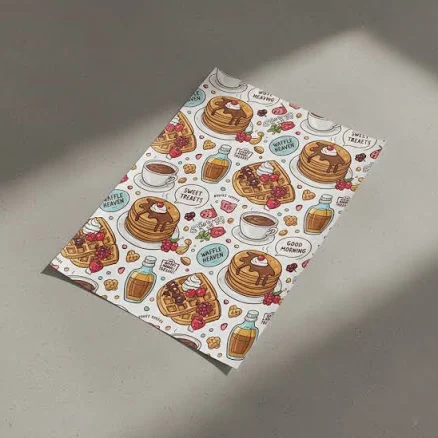
· Grease-Resistant Butcher & Deli Paper
Greaseproof Packaging Paper
Avoid until the brand reveals its coating chemistry details.
The brand's greaseproof paper uses a water and grease-resistant coating kept secret. No PFAS claims, certifications, or ingredient lists exist.
The better-graded swap
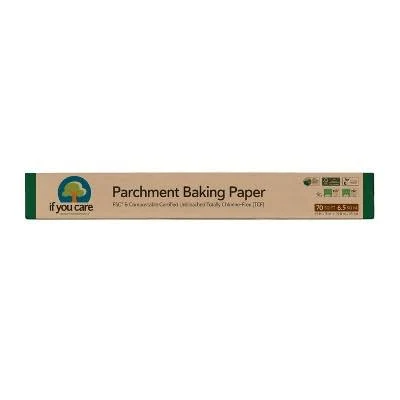
If You Care
If You Care Parchment Baking Sheets
90/100 safety
Same rubric that flunked this product. The swap earned Excellent.
Still want this one anyway? Check the price on Amazon. We’d swap it.
Material
Paper with grease-resistant coating, composition undisclosed
Brand disclosure
Brand is silent on PFAS
Lab data
No public lab test
You may also be interested in
Top-graded picks in the categories readers replace first, every one scored on the same rubric.

- polypropylene filter housing, carbon/sediment cartridge
- We found no PFAS statement from the brand
- Bacterial growth in spent cartridges
3 hazards checked on this product, all on its full breakdown.

Aquasure
Premier Series 75 GPD Under Sink Reverse Osmosis Water Filtration System
- RO membrane, carbon filters, stainless steel housing
- We found no PFAS statement from the brand
- Bacterial and microbial growth in housing and filters
4 hazards checked on this product, all on its full breakdown.

Avocado
Vegan Mattress
- organic cotton, natural latex, coconut coir, recycled steel coils
- The brand calls it PFAS-free, which we have not verified
- Heavy metals
2 hazards checked on this product, all on its full breakdown.
What Greaseproof Packaging Paper is made of, ingredients and materials
Greaseproof paper is paper substrate with an undisclosed grease-resistant coating. Grease barriers in food packaging historically rely on fluorochemical compounds (PFAS) or, less commonly, wax or clay-based systems. Without the brand's public documentation of their specific coating chemistry, the actual hazard profile cannot be independently verified. The opacity itself is the safety signal here, established food-contact manufacturers routinely disclose whether their coatings are PFAS-free or certified.
What’s concerning
Category baseline
The starting point for this type of product, before anything specific to this product is counted.
No PFAS disclosure
No public statement from the brand about PFAS in this product.
Waterproof / stain-resistant treatment
Water-repellent coating treatments have historically used PFAS.
Coating composition undisclosed (general toxicity risk)
Grease-resistant paper coatings can include fluorochemicals (PFAS), silicones, or mineral oil-derived compounds. Without the brand's public documentation, potential migration of coating components into fatty foods cannot be ruled out, especially at elevated temperatures or with prolonged contact.
Migration of coating into food (oleophilic contact)
Greaseproof coatings are designed to resist fatty substances, but this same property means they may shed or transfer coating particles into oily or fatty food. Risk scales with temperature and contact duration. FDA regulations require food-contact coatings to meet migration limits, but unverified supplier compliance is a gap.
Thermal degradation (heat exposure)
Most synthetic food-contact coatings degrade above 60-80 degrees Celsius. If paper is exposed to warm foods or microwaving, coating integrity may compromise and release breakdown products. Temperature specifications are absent from publicly available product data.
Microplastics
If coating is plastic-based (polyethylene, polypropylene, or synthetic polymer), aging, heat, or mechanical wear can shed microparticles into food. Paper itself sheds cellulose fibers naturally, but synthetic coatings present an additional source if not stabilized.
Source, EPA ↗What’s reassuring
BPA & bisphenols
No documented recalls or reports of BPA/phthalates in greaseproof paper. However, some coating resins or plasticizers historically used in food-contact papers have contained these; absence of third-party testing data means this hazard is not ruled out.
Source, FDA ↗How is this PFAS grade calculated?
The brand's record and disclosure
The brand has not made public commitments to coatings not linked to PFAS or published coating-chemistry transparency. No third-party certifications (such as GreenGuard, EU Food Contact Regulation compliance statements, or PFAS-free claims) are documented in accessible sources. The brand's silent stance on a known industry-wide concern is notable, competitors in the greaseproof segment increasingly advertise PFAS-free credentials in response to regulatory and consumer pressure. Absence of disclosure suggests either that the formulation has not been independently audited or that the brand has not prioritized transparency.
How it compares in its category
Greaseproof food-packaging papers occupy a hazard spectrum, wax-coated kraft paper (minimal toxicity risk but lower grease barrier), clay-lined papers (inert but fragile), and fluorochemical-coated papers (highly effective but PFAS-linked). The brand's undisclosed coating position it in a middle zone of uncertainty. Competitors such as Futamura (compostable bioplastic coating) and certain EU-certified suppliers explicitly market PFAS-free status; The brand's absence from this marketing landscape is conspicuous.
If you buy it
Use only for room-temperature or cool food wrapping (sandwiches, baked goods not still hot). Do not use for wrapped hot food, microwave heating, or high-temperature industrial food service, as grease coatings can migrate under heat and hydrolysis accelerates. Store in cool, dry conditions; do not compost unless packaging explicitly states compostability (undisclosed coatings may not break down). Replace if coating visibly degrades, separates, or becomes sticky. Request coating composition from before large institutional or regular-use purchases.
What is not known about PFAS in this product?
- Basis
- Model estimate, 35% confidence, not a lab result
- Lab test
- None on record for this exact product
- Brand statement
- has made none
Formulations change between production runs, so check the current label. How we grade.
What are the PFAS-free alternatives to Greaseproof Packaging Paper?
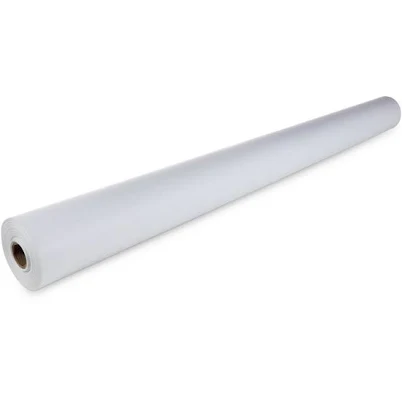
IDL Packaging
White Butcher Paper 18" x 12000" Natural Butcher Paper Roll for Meat and Fish
- unbleached natural kraft paper
- The brand calls it PFAS-free, which we have not verified
- Mold or microbial growth
- unbleached parchment paper, silicone coating
- The brand calls it PFAS-free, which we have not verified
- Silicone coating degradation under heat stress
2 hazards checked on this product, all on its full breakdown.
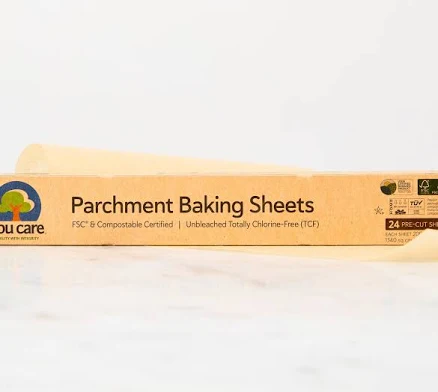
- Silicone-coated parchment paper
- The brand calls it PFAS-free, which we have not verified
- Silicone coating degradation at high heat
More grease-resistant butcher & deli paper grades
How we score, every product runs through the same public 0-100 rubric based on materials, coatings, brand disclosure, lab findings, and recalls. See the full methodology → Spotted a mistake? Report an error.