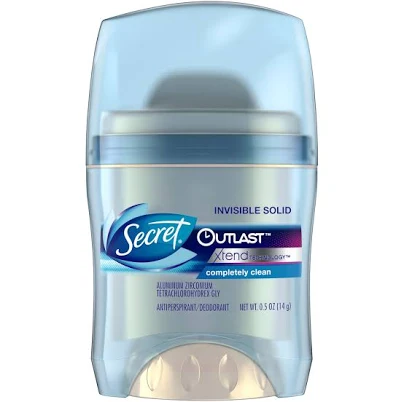
Secret Outlast Invisible Solid Antiperspirant/Deodorant
Wait for Secret's PFAS disclosure or third-party testing before buying.
Secret Outlast doesn't publicly address PFAS in this product. Long-lasting and invisible deodorant sticks frequently use PFAS for sweat and water resistance, making this a moderate concern without independent testing or brand transparency.
The better-graded swap
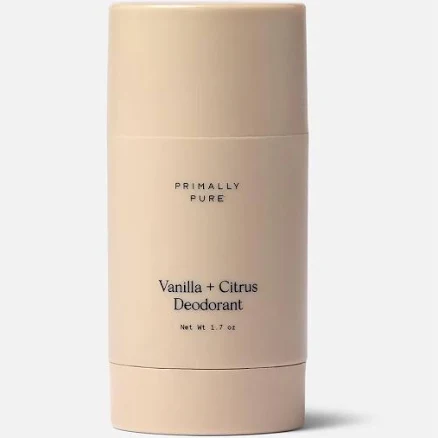
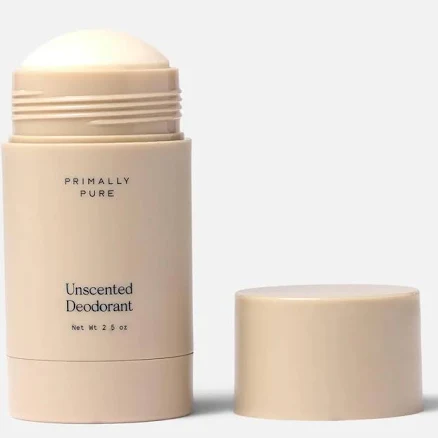
Primally Pure
Primally Pure + Deodorant +
100/100 safety
Same rubric that flunked this product. The swap earned Excellent.
Still want this one anyway? Check the price on Amazon. We’d swap it.
Material
Stick composite (wax, starch, fragrance base)
Brand disclosure
Brand is silent on PFAS
Lab data
No public lab test
You may also be interested in
Top-graded picks in the categories readers replace first, every one scored on the same rubric.

- polypropylene filter housing, carbon/sediment cartridge
- We found no PFAS statement from the brand
- Bacterial growth in spent cartridges
3 hazards checked on this product, all on its full breakdown.

Aquasure
Premier Series 75 GPD Under Sink Reverse Osmosis Water Filtration System
- RO membrane, carbon filters, stainless steel housing
- We found no PFAS statement from the brand
- Bacterial and microbial growth in housing and filters
4 hazards checked on this product, all on its full breakdown.

Avocado
Vegan Mattress
- organic cotton, natural latex, coconut coir, recycled steel coils
- The brand calls it PFAS-free, which we have not verified
- Heavy metals
2 hazards checked on this product, all on its full breakdown.
What Secret Outlast Antiperspirant/Deodorant is made of, ingredients and materials
Secret Outlast is a stick composite of wax (likely paraffin or synthetic wax), starch (corn or tapioca for absorption), fragrance compounds, and aluminum salts as the antiperspirant active. The 'Invisible Solid' formulation emphasizes low residue on skin and clothing. Wax and starch are generally low-toxicity excipients, but fragrance blends in cosmetics remain poorly disclosed and can trigger contact sensitization in vulnerable users.
What’s concerning
Category baseline
The starting point for this type of product, before anything specific to this product is counted.
No PFAS disclosure
No public statement from the brand about PFAS in this product.
Fragrance allergens and contact sensitization
Secret Outlast lists 'fragrance' as a single ingredient without component disclosure, standard industry practice. Fragrance blends in stick deodorants commonly contain limonene, linalool, and eugenol, which are known contact allergens; incidence in the general population is 1-3%, higher in atopic individuals.
Aluminum absorption via skin
Antiperspirant aluminum salts (likely aluminum chlorohydrate or zirconium at 15-25% w/w) penetrate the stratum corneum under occlusion. Systemic absorption is low but detectable; long-term daily use raises cumulative exposure. No causative link to Alzheimer's is established, but vulnerable populations (kidney disease, frequent users) warrant monitoring and dermatologist clearance.
Fragrance-related respiratory or skin irritation in sensitive groups
Anecdotal user reports on beauty forums describe underarm irritation or mild respiratory sensitivity to scent intensity in Secret formulations. Not a widespread adverse event, but fragrance-sensitive consumers should patch test or request unscented alternatives from the brand.
PFAS
P&G has not disclosed whether fluorinated surfactants or processing aids are used in Secret Outlast manufacturing. Many mass-market stick deodorants use PFAS-containing emulsifiers; absence of confirmation is not absence of risk. Third-party testing is recommended before purchase if PFAS exposure is a concern.
Source, ATSDR ↗What’s reassuring
Base material not linked to PFAS
The main material recorded for this product is not one associated with PFAS.
Talc contamination (if present)
Secret Outlast ingredient label does not list talc; starch is the declared absorbent. No recalls or documented talc contamination in this product line on record. Risk is classified as none known for this specific formulation.
How is this PFAS grade calculated?
The brand's record and disclosure
Procter & Gamble (Secret's parent) has not published comprehensive PFAS content or sourcing data for this product line as of public record. The brand holds no third-party sustainability certifications (e.g., EWG Verified, Leaping Bunny) specific to chemical transparency. P&G faces no major recalls tied to Secret deodorants, but the parent company's opacity on PFAS "forever chemicals" in cosmetic emulsifiers remains a documented gap versus competitors like native or Kopari.
How it compares in its category
Secret Outlast sits in the mainstream antiperspirant segment; aluminum zirconium and aluminum chlorohydrate concentrations are standard for this tier. Fragrance load is moderate to heavy, typical of mass-market sticks. Compared to fragrance-free or hypoallergenic alternatives (e.g., Vanicream, Aluminum-Free Crystal), Secret offers stronger scent masking and longer wear but carries higher sensitizer risk and unresolved PFAS disclosure. Compared to premium natural brands, it offers no certified organic or plant-derived claims.
If you buy it
Apply to clean, dry skin once daily (usually evening for overnight protection); avoid application to broken skin or immediately after shaving, which increases aluminum absorption. Store in cool, dry conditions away from direct heat to prevent wax separation or fragrance volatilization. Discontinue use if rash, itching, or persistent underarm irritation develops; consider a fragrance-free alternative. Replace every 6-12 months depending on frequency. Request PFAS testing data from P&G before repurchase if uncertain about fluorinated surfactants in emulsifier blends.
What is not known about PFAS in this product?
- Basis
- Model estimate, 45% confidence, not a lab result
- Lab test
- None on record for this exact product
- Brand statement
- Secret has made none
Formulations change between production runs, so check the current label. How we grade.
What are the PFAS-free alternatives to Secret Outlast Invisible Solid Antiperspirant/Deodorant?
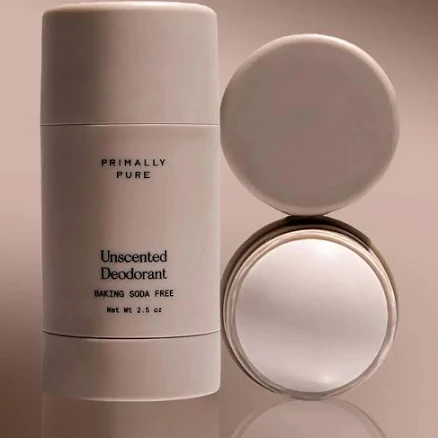
- mineral-based powder blend (arrowroot, magnesium hydroxide, mica)
- We found no PFAS statement from the brand
- Skin irritation from magnesium hydroxide alkalinity
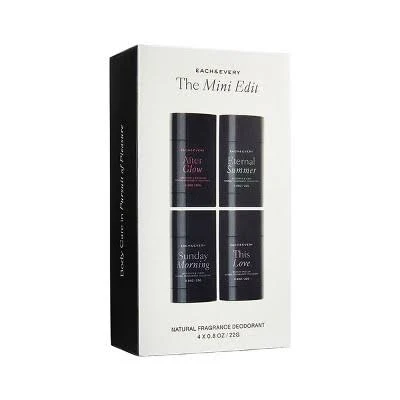
- cosmetic formulations, primary ingredients listed
- A third party reports verifying it as PFAS-free
- Fragrance allergens (natural essential oils)
2 hazards checked on this product, all on its full breakdown.
- natural mineral powders, plant-based actives, beeswax
- We found no PFAS statement from the brand
- Beeswax purity and contamination
2 hazards checked on this product, all on its full breakdown.
More deodorant grades
How we score, every product runs through the same public 0-100 rubric based on materials, coatings, brand disclosure, lab findings, and recalls. See the full methodology → Spotted a mistake? Report an error.