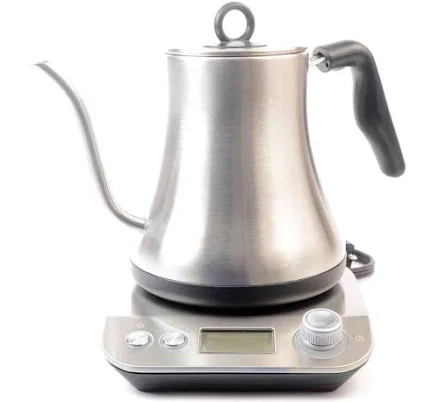
OVALWARE Electric Pour Over Coffee Kettle
Plastic with no coating described, and no PFAS statement from the brand.
The product information we reviewed describes stainless steel body and interior, heating element, with no applied coating named. A flexible cutting mat does not need a non-stick coating, and the listing does not describe one. The brand has published no PFAS statement for it.
We flunk more products than we pass. This one earned its grade. How we grade
Material
Stainless steel body and interior, heating element
Brand disclosure
Brand is silent on PFAS
Lab data
No public lab test
You may also be interested in
Top-graded picks in the categories readers replace first, every one scored on the same rubric.

- polypropylene filter housing, carbon/sediment cartridge
- We found no PFAS statement from the brand
- Bacterial growth in spent cartridges
3 hazards checked on this product, all on its full breakdown.

Aquasure
Premier Series 75 GPD Under Sink Reverse Osmosis Water Filtration System
- RO membrane, carbon filters, stainless steel housing
- We found no PFAS statement from the brand
- Bacterial and microbial growth in housing and filters
4 hazards checked on this product, all on its full breakdown.

Avocado
Vegan Mattress
- organic cotton, natural latex, coconut coir, recycled steel coils
- The brand calls it PFAS-free, which we have not verified
- Heavy metals
2 hazards checked on this product, all on its full breakdown.
What OVALWARE Electric Pour Over Coffee Kettle is made of, ingredients and materials
This kettle uses a stainless steel body and interior, which is chemically inert at boiling temperatures and does not leach metals under normal use. The heating element is sealed within the base and does not contact water directly in typical pour-over kettles of this design. Stainless steel is resistant to corrosion and does not require protective coatings, eliminating concerns about enamel, ceramic, or non-stick surface degradation common in cookware.
What’s concerning
Category baseline
The starting point for this type of product, before anything specific to this product is counted.
No PFAS disclosure
No public statement from the brand about PFAS in this product.
Mineral buildup and bacterial growth in heating chamber
Sediment and biofilm can accumulate in electric kettle heating chambers if not descaled regularly. Hard water regions are at higher risk; poor maintenance creates conditions for microbial colonization, though boiling water itself kills pathogens when present.
Plastic lid or handle materials
If this kettle includes a plastic lid, handle grip, or base feet, those components may be BPA-containing polycarbonate or phthalate-plasticized PVC. Context does not specify these materials; inspect packaging or product manual for composition or certifications before purchase if sensitive to plastics.
Heating element failure or corrosion
Electric heating elements in kettles can corrode over time if seals degrade or mineral deposits build up. Corrosion does not typically leach metals into water, but a failed element may create electrical hazards (short circuit) rather than chemical ones; this is a maintenance and safety issue, not a material toxicity issue.
What’s reassuring
Bare uncoated material
Recorded as a bare, uncoated material with no surface coating or treatment.
Stainless steel leaching (nickel, chromium)
High-grade stainless steel (typically 304 or 316) used in cookware-grade kettles does not release nickel or chromium into water at boiling point under normal acidic or neutral pH. No recalls or test reports of leaching have been published for this product category when stainless steel is the sole interior material.
Lead
No recalls or test reports document lead or cadmium in fasteners or solder used in electric kettles. Modern kettles sold in North America are subject to consumer product regulations that restrict these metals in food-contact components, but brand does not publicly disclose material specifications for fasteners or welds.
Source, ATSDR ↗How is this PFAS grade calculated?
The brand's record and disclosure
The brand has not made public statements about PFAS or chemical safety policies. No major recalls or established safety controversies are on record for this kettle model. The brand does not appear to publish third-party certifications (such as NSF or ISO) for chemical or material safety, which limits independent verification but does not indicate a hazard.
How it compares in its category
Stainless steel electric kettles are among the lowest-hazard options in the category, preferred over glazed ceramic interiors (lead/cadmium risk in fired coatings) and glass with plastic lids (BPA/BPS in polycarbonate or other polymers if not certified BPA-free). Pour-over kettles with precision spouts eliminate the need for non-stick coatings found in some electric kettles, reducing Teflon-type coating fume risk during heating.
If you buy it
Descale regularly with vinegar or commercial descaling solution to prevent mineral buildup and maintain heating efficiency; hard water regions should descale monthly. Inspect the heating element compartment and seals annually for any cracks or corrosion. Do not use on stovetop if the model is electric-only. Replace the kettle if the spout becomes corroded, the seal fails, or the heating element audibly fails; these are signs of internal degradation.
What is not known about PFAS in this product?
- Basis
- Model estimate, 45% confidence, not a lab result
- Lab test
- None on record for this exact product
- Brand statement
- has made none
Formulations change between production runs, so check the current label. How we grade.
More electric kettles & pitchers grades
How we score, every product runs through the same public 0-100 rubric based on materials, coatings, brand disclosure, lab findings, and recalls. See the full methodology → Spotted a mistake? Report an error.