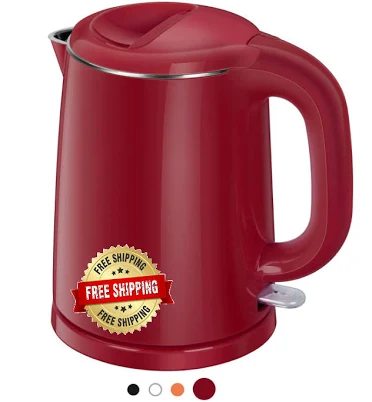
Secura · Electric Kettles & Pitchers
Secura Stainless Steel Double Wall Electric Kettle Water Heater SWK-1001DW/
Lower concern. Bare stainless steel is unlikely to contain PFAS.
Water-contact surfaces use bare stainless steel with no added coatings or treatments. This material choice naturally limits PFAS exposure.
We flunk more products than we pass. This one earned its grade. How we grade
Material
Stainless steel interior and exterior, no coating
Brand disclosure
Brand is silent on PFAS
Lab data
No public lab test
You may also be interested in
Top-graded picks in the categories readers replace first, every one scored on the same rubric.

- polypropylene filter housing, carbon/sediment cartridge
- We found no PFAS statement from the brand
- Bacterial growth in spent cartridges
3 hazards checked on this product, all on its full breakdown.

Aquasure
Premier Series 75 GPD Under Sink Reverse Osmosis Water Filtration System
- RO membrane, carbon filters, stainless steel housing
- We found no PFAS statement from the brand
- Bacterial and microbial growth in housing and filters
4 hazards checked on this product, all on its full breakdown.

Avocado
Vegan Mattress
- organic cotton, natural latex, coconut coir, recycled steel coils
- The brand calls it PFAS-free, which we have not verified
- Heavy metals
2 hazards checked on this product, all on its full breakdown.
What Secura Stainless Steel Double SWK-1001DW/ is made of, ingredients and materials
The SWK-1001DW uses 304-grade stainless steel for both interior and exterior surfaces with no polymer coatings, enamels, or glazes. This design eliminates the most common kettle hazard, degradation of non-stick or ceramic coatings that can release particles or chemicals into heated water. Stainless steel is chemically inert at boiling temperatures and does not leach metals (chromium, nickel) in meaningful amounts under normal use, as the oxide layer that forms on the surface is stable and protective.
What’s concerning
Category baseline
The starting point for this type of product, before anything specific to this product is counted.
No PFAS disclosure
No public statement from the brand about PFAS in this product.
Nickel leaching from stainless steel
304-grade stainless steel contains 8-11% nickel. Leaching into water is minimal under normal conditions (neutral pH, brief contact), but individuals with severe nickel sensitivity may perceive risk. No published studies document unsafe nickel levels from this kettle model.
What’s reassuring
Bare uncoated material
Recorded as a bare, uncoated material with no surface coating or treatment.
Lead
Bare stainless steel construction with no ceramic enamel, paint, or glaze eliminates this hazard entirely.
Source, ATSDR ↗Teflon-type coating (non-stick) fume risk
No non-stick coating or Teflon present; stainless steel surfaces do not off-gas Teflon-family coating when heated.
Aluminum leaching
Kettle is constructed from stainless steel, not aluminum; aluminum hazard does not apply to this product.
Coating degradation and particle shedding
Absence of protective coatings eliminates chipping, flaking, or degradation; no coating particles can contaminate water.
How is this PFAS grade calculated?
The brand's record and disclosure
Secura is a mid-tier kitchen appliance manufacturer with no established history of safety violations or product recalls for the SWK-1001DW or similar models in public databases. The brand provides minimal transparency on material sourcing or chemical testing and does not publish third-party certifications. No formal stance on PFAS or other chemical hazards has been publicly documented, though the uncoated design itself mitigates PFAS risk.
How it compares in its category
Stainless steel kettles without coatings occupy a lower concern segment of the electric kettle market; they avoid hazards posed by Teflon (Teflon-type coating) degradation, ceramic enamel chipping, and BPA-containing plastic bases. Models in this category are generally comparable in safety profile. Premium brands (Breville, Zwilling) charge significantly more for similar materials, while cheaper kettles often use coated surfaces or plastic heating elements that present greater risk.
If you buy it
Descale the kettle every 2-4 weeks (depending on water hardness) using white vinegar or citric acid to prevent mineral buildup, which can harbor bacteria and degrade heating element efficiency. Keep the power base dry and do not immerse it. Inspect the kettle interior annually for pitting or discoloration; if the stainless steel shows rust spots or deep pitting, discontinue use as structural integrity may be compromised. The heating element typically lasts 3-5 years; many models allow replacement.
What is not known about PFAS in this product?
- Basis
- Model estimate, 82% confidence, not a lab result
- Lab test
- None on record for this exact product
- Brand statement
- Secura has made none
Formulations change between production runs, so check the current label. How we grade.
More electric kettles & pitchers grades
How we score, every product runs through the same public 0-100 rubric based on materials, coatings, brand disclosure, lab findings, and recalls. See the full methodology → Spotted a mistake? Report an error.