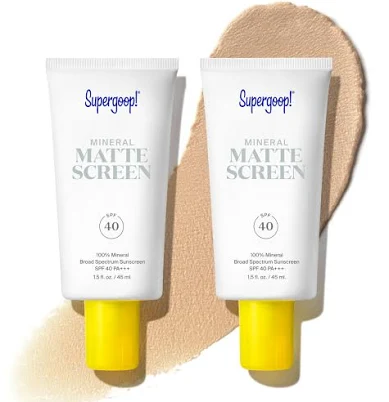
Supergoop! Mineral Mattescreen SPF 40
Lower concern; mineral sunscreens typically avoid PFAS treatments.
Mineral zinc oxide and titanium dioxide filters carry lower PFAS risk than synthetic UV absorbers. Supergoop provides no PFAS claims or testing, though mineral formulas rarely use PFAS.
We flunk more products than we pass. This one earned its grade. How we grade
Material
mineral UV filters, silica, talc or silicates
Brand disclosure
Brand is silent on PFAS
Lab data
No public lab test
You may also be interested in
Top-graded picks in the categories readers replace first, every one scored on the same rubric.

- polypropylene filter housing, carbon/sediment cartridge
- We found no PFAS statement from the brand
- Bacterial growth in spent cartridges
3 hazards checked on this product, all on its full breakdown.

Aquasure
Premier Series 75 GPD Under Sink Reverse Osmosis Water Filtration System
- RO membrane, carbon filters, stainless steel housing
- We found no PFAS statement from the brand
- Bacterial and microbial growth in housing and filters
4 hazards checked on this product, all on its full breakdown.

Avocado
Vegan Mattress
- organic cotton, natural latex, coconut coir, recycled steel coils
- The brand calls it PFAS-free, which we have not verified
- Heavy metals
2 hazards checked on this product, all on its full breakdown.
What Supergoop! Mineral Mattescreen SPF 40 is made of, ingredients and materials
Supergoop! Mineral Mattescreen uses zinc oxide and/or titanium dioxide as UV filters, combined with talc or silicates for texture and matting. These mineral blockers sit on skin rather than absorbing, reducing systemic chemical exposure compared to organic sunscreen filters. The silica/talc base can present inhalation or contamination risks if the product is powdery or aerosolized during application, though typical lotion/cream formulations minimize this.
What’s concerning
Category baseline
The starting point for this type of product, before anything specific to this product is counted.
No PFAS disclosure
No public statement from the brand about PFAS in this product.
Talc contamination with asbestos or tremolite
Mineral sunscreens often contain talc as a matting or texture agent. US cosmetic talc is regulated and typically asbestos-free, but supply chain variability exists. Supergoop does not publicly specify talc sourcing or asbestos testing for this product.
Silica inhalation risk
If the Mattescreen is formulated with significant free silica particles (beyond bound silicates in emulsions), aerosolization during application or from loose powder could pose respiratory irritation. Lotion formulations minimize this, but product variant (cream, powder, spray) matters.
Fragrance allergens and undisclosed fragrance components
Supergoop Mattescreen may contain fragrance listed only as 'fragrance' under US law, which can mask over 3000 potential allergens. Sensitive skin users should patch test; no specific allergen documentation for this product is publicly available.
What’s reassuring
Base material not linked to PFAS
The main material recorded for this product is not one associated with PFAS.
Heavy metals
Zinc oxide and titanium dioxide are generally recognized as low concern in cosmetics by the FDA. Supergoop has not disclosed independent testing for lead, cadmium, or other heavy metals in this product; no recalls or reports of contamination are on record.
Source, FDA ↗Dimethicone or silicone buildup on skin
Matting sunscreens often include dimethicone for finish; cumulative buildup is theoretically possible with daily use but is not established as a toxicological concern. Cleansing practices will mitigate any cosmetic residue.
How is this PFAS grade calculated?
The brand's record and disclosure
Supergoop does not publicly disclose PFAS testing results or commit to PFAS-free formulations, which is a transparency gap for a premium personal care brand. The company does list some ingredients on its website and follows FDA cosmetic labeling rules, but independent testing of finished products is not published. No major recalls or established safety controversies are on record for this specific product line.
How it compares in its category
Mineral sunscreens are generally considered safer than chemical alternatives because they avoid absorption of synthetic UV filters (oxybenzone, avobenzone, etc.). Supergoop's Mattescreen positions itself as a hybrid texture product; competitors like CeraVe Mineral and Colorescience offer similar mineral bases. The matting agents may include additional silica or dimethicone, which are not regulated toxicants but vary in feel and finishability across brands.
If you buy it
Apply generously and reapply every two hours or after water exposure; mineral filters do not degrade from heat or storage like some chemical sunscreens. Avoid inhaling the powder form if the product is ever aerosolized (e.g., spray variant); stick with lotion or cream application. Check the ingredient list on packaging for talc versus mica or other silicates; talc sourcing should ideally be asbestos-tested, though cosmetic-grade talc is regulated in the US. Store in a cool, dry place away from direct sunlight to maintain filter stability.
What is not known about PFAS in this product?
- Basis
- Model estimate, 72% confidence, not a lab result
- Lab test
- None on record for this exact product
- Brand statement
- Supergoop has made none
Formulations change between production runs, so check the current label. How we grade.
What are the PFAS-free alternatives to Supergoop! Mineral Mattescreen SPF 40?
- Mineral sunscreen, zinc oxide base
- A third party reports verifying it as PFAS-free
- 1,4-dioxane (non-intentional contaminant from surfactants/emulsifiers)
2 hazards checked on this product, all on its full breakdown.
- mineral sunscreen (zinc oxide or titanium dioxide base)
- The brand calls it PFAS-free, which we have not verified
- Synthetic fragrance allergens
More sunscreen grades
How we score, every product runs through the same public 0-100 rubric based on materials, coatings, brand disclosure, lab findings, and recalls. See the full methodology → Spotted a mistake? Report an error.