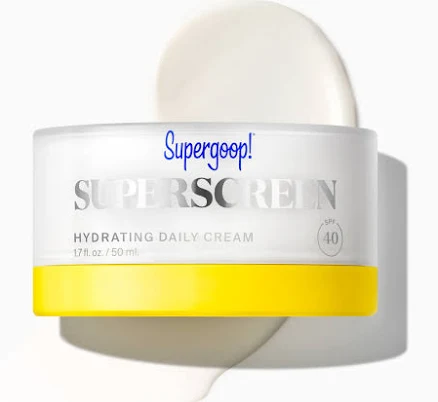
Supergoop! Superscreen Hydrating Daily Cream SPF 40
Lower PFAS concern for a standard hydrating cream formula.
This hydrating cream sunscreen has no water-repellent or grease-resistant treatments that would trigger PFAS. Supergoop makes no PFAS disclosures.
We flunk more products than we pass. This one earned its grade. How we grade
Material
Water-based hydrating cream with SPF organic filters
Brand disclosure
Brand is silent on PFAS
Lab data
No public lab test
You may also be interested in
Top-graded picks in the categories readers replace first, every one scored on the same rubric.

- polypropylene filter housing, carbon/sediment cartridge
- We found no PFAS statement from the brand
- Bacterial growth in spent cartridges
3 hazards checked on this product, all on its full breakdown.

Aquasure
Premier Series 75 GPD Under Sink Reverse Osmosis Water Filtration System
- RO membrane, carbon filters, stainless steel housing
- We found no PFAS statement from the brand
- Bacterial and microbial growth in housing and filters
4 hazards checked on this product, all on its full breakdown.

Avocado
Vegan Mattress
- organic cotton, natural latex, coconut coir, recycled steel coils
- The brand calls it PFAS-free, which we have not verified
- Heavy metals
2 hazards checked on this product, all on its full breakdown.
What Supergoop! Superscreen Daily Cream SPF is made of, ingredients and materials
Superscreen Hydrating Daily Cream SPF 40 is formulated as a water-based sunscreen using organic (chemical) UV filters rather than mineral blockers. The cream matrix is designed for daily facial use with humectant ingredients to reduce the drying effect typical of sunscreens. Water-based formulations generally pose lower leaching risk than oil-heavy creams, and organic filters like avobenzone or homosalate are well-established in cosmetics with extensive safety records, though avobenzone can degrade under UV exposure in poorly stabilized products.
What’s concerning
Category baseline
The starting point for this type of product, before anything specific to this product is counted.
No PFAS disclosure
No public statement from the brand about PFAS in this product.
Organic UV filter photodegradation (particularly avobenzone)
Water-based sunscreens with avobenzone can lose efficacy and may generate degradation byproducts if not properly stabilized with secondary filters or antioxidants. Product formulation details are not publicly available; assume standard stabilization but verify reapplication frequency on label matches actual need.
Fragrance allergens
Supergoop Superscreen contains fragrance; common sunscreen fragrances (often undisclosed in full on labels due to trade secret protection) can trigger contact dermatitis or photosensitivity in sensitive individuals. No unscented variant of this specific product is known.
Preservative sensitization (methylchloroisothiazolinone or similar in water-based creams)
Water-based formulations require robust preservative systems; while Supergoop is not known to use problematic preservatives on record, full preservation agent disclosure is not consistently public, and individual sensitivity varies widely.
What’s reassuring
Base material not linked to PFAS
The main material recorded for this product is not one associated with PFAS.
1,4-dioxane (residual from cosmetic ingredient processing)
No specific test results or recalls for this product involving 1,4-dioxane contamination are on public record. Water-based sunscreens in general carry lower risk than oil-based alternatives, but non-disclosure of full supplier testing limits certainty.
Heavy metals
Current formula uses organic filters; if brand switches to mineral filters in future, zinc oxide and titanium dioxide carry low heavy metal contamination risk under normal manufacturing standards.
Source, FDA ↗How is this PFAS grade calculated?
The brand's record and disclosure
Supergoop is a sunscreen-focused brand that has built reputation on accessibility and SPF education but maintains limited public disclosure on full ingredient sourcing or third-party testing results. The brand has not faced major recalls or public safety controversies on record. However, their silence on PFAS presence despite the category's known contamination risk suggests reactive rather than proactive transparency; certification by dermatologists or reef-safe claims are present but do not substitute for chemical disclosure.
How it compares in its category
Daily facial sunscreen creams occupy a crowded market with widely varying hazard profiles. Supergoop's water-based, organic-filter formula is middle-of-the-road, it avoids the rancidity and ingredient degradation concerns of oil-heavy sunscreens, but offers no special advantage over established brands like La Roche-Posay or CeraVe that provide equivalent SPF with clearer ingredient transparency. Mineral sunscreen alternatives (zinc oxide, titanium dioxide) eliminate organic filter concerns entirely but may feel greasier on skin.
If you buy it
Apply generously (about 1/4 teaspoon for face) and reapply every 2 hours or immediately after water contact; standard sunscreen care applies regardless of brand. Store in a cool, dark place away from direct sunlight to prevent filter degradation, especially if the formula contains avobenzone. Discontinue use if irritation or photosensitivity develops; this product is not reef-safe and contains chemical UV absorbers that may harm marine ecosystems if you spend significant time in ocean water. Replace annually or if the texture, color, or smell changes.
What is not known about PFAS in this product?
- Basis
- Model estimate, 72% confidence, not a lab result
- Lab test
- None on record for this exact product
- Brand statement
- Supergoop has made none
Formulations change between production runs, so check the current label. How we grade.
What are the PFAS-free alternatives to Supergoop! Superscreen Hydrating Daily Cream SPF 40?
- Mineral sunscreen, zinc oxide base
- A third party reports verifying it as PFAS-free
- 1,4-dioxane (non-intentional contaminant from surfactants/emulsifiers)
2 hazards checked on this product, all on its full breakdown.
- mineral sunscreen (zinc oxide or titanium dioxide base)
- The brand calls it PFAS-free, which we have not verified
- Synthetic fragrance allergens
More sunscreen grades
How we score, every product runs through the same public 0-100 rubric based on materials, coatings, brand disclosure, lab findings, and recalls. See the full methodology → Spotted a mistake? Report an error.