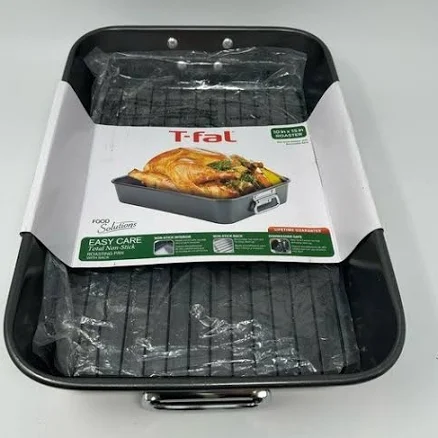
T-fal Easy Care Nonstick Roasting Pan with Rack, Is It Non-Toxic?
Teflon-type coating non-stick coating, disclosed by the brand.
T-fal lists this range among its products containing intentionally added PFAS and says its nonstick contains Teflon-type coating, a Teflon-family coating in the PFAS family.
The better-graded swap
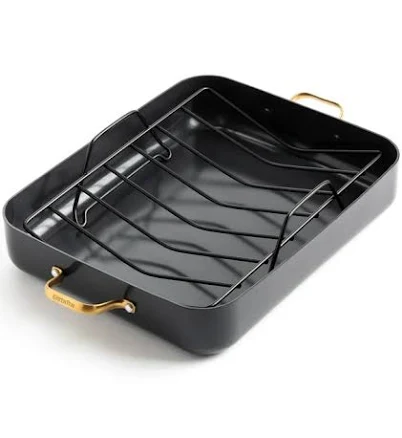
GreenPan
GreenPan Reserve Ceramic Nonstick Roasting Pan with Rack
70/100 safety
Same rubric that flunked this product. The swap earned Good.
Still want this one anyway? Check the price on Amazon. We’d swap it.
Material
Teflon-type coating non-stick coating, as disclosed by T-fal for this range
Lab data
No public lab test
You may also be interested in
Top-graded picks in the categories readers replace first, every one scored on the same rubric.

- polypropylene filter housing, carbon/sediment cartridge
- We found no PFAS statement from the brand
- Bacterial growth in spent cartridges
3 hazards checked on this product, all on its full breakdown.

Aquasure
Premier Series 75 GPD Under Sink Reverse Osmosis Water Filtration System
- RO membrane, carbon filters, stainless steel housing
- We found no PFAS statement from the brand
- Bacterial and microbial growth in housing and filters
4 hazards checked on this product, all on its full breakdown.

Avocado
Vegan Mattress
- organic cotton, natural latex, coconut coir, recycled steel coils
- The brand calls it PFAS-free, which we have not verified
- Heavy metals
2 hazards checked on this product, all on its full breakdown.
Is T-fal Easy Care Nonstick Roasting Pan Rack non-toxic? What it is made of
This roasting pan uses Teflon-type coating (polytetrafluoroethylene) as the nonstick coating applied over a metal substrate, likely aluminum or steel. Teflon-type coating itself is chemically stable at normal cooking temperatures below 500°F, but when overheated it can decompose and release fumes that pose acute respiratory risk. The coating's durability depends on avoidance of metal utensils, abrasion, and thermal stress; once compromised, the underlying metal may leach or coating fragments may enter food.
What’s concerning
No PFAS disclosure
No PFAS-free statement from the brand for this product.
PTFE / Teflon confirmed
The brand discloses a Teflon-type coating.
Category baseline
The starting point for this type of product, before anything specific to this product is counted.
Teflon-type coating thermal decomposition fumes
Teflon-type coating-coated cookware above 500°F releases fumes; acute inhalation risk documented in literature and by EPA. This pan's oven-use context increases overheating risk if temperature guidelines are not followed.
Coating degradation and metal leaching
Abrasion, metal utensils, and dishwasher use compromise Teflon-type coating over time. Once breached, underlying aluminum (if present) may leach; no brand specification of substrate material is disclosed for this model.
Microplastic or coating fragment ingestion
Worn or chipped Teflon-type coating can shed fragments into food. Risk increases with pan age and mechanical damage; no published incident data for this specific model.
Aluminum leaching from substrate
If substrate is aluminum and Teflon-type coating is compromised, acidic or prolonged contact may increase leaching. Brand does not specify substrate material; assumption of aluminum is common in nonstick roasting pans but unconfirmed for this model.
What’s reassuring
Lead
No published recalls or test failures for this T-fal model. Modern cookware from established brands typically complies with FDA limits, but substrate composition is not disclosed in available product documentation.
Source, ATSDR ↗How is this PFAS grade calculated?
The brand's record and disclosure
T-fal explicitly discloses the Teflon-type coating nonstick coating in product materials, meeting baseline transparency. The brand maintains no public statement on PFAS reduction or phase-out timelines, and no independent certifications (e.g., GOTS, bluesign) are associated with this cookware line. No product recalls specific to this model have been published by CPSC or T-fal.
How it compares in its category
Roasting pans with Teflon-type coating coatings are standard in mass-market cookware; this product sits in the conventional tier. Alternatives include uncoated stainless steel (no fume risk, requires oil or butter), cast iron (no coating degradation risk, requires seasoning), and ceramic-coated pans (lower PFAS burden but variable durability). T-fal's Teflon-type coating offering is not distinguished by lower-concern material choices relative to competitors at its price point.
If you buy it
Keep roasting oven temperature at or below 500°F to avoid Teflon-type coating fume release; never preheat empty. Hand-wash only; avoid scouring pads, metal utensils, and dishwasher, which accelerate coating wear. Inspect the coating annually for chips, peeling, or bare spots; replace the pan if damage is visible. Store with a protective liner to minimize friction during stacking.
What is not known about PFAS in this product?
- Basis
- Model estimate, 45% confidence, not a lab result
- Lab test
- None on record for this exact product
- Brand statement
- T-fal has made a specific claim
Formulations change between production runs, so check the current label. How we grade.
What are the PFAS-free alternatives to T-fal Easy Care Nonstick Roasting Pan with Rack?
- Ceramic nonstick coating (Thermolon™)
- The brand calls it PFAS-free, which we have not verified
- Ceramic coating degradation over time
3 hazards checked on this product, all on its full breakdown.
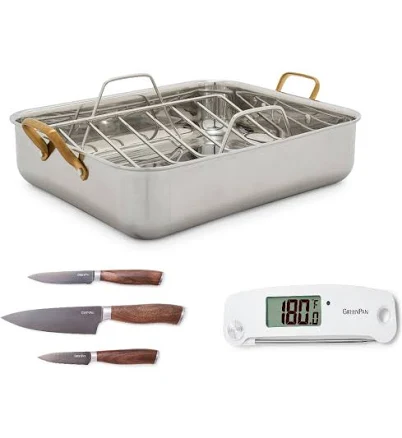
- Ceramic-reinforced nonstick coating (unspecified formulation)
- The brand calls it PFAS-free, which we have not verified
- Coating degradation over time
4 hazards checked on this product, all on its full breakdown.
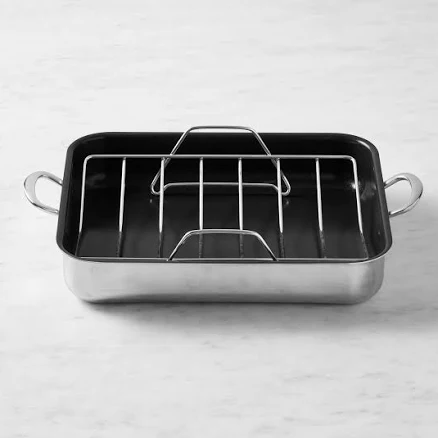
- Thermolon nonstick coating (proprietary blend, composition not fully disclosed)
- The brand calls it PFAS-free, which we have not verified
- Aluminum leaching
3 hazards checked on this product, all on its full breakdown.
More roasting pans grades
How we score, every product runs through the same public 0-100 rubric based on materials, coatings, brand disclosure, lab findings, and recalls. See the full methodology → Spotted a mistake? Report an error.