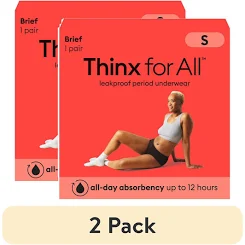
(2 pack) Thinx for All Period Underwear for Women, Super Absorbency, Black, S-xl, Women's, Size: Small
Skip until brand discloses waterproof coating chemistry.
Thinx period underwear uses an undisclosed waterproof treatment, likely water-repellent coating-coated for leak protection. Brand provides no PFAS disclosure or certification, limiting confidence in safety assessment.
The better-graded swap
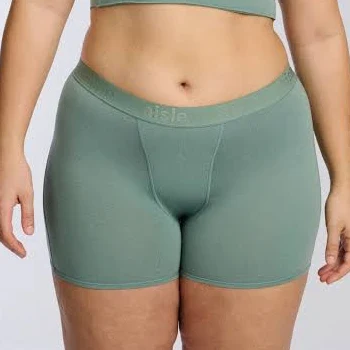
Aisle
Aisle Best-Selling Leakproof Period Boxer Brief - Essential Boxer Essential Boxer Eucalyptus / 2X
90/100 safety
Same rubric that flunked this product. The swap earned Excellent.
Still want this one anyway? Check the price on Amazon. We’d swap it.
Material
Cotton/synthetic blend with proprietary waterproof coating
Lab data
No public lab test
What (2 pack) Thinx for All Period Underwear is made of, ingredients and materials
Thinx period underwear uses a cotton/synthetic blend (typically cotton, spandex, and polyester) with a proprietary waterproof coating on the gusset to prevent leakage. The coating's chemistry is not publicly disclosed by the brand. Cotton is generally low-concern for direct contact; spandex and polyester themselves are inert, but the synthetic blend can harbor dyes and finishes applied during manufacture. The undisclosed waterproof coating is the primary material uncertainty in this product.
What’s concerning
Waterproof / stain-resistant treatment
Water-repellent coating treatments have historically used PFAS.
Category baseline
The starting point for this type of product, before anything specific to this product is counted.
No PFAS disclosure
No public statement from the brand about PFAS in this product.
Waterproof coating composition (undisclosed)
The proprietary waterproof layer is not publicly named or analyzed. PFAS is a known concern in textile coatings; absence of brand disclosure does not rule out PFAS presence. No independent testing of this specific product formulation is on record.
Coating degradation and leachates over time
All polymeric waterproof coatings degrade with washing, stretching, and heat exposure. As the coating degrades, contact with the underlying textile increases, and any unreacted monomers or processing residues in the coating matrix could leach. Thinx does not publish data on coating lifespan or degradation by-products.
What’s reassuring
Synthetic dyes and finish treatments
No specific recalls, azo-dye violations, or heavy-metal contamination are documented for Thinx period underwear. Cotton and polyester textiles may carry residual dyes and formaldehyde-based finishes from manufacture, but Thinx provides no dye standard or finish disclosure (e.g., Oeko-Tex) to assess risk.
Microplastics
Spandex and polyester do not leach hazardous chemicals at body temperature. Fiber shedding in washing is minimal and not specific to this product, though synthetic blends shed more than 100-percent cotton. No microplastic-release testing is on record for this product.
Source, EPA ↗Formaldehyde / VOCs
Formaldehyde-based finishes (used for wrinkle resistance and shrinkage control in cotton-polyester blends) are not documented in Thinx product materials. No certification or testing is publicly available to rule this in or out.
Source, ATSDR ↗The full breakdown
The brand's record and disclosure
Thinx has not published detailed ingredient lists, material safety data, or waterproof coating chemistry despite multiple product inquiries from consumers and independent analysts. The brand has faced criticism for vague marketing claims about sustainability and safety without third-party certification (no Oeko-Tex, GOTS, or similar standards listed on product). No major recalls or adverse event reports are on record for this specific product line. The lack of transparency on the waterproof layer is a documented gap, not a hidden scandal, but it prevents independent verification of PFAS or other coating hazards.
How it compares in its category
Most reusable period underwear and cloth pads rely on waterproof coatings (often laminated polyurethane or undisclosed blends); Thinx is not unique in this regard. Brands like Aisle, Lunapads, and some Knix products offer similar products with equally opaque coating disclosures, or in a few cases, stated PFAS-free polyurethane. Conventional disposable pads contain superabsorbent polymers (SAP) and plastic but avoid the waterproof-coating question. Thinx's reusability is an environmental advantage, but the coating opacity is sector-wide, not brand-specific.
If you buy it
Wash in cold water, air dry, and avoid heat (dryer, high-temperature water) to preserve the waterproof coating; heat can degrade or off-gas coating materials. Replace the garment if the coating begins to crack, peel, or lose water repellency, as this signals barrier breakdown. Do not bleach or use harsh detergents; mild detergent and gentle agitation protect both the textile and coating. Request detailed coating chemistry from the brand before purchase if PFAS exposure is a personal concern; silence may indicate PFAS presence or unwillingness to disclose.
What we don’t know
- Basis
- Model estimate, 35% confidence, not a lab result
- Lab test
- None on record for this exact product
- Brand statement
- Thinx has made a specific claim
Formulations change between production runs, so check the current label. How we grade.
Better-graded alternatives in Period Underwear

Ruby Love
Rubylove First Period Kit +teen Period Underwear
- organic cotton, waterproof backing layer
- A third party reports verifying it as PFAS-free
- Coating degradation and microparticle shedding
2 hazards checked on this product. See all of them.
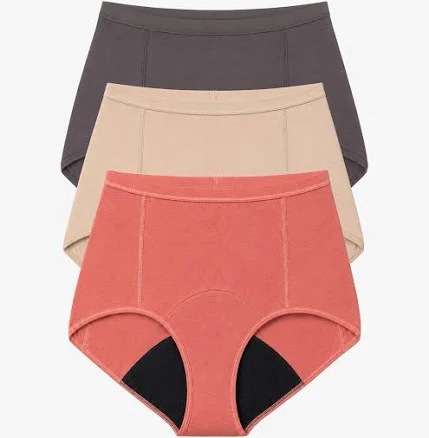
Lunapads
3-Pack BOOST Brief
- organic cotton blend, water-resistant gusset
- The brand calls it PFAS-free, which we have not verified
- Microplastic shedding from water-resistant barrier

Aisle
Super Hipster
- Organic cotton, wood pulp fiber
- The brand calls it PFAS-free, which we have not verified
- Azo dyes and synthetic dyes
2 hazards checked on this product. See all of them.
More period underwear grades
How we score, every product runs through the same public 0-100 rubric based on materials, coatings, brand disclosure, lab findings, and recalls. See the full methodology → Spotted a mistake? Report an error.