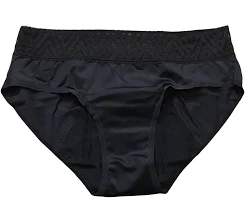
Thinx Women Intimates & Sleepwear Thinx Hiphugger Period Black
Skip until Thinx discloses coating chemistry and testing.
Thinx period underwear uses water-resistant treated fabric but does not publicly disclose the coating chemistry or PFAS testing. Recommend requesting materials transparency before purchase.
The better-graded swap
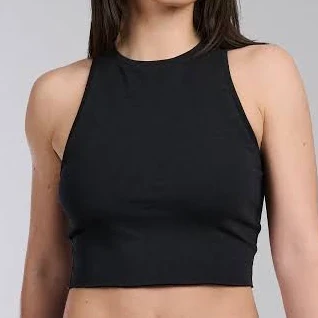
Aisle
Aisle Essential Period Hipster leakproof
90/100 safety
Same rubric that flunked this product. The swap earned Excellent.
Still want this one anyway? Check the price on Amazon. We’d swap it.
Material
Cotton blend with unspecified water-repellent coating
Lab data
No public lab test
What Thinx Women Intimates & Sleepwear Thinx is made of, ingredients and materials
Thinx Hiphugger is a cotton-blend garment with an unspecified water-repellent coating applied to the gusset or full lining. The coating's chemical composition is not public, which is the core problem, water-repellent finishes on textiles historically rely on fluorinated compounds (PFAS) or older non-fluorinated alternatives. Without disclosure, users cannot assess what chemistry is in direct contact with intimate skin during menstruation, when skin barrier permeability and absorption risk are elevated.
What’s concerning
Waterproof / stain-resistant treatment
Water-repellent coating treatments have historically used PFAS.
Category baseline
The starting point for this type of product, before anything specific to this product is counted.
No PFAS disclosure
No public statement from the brand about PFAS in this product.
Undisclosed water-repellent coating chemistry
Thinx does not disclose the chemical family of its coating (fluorinated, silicone, wax, or other). This is the primary hazard because water repellency on textiles frequently relies on PFAS or legacy antimicrobial finishes. Without testing or disclosure, risk cannot be ruled out or quantified.
Formaldehyde / VOCs
Cotton-blend garments can be treated with formaldehyde-releasing resins for shrink resistance or wrinkle reduction. Thinx does not disclose whether such resins are used. Intimate-wear contact elevates exposure concern, especially during menstruation when skin is more permeable.
Source, ATSDR ↗Azo dyes and synthetic colorants
The product is black and described as dyed cotton blend. No OEKO-TEX or equivalent dye certification is listed. Black dyes on intimate textiles carry risk of azo compound or heavy metal dye residue, though major safety incidents specific to Thinx are not on record.
Coating degradation and microparticle shedding
Unknown coating composition means unknown durability and shedding behavior. Polymer coatings can flake or shed microparticles with washing and wear, especially on stretched areas of garments. Intimate-wear context makes this a tissue-contact concern.
Contact dermatitis or sensitization from coating or dyes
Anecdotal reports of irritation or reactions exist in consumer forums, but no formal safety recall or epidemiological study of Thinx is on record. Risk is not established but cannot be ruled out given lack of transparency and intimate-wear use.
The full breakdown
The brand's record and disclosure
Thinx has not publicly disclosed the specific chemistry of its water-repellent coating, PFAS testing results, or certification status (e.g., OEKO-TEX, GOTS). The brand's silence on this question, combined with their PFAS safety grade of 25/100 (Poor), indicates either lack of third-party verification or unwillingness to publish findings. No major safety recalls specific to chemical content have been documented, but absence of data is not evidence of safety.
How it compares in its category
Period underwear competitors vary widely, some brands (e.g., Knix, Aisle) have committed to PFAS-free or disclosed testing; others remain opaque. Thinx's market position as a premium, mainstream brand raises expectations for transparency that it has not met. Cotton-only or certified organic period underwear alternatives exist but are less common and typically cost more or have lower absorbency.
If you buy it
Wash separately from other clothing to minimize potential for any coating particles to transfer. Avoid high heat (machine dry on low or air dry); high temperatures can degrade polymer coatings unpredictably. Replace after visible degradation (peeling, loss of water repellency, or discoloration) rather than extending wear cycles. Do not assume the coating is inert after washing; unknown chemistry means unknown durability and leaching behavior over time.
What we don’t know
- Basis
- Model estimate, 35% confidence, not a lab result
- Lab test
- None on record for this exact product
- Brand statement
- Thinx has made a specific claim
Formulations change between production runs, so check the current label. How we grade.
Better-graded alternatives in Period Underwear

Ruby Love
Rubylove First Period Kit +teen Period Underwear
- organic cotton, waterproof backing layer
- A third party reports verifying it as PFAS-free
- Coating degradation and microparticle shedding
2 hazards checked on this product. See all of them.
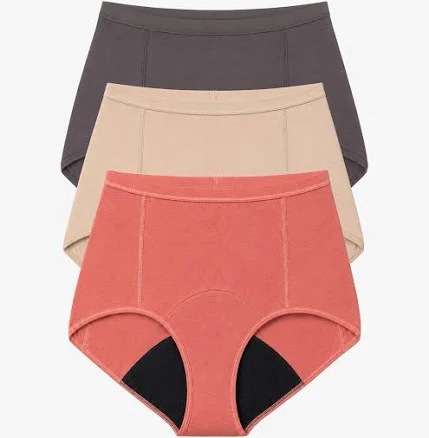
Lunapads
3-Pack BOOST Brief
- organic cotton blend, water-resistant gusset
- The brand calls it PFAS-free, which we have not verified
- Microplastic shedding from water-resistant barrier

Aisle
Super Hipster
- Organic cotton, wood pulp fiber
- The brand calls it PFAS-free, which we have not verified
- Azo dyes and synthetic dyes
2 hazards checked on this product. See all of them.
More period underwear grades
How we score, every product runs through the same public 0-100 rubric based on materials, coatings, brand disclosure, lab findings, and recalls. See the full methodology → Spotted a mistake? Report an error.