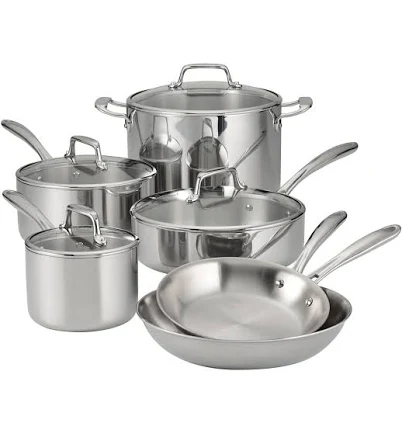
Tramontina Tri-Ply Clad 10 Pc Stainless Steel Cookware Set with Glass Lids
Lower concern. Bare stainless steel and glass with no coating on record.
This cookware set is made of stainless steel tri-ply clad construction and glass lids with no nonstick coating or surface treatment on record. The brand has no PFAS statement on record.
We flunk more products than we pass. This one earned its grade. How we grade
Material
stainless steel tri-ply clad, glass lids
Lab data
No public lab test
Are Tramontina Tri-Ply Clad 10 Pc Stainless non-toxic? What it is made of
This cookware uses a tri-ply clad construction, a stainless steel cooking surface bonded to an aluminum core for heat distribution, with an outer stainless steel layer. Glass lids are inert and chemically stable. Bare stainless steel does not leach problematic metals under normal cooking conditions, and the tri-ply design prevents direct aluminum contact with food. This material architecture avoids Teflon-type coating/nonstick coatings entirely, eliminating fume risk even at high heat.
What’s concerning
Category baseline
Cookware is a category where PFAS exposure is more common.
No PFAS disclosure
No public statement about PFAS in this product.
Stainless steel surface degradation and pitting
Prolonged exposure to high chloride environments (saltwater, heavily salted foods, or chlorine-based cleaners) can cause pitting corrosion in lower-grade stainless steel. Tramontina does not publicly disclose the specific stainless steel alloy grade (e.g., 304 vs. 430), making durability predictions uncertain, though pitting is typically cosmetic rather than a food safety hazard.
Glass lid thermal stress and breakage
Tempered glass lids can crack from rapid temperature changes (e.g., cold water on hot glass). This is a durability and injury risk rather than a chemical hazard, but replacement lids are an ongoing cost. No known defects in Tramontina glass lid quality are on record.
What’s reassuring
Bare uncoated material
Bare, uncoated material (cast iron, stainless, carbon steel, or glass) with no surface treatment to contain PFAS.
Aluminum core leaching
The tri-ply clad design fully encases the aluminum core between stainless steel layers, preventing direct contact with food. No documented cases of aluminum leaching from this product configuration exist in public safety databases.
Teflon-type coating fume risk
This product is bare stainless steel with no nonstick coating, so Teflon-type coating and associated high-heat fume concerns do not apply.
Lead
No ceramic glaze, enamel, or paint coatings are present on the cooking surface or glass lids. Stainless steel and tempered glass are inherently free of these legacy heavy metal risks.
Source, ATSDR ↗The full breakdown
The brand's record and disclosure
Tramontina is a Brazilian cookware manufacturer with widespread retail distribution in North America. The company does not publish comprehensive material safety or third-party certification disclosures. No major product recalls or documented safety controversies specific to this tri-ply stainless steel line are on public record. The brand maintains a silent stance on PFAS and other legacy hazard transparency, though this product's construction does not inherently require such disclosure.
How it compares in its category
Tri-ply stainless steel cookware sits in the mid-safety tier of the cookware market. It avoids the coating-degradation and fume risks of nonstick alternatives and the ceramic-glaze heavy metal concerns of some coated cookware. Comparable products from All-Clad or Le Creuset typically cost 2-3 times more with similar material safety profiles. Budget alternatives (single-ply stainless or ceramic coated) may introduce aluminum leaching or glaze durability questions.
If you buy it
Use low-to-medium heat; stainless steel heats slowly but conducts evenly, so high flame is unnecessary and can damage the lids. Hand wash glass lids to avoid thermal shock in dishwashers. Inspect the cooking surface annually for pitting or corrosion; small surface discoloration is normal, but deep pits may trap food and bacteria. The aluminum core is fully enclosed, so normal cooking poses no leaching risk; avoid prolonged soaking or abrasive scrubbing of joints where the cladding meets.
What we don’t know
- Basis
- Model estimate, 82% confidence, not a lab result
- Lab test
- None on record for this exact product
- Brand statement
- Tramontina has made a specific claim
Formulations change between production runs, so check the current label. How we grade.
Better-graded alternatives in Cookware
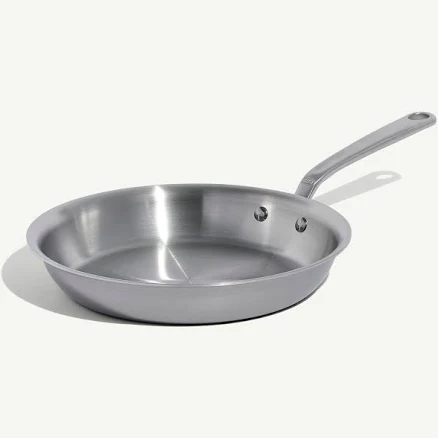
Made In
Stainless Clad Fry Pan
- Stainless steel clad construction, no nonstick coating
- The brand calls it PFAS-free, which we have not verified
- Clad separation or delamination over time
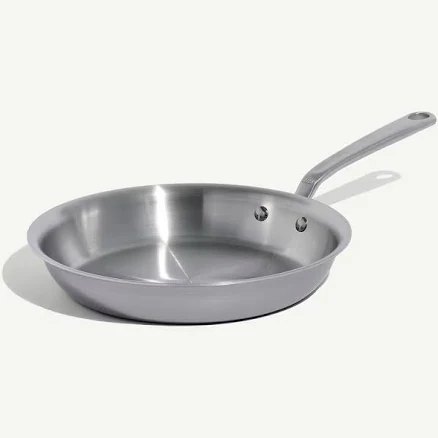
Made In
10' Stainless Clad Frying Pan
- stainless steel clad construction, no nonstick coating
- The brand calls it PFAS-free, which we have not verified
- Nickel leaching from stainless steel
3 hazards checked on this product. See all of them.
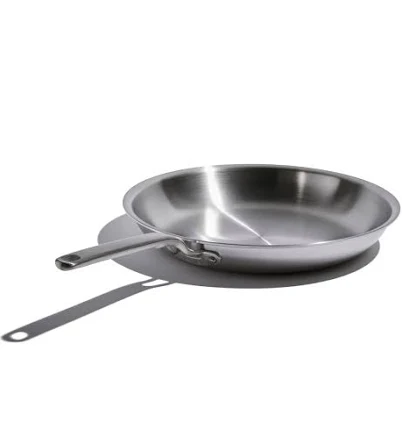
Heritage Steel
Eater Fry Pan
- Clad stainless steel, no coating
- The brand calls it PFAS-free, which we have not verified
- Metal ion release during cooking (iron, nickel, chromium)
More cookware grades
How we score, every product runs through the same public 0-100 rubric based on materials, coatings, brand disclosure, lab findings, and recalls. See the full methodology → Spotted a mistake? Report an error.