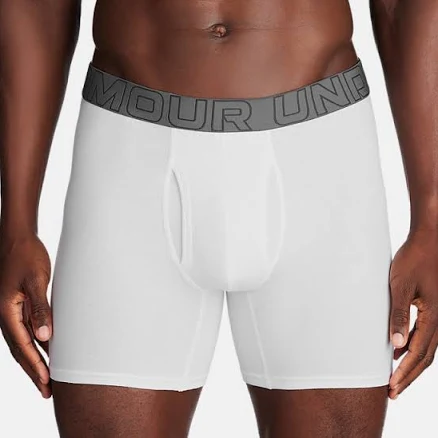
Under Armour · Sports Performance Undergarments
Men's Under Armour Charged Cotton 6-inch Novelty Boxerjock 3-Pack
Lower PFAS concern. Cotton boxers unlikely to contain intentional PFAS.
Charged Cotton is a moisture-wicking cotton blend with no disclosed waterproof or stain-resistant finish. Basic cotton underwear typically avoids PFAS treatment.
Still want this one anyway? Check the price on Amazon. We’d swap it.
Material
Cotton blend (Charged Cotton proprietary fabric)
Brand disclosure
Brand is silent on PFAS
Lab data
No public lab test
What Men's Under Armour Charged Cotton 6-inch is made of, ingredients and materials
Charged Cotton is Under Armour's proprietary cotton-blend fabric (typically 60-80% cotton with polyester/elastane). The cotton content dominates, reducing plastic-derived chemical exposure relative to synthetic-heavy alternatives. Polyester and elastane additions provide stretch and durability but introduce polymer-based dye carriers and finishing chemicals. No public data indicates intentional flame retardants, antimony, or formaldehyde-release treatments in this casual hosiery line.
What’s concerning
Category baseline
The starting point for this type of product, before anything specific to this product is counted.
No PFAS disclosure
No public statement from the brand about PFAS in this product.
Azo dyes and synthetic colorants
Polyester-cotton blends rely on synthetic acid/reactive dyes standard in apparel manufacturing. Most commercial dyes are compliant with EU restrictions on carcinogenic azo compounds, but no product-specific testing is disclosed by Under Armour. Loose dye release is normal in first few washes.
Formaldehyde / VOCs
Casual cotton apparel may receive formaldehyde-based resin finishes to prevent shrinkage and wrinkles. Under Armour does not state exclusion of these additives. Levels in untreated cotton blends are typically well below regulatory thresholds, but not independently verified for this product.
Source, ATSDR ↗Antimony in polyester
Polyester component may contain antimony trioxide (a catalyst used in resin synthesis). Skin contact exposure from apparel is considered negligible in toxicology literature, but is present in most synthetic fibers at trace levels.
Elastic degradation and microfiber shedding
Elastane/spandex deteriorates with heat and repeated washing, potentially shedding microscopic fibers. This is a wear-out mechanism rather than a chemical hazard, but relevant to product lifespan and environmental persistence.
What’s reassuring
Base material not linked to PFAS
The main material recorded for this product is not one associated with PFAS.
Skin sensitization from residual dyes or finishes
No recalls or widespread complaints of contact dermatitis linked to this product or line. Standard risk for dyed apparel in users with sensitive skin or dye allergies; pre-wash mitigates this.
The full breakdown
The brand's record and disclosure
Under Armour does not publicly disclose fabric chemical testing or restrict hazardous dyes/finishes in consumer communications. The brand has not faced major recalls or documented safety violations in apparel. No certification (OEKO-TEX, GOTS) is marketed for this product, suggesting standard industrial dyeing and finishing without premium chemical vetting. PFAS disclosure is silent, consistent with the broader athletic apparel industry's limited transparency.
How it compares in its category
Cotton-blend boxers are generally lower-risk than fully synthetic or chemically-treated performance wear (which may contain antimicrobial finishes or heavy flame retardants). This novelty/casual line avoids performance claims that often trigger aggressive chemical treatment. Equivalent cotton-blend briefs from mass-market competitors (Hanes, Calvin Klein) operate under similar dye and finish standards with comparable disclosure gaps.
If you buy it
Wash before first wear to reduce loose dyes and any formaldehyde-type finishes common in apparel manufacturing. Machine wash warm (not hot), as heat can degrade elastane and accelerate pigment leaching. Line-dry or low heat to preserve elastic integrity over 50+ wash cycles. Replace when elastic fails or seams show wear, typically 12-24 months with regular rotation.
What we don’t know
- Basis
- Model estimate, 72% confidence, not a lab result
- Lab test
- None on record for this exact product
- Brand statement
- Under Armour has made none
Formulations change between production runs, so check the current label. How we grade.
More sports performance undergarments grades
How we score, every product runs through the same public 0-100 rubric based on materials, coatings, brand disclosure, lab findings, and recalls. See the full methodology → Spotted a mistake? Report an error.