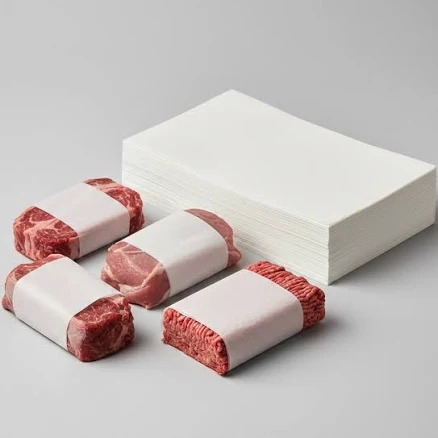
· Grease-Resistant Butcher & Deli Paper
High-Quality Meat Wrapping Paper
Avoid until brand discloses coating chemistry or PFAS status.
The brand' meat wrapping paper typically uses grease-resistant coatings, often fluorinated. No public disclosure of PFAS or coating details exists, creating uncertainty for food-contact safety.
The better-graded swap
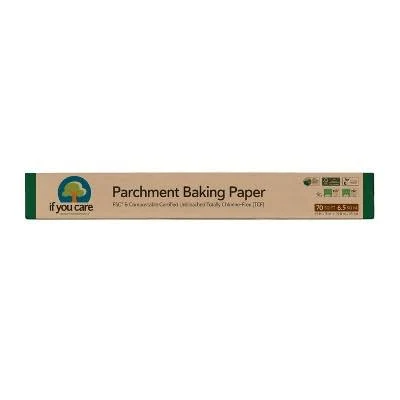
If You Care
If You Care Parchment Baking Sheets
90/100 safety
Same rubric that flunked this product. The swap earned Excellent.
Still want this one anyway? Check the price on Amazon. We’d swap it.
Material
bleached kraft paper with grease-resistant coating
Brand disclosure
Brand is silent on PFAS
Lab data
No public lab test
You may also be interested in
Top-graded picks in the categories readers replace first, every one scored on the same rubric.

- polypropylene filter housing, carbon/sediment cartridge
- We found no PFAS statement from the brand
- Bacterial growth in spent cartridges
3 hazards checked on this product, all on its full breakdown.

Aquasure
Premier Series 75 GPD Under Sink Reverse Osmosis Water Filtration System
- RO membrane, carbon filters, stainless steel housing
- We found no PFAS statement from the brand
- Bacterial and microbial growth in housing and filters
4 hazards checked on this product, all on its full breakdown.

Avocado
Vegan Mattress
- organic cotton, natural latex, coconut coir, recycled steel coils
- The brand calls it PFAS-free, which we have not verified
- Heavy metals
2 hazards checked on this product, all on its full breakdown.
What High-Quality Meat Wrapping Paper is made of, ingredients and materials
Meat wrapping paper is bleached kraft paper treated with a grease-resistant coating. Bleached kraft itself is generally food-safe, but the grease-resistant layer is the critical unknown, it is often formulated with PFAS (PFAS "forever chemicals") or silicone-based alternatives, neither of which the brand discloses. The coating's composition directly determines whether it leaches into fatty foods like meat, where it can migrate readily.
What’s concerning
Category baseline
The starting point for this type of product, before anything specific to this product is counted.
No PFAS disclosure
No public statement from the brand about PFAS in this product.
Waterproof / stain-resistant treatment
Water-repellent coating treatments have historically used PFAS.
PFAS
Grease-resistant food-contact papers commonly used PFAS historically; The brand has not disclosed whether this product contains PFAS. Migration to fatty meat is plausible, especially under warm conditions or prolonged contact.
Source, ATSDR ↗PFAS
If the coating is not PFAS-based, it may still be silicone or wax-derived; these are generally lower hazard but migration under heat or fat contact is not fully characterized for this specific formulation.
Source, ATSDR ↗Migration of coating polymers into food
Studies document measurable migration of grease-resistant coatings into fatty foods; risk increases with heat and duration of contact. This product's coating chemistry remains undisclosed, preventing hazard-specific assessment.
What’s reassuring
Chlorine residue from bleaching process
Food-grade bleached kraft is regulated and rinse-treated; chlorine residue hazard is not established for this category, though unbleached kraft avoids the step entirely.
Microplastics
No evidence specific to meat wrapping papers; risk is theoretical if coatings degrade mechanically and are ingested with food residue.
Source, EPA ↗How is this PFAS grade calculated?
The brand's record and disclosure
The brand has not publicly disclosed the chemistry of its grease-resistant coatings or stated a PFAS policy for food contact papers. No third-party certifications (e.g., GOTS, OEKO-TEX, or PFAS-free claims) are visible on this product. The brand's silence on coating composition is typical for conventional foodservice suppliers but reflects minimal transparency compared to retailers offering PFAS-free alternatives.
How it compares in its category
Bleached kraft wrapping papers with grease resistance span a wide spectrum, some use PFAS-based Teflon-family coating (legacy standard), some use chlorine-paraffin wax or silicone, and a growing subset market as PFAS-free with plant-based or non-fluorinated barriers. The brand does not market this as PFAS-free, placing it in the middle-to-higher-risk category. Certified PFAS-free alternatives exist but may cost more and require supplier-switching.
If you buy it
Use only for cold or ambient-temperature wrapping; avoid direct contact with hot or fatty meat immediately after cooking, as warmth accelerates coating migration. Store wrapped meat in a refrigerator and use within the product's recommended timeframe. Do not reuse sheets. If your source switches supply or introduces product changes, request the safety data sheet (SDS) or food contact article declaration (FDA) from the distributor to verify coating chemistry. Consider switching to uncoated kraft, parchment (often silicone-coated but more transparent), or explicitly PFAS-free brands once sourced.
What is not known about PFAS in this product?
- Basis
- Model estimate, 45% confidence, not a lab result
- Lab test
- None on record for this exact product
- Brand statement
- has made none
Formulations change between production runs, so check the current label. How we grade.
What are the PFAS-free alternatives to High-Quality Meat Wrapping Paper?
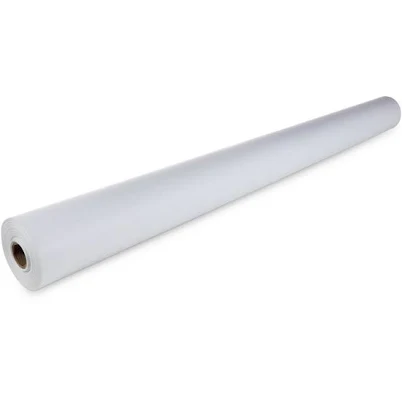
IDL Packaging
White Butcher Paper 18" x 12000" Natural Butcher Paper Roll for Meat and Fish
- unbleached natural kraft paper
- The brand calls it PFAS-free, which we have not verified
- Mold or microbial growth
- unbleached parchment paper, silicone coating
- The brand calls it PFAS-free, which we have not verified
- Silicone coating degradation under heat stress
2 hazards checked on this product, all on its full breakdown.
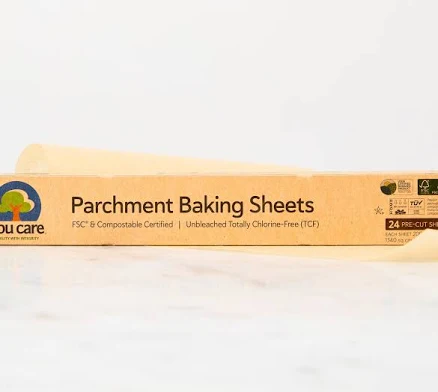
- Silicone-coated parchment paper
- The brand calls it PFAS-free, which we have not verified
- Silicone coating degradation at high heat
More grease-resistant butcher & deli paper grades
How we score, every product runs through the same public 0-100 rubric based on materials, coatings, brand disclosure, lab findings, and recalls. See the full methodology → Spotted a mistake? Report an error.