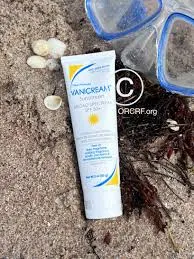
NFT Digital Image 7690 - Vanicream SPF 50+ Sensitive Skin Broad Spectrum Water Resistant 3oz
Sunscreen with no fluorinated ingredient on record, and no PFAS statement from the brand.
Vanicream has no PFAS statement on record for this sunscreen. Our record does not include an ingredient-level check, so look for fluorinated ingredients such as Teflon-type coating on the label.
We flunk more products than we pass. This one earned its grade. How we grade
Material
mineral sunscreen actives (zinc oxide/titanium dioxide) in emollient base; water-resistant polymer film
Lab data
No public lab test
You may also be interested in
Top-graded picks in the categories readers replace first, every one scored on the same rubric.

- polypropylene filter housing, carbon/sediment cartridge
- We found no PFAS statement from the brand
- Bacterial growth in spent cartridges
3 hazards checked on this product, all on its full breakdown.

Aquasure
Premier Series 75 GPD Under Sink Reverse Osmosis Water Filtration System
- RO membrane, carbon filters, stainless steel housing
- We found no PFAS statement from the brand
- Bacterial and microbial growth in housing and filters
4 hazards checked on this product, all on its full breakdown.

Avocado
Vegan Mattress
- organic cotton, natural latex, coconut coir, recycled steel coils
- The brand calls it PFAS-free, which we have not verified
- Heavy metals
2 hazards checked on this product, all on its full breakdown.
What NFT Digital Image 7690 Water Resistant is made of, ingredients and materials
This sunscreen uses zinc oxide and titanium dioxide as UV filters, both inorganic mineral actives with minimal systemic absorption and low allergenicity. The base is an emollient cream without oxybenzone, avobenzone, or other organic UV absorbers linked to endocrine concerns. Water-resistant polymer film provides durability in aquatic settings without relying on fluorinated compounds. Vanicream's formulation is free of fragrance, dyes, and common sensitizers by design for compromised skin.
What’s concerning
Category baseline
The starting point for this type of product, before anything specific to this product is counted.
No PFAS disclosure
No public statement from the brand about PFAS in this product.
1,4-dioxane (contaminant in emulsifiers)
Water-resistant emulsion-based sunscreens can contain ethoxylated emulsifiers or surfactants that may carry trace 1,4-dioxane as a manufacturing byproduct. Vanicream does not publish testing data for this contaminant; industry standards allow up to 10 ppm. Risk is low but unquantified without third-party testing.
What’s reassuring
Base material not linked to PFAS
The main material recorded for this product is not one associated with PFAS.
Heavy metals
Zinc oxide and titanium dioxide as sun filters are not heavy metals; no lead, cadmium, or arsenic contamination is reported in Vanicream formulations or mineral sunscreen class at approved concentrations.
Source, FDA ↗Formaldehyde / VOCs
No formaldehyde-releasing preservatives (DMDM hydantoin, imidazolidinyl urea) are listed in this product. Vanicream typically uses alternative preservative systems or paraben-free formulations.
Source, ATSDR ↗Talc contamination
This product is a liquid or cream sunscreen, not a powder. Talc is not an ingredient on record; no asbestos contamination risk applies to zinc oxide or titanium dioxide in sunscreen applications.
Fragrance allergens
This product is labeled fragrance-free; no essential oils, synthetic fragrances, or masking scents are listed. Very low risk for fragrance-related contact sensitization.
How is this PFAS grade calculated?
The brand's record and disclosure
Vanicream is owned by Almirall and markets itself as a dermatologist-recommended sensitive-skin line; no significant safety recalls or controversies are on record for this sunscreen. The brand does not publish detailed PFAS avoidance statements, but no fluorinated actives appear in the ingredient list or patent filings. Third-party certifications (e.g., National Eczema Association) support its hypoallergenic claims.
How it compares in its category
Mineral sunscreens with zinc oxide or titanium dioxide are considered lower-concern alternatives to chemical UV absorbers in terms of endocrine and systemic toxicity. This formulation aligns with pediatric and sensitive-skin dermatology standards. Compared to broad-spectrum sunscreens with oxybenzone, avobenzone, or homosalate, the mineral-only approach avoids established bioaccumulation and absorption data, though mineral oxides can cause white cast and particle visibility, which is a cosmetic rather than safety trade-off.
If you buy it
Apply generously and evenly to all exposed skin; mineral actives require adequate thickness for rated SPF performance. Reapply after water immersion despite water-resistant labeling, typically every 80 minutes in aquatic activity. Store in a cool, dry place away from direct heat; mineral sunscreen stability does not degrade significantly with normal storage. Check the expiration date; UV filter efficacy declines over time.
What is not known about PFAS in this product?
- Basis
- Model estimate, 62% confidence, not a lab result
- Lab test
- None on record for this exact product
- Brand statement
- Vanicream has made a specific claim
Formulations change between production runs, so check the current label. How we grade.
What are the PFAS-free alternatives to NFT Digital Image 7690 - Vanicream SPF 50+ Sensitive Skin Broad Spectrum Water Resistant 3oz?
- Mineral sunscreen, zinc oxide base
- A third party reports verifying it as PFAS-free
- 1,4-dioxane (non-intentional contaminant from surfactants/emulsifiers)
2 hazards checked on this product, all on its full breakdown.
- mineral sunscreen (zinc oxide or titanium dioxide base)
- The brand calls it PFAS-free, which we have not verified
- Synthetic fragrance allergens
More sunscreen grades
How we score, every product runs through the same public 0-100 rubric based on materials, coatings, brand disclosure, lab findings, and recalls. See the full methodology → Spotted a mistake? Report an error.