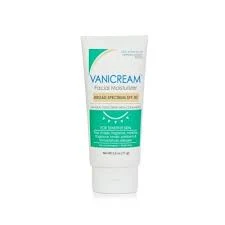
Vanicream Facial Moisturizer Broad Spectrum SPF 30
Low concern; typical emulsified moisturizer with mineral sunscreen, no PFAS triggers.
Water-based cream with zinc oxide mineral filter requires no PFAS compounds. Vanicream makes no PFAS claims and no credible testing flags contamination.
We flunk more products than we pass. This one earned its grade. How we grade
Material
water-based moisturizer with zinc oxide UV filter
Lab data
No public lab test
You may also be interested in
Top-graded picks in the categories readers replace first, every one scored on the same rubric.

- polypropylene filter housing, carbon/sediment cartridge
- We found no PFAS statement from the brand
- Bacterial growth in spent cartridges
3 hazards checked on this product, all on its full breakdown.

Aquasure
Premier Series 75 GPD Under Sink Reverse Osmosis Water Filtration System
- RO membrane, carbon filters, stainless steel housing
- We found no PFAS statement from the brand
- Bacterial and microbial growth in housing and filters
4 hazards checked on this product, all on its full breakdown.

Avocado
Vegan Mattress
- organic cotton, natural latex, coconut coir, recycled steel coils
- The brand calls it PFAS-free, which we have not verified
- Heavy metals
2 hazards checked on this product, all on its full breakdown.
What Vanicream Facial Moisturizer Spectrum SPF is made of, ingredients and materials
Vanicream Facial Moisturizer SPF 30 uses zinc oxide as its active UV filter rather than chemical absorbers like oxybenzone or avobenzone. Zinc oxide is a physical (mineral) sunscreen that sits on skin and reflects UV rays, making it less likely to absorb systemically than chemical alternatives. The water-based emulsion base is designed to minimize irritation, which aligns with Vanicream's hypoallergenic formula philosophy. No Teflon-type coating (Teflon), talc, or oxybenzone-class compounds are listed in publicly available ingredient disclosures.
What’s concerning
No PFAS disclosure
No public statement from the brand about PFAS in this product.
Category baseline
The starting point for this type of product, before anything specific to this product is counted.
1,4-dioxane contamination in emulsifiers
Water-based emulsified moisturizers can contain trace 1,4-dioxane as a byproduct of ethoxylated surfactants used in the base formula. Vanicream does not publicly disclose 1,4-dioxane testing results; the risk is typical for this product class but not confirmed absent in this specific formulation.
Contact sensitization to zinc or preservatives
Zinc can trigger allergic contact dermatitis in individuals with zinc hypersensitivity, though this is rare (less than 1% of the population). Vanicream's preservative system is not fully disclosed in consumer-facing materials, so trace reactions remain possible in highly sensitive individuals.
What’s reassuring
Base material not linked to PFAS
The main material recorded for this product is not one associated with PFAS.
Heavy metals
Zinc oxide itself is not a heavy metal concern at typical sunscreen concentrations. No lead, cadmium, or arsenic contamination has been reported in Vanicream products or zinc oxide raw materials in published safety assessments.
Source, FDA ↗Formaldehyde / VOCs
Vanicream explicitly formulates fragrance-free lines and avoids formaldehyde-releasing preservatives in most products. This moisturizer is marketed as free of added fragrance and common releasers like imidazolidinyl urea.
Source, ATSDR ↗Zinc oxide particle size and inhalation risk
Zinc oxide in moisturizer form (not powder sunscreen spray) poses minimal inhalation risk because it is bound in a wet matrix. No respiratory hazard alerts have been issued for topical zinc oxide moisturizer use.
How is this PFAS grade calculated?
The brand's record and disclosure
Vanicream is owned by Pharmaceutical Specialties Inc. and has built its market position on excluding common irritants and allergens (dyes, fragrance, formaldehyde releasers, lanolin, parabens in many lines). The brand does not make explicit PFAS commitments in public statements, but does provide detailed ingredient listings and avoids surfactant classes most commonly linked to PFAS contamination. No product recalls or safety controversies specific to this moisturizer have been reported in FDA or consumer databases as of available records.
How it compares in its category
Mineral sunscreen moisturizers with zinc oxide occupy a lower-risk position vs. chemical sunscreen lines, which sometimes use PFAS-prone emulsifiers or undergo systemic absorption debate. Vanicream's approach is more conservative than mass-market brands using octinoxate or homosalate. Among mineral options, this product sits in the moderate price-to-safety ratio and does not claim reef-safe or organic certifications that might signal additional cost without necessarily adding chemical safety benefit.
If you buy it
Apply as directed (typically 1/4 teaspoon for face) to ensure adequate UV coverage; zinc oxide is inert and does not degrade with light or moderate heat, so storage at room temperature is sufficient. Do not apply to broken or heavily irritated skin without consulting a dermatologist, as even hypoallergenic formulas can trigger individual sensitivities. Replace annually or if the product separates, thickens unusually, or develops an off odor, which may signal emulsion breakdown. Patch test on inner arm first if you have a history of metal sensitivities, as zinc is a known contact allergen in susceptible individuals.
What is not known about PFAS in this product?
- Basis
- Model estimate, 78% confidence, not a lab result
- Lab test
- None on record for this exact product
- Brand statement
- Vanicream has made a specific claim
Formulations change between production runs, so check the current label. How we grade.
What are the PFAS-free alternatives to Vanicream Facial Moisturizer Broad Spectrum SPF 30?
- Mineral sunscreen, zinc oxide base
- A third party reports verifying it as PFAS-free
- 1,4-dioxane (non-intentional contaminant from surfactants/emulsifiers)
2 hazards checked on this product, all on its full breakdown.
- mineral sunscreen (zinc oxide or titanium dioxide base)
- The brand calls it PFAS-free, which we have not verified
- Synthetic fragrance allergens
More sunscreen grades
How we score, every product runs through the same public 0-100 rubric based on materials, coatings, brand disclosure, lab findings, and recalls. See the full methodology → Spotted a mistake? Report an error.