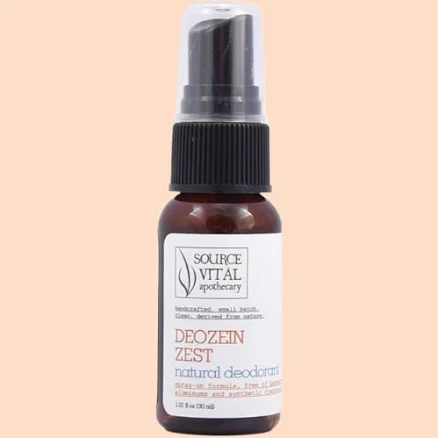
Source Vital Apothecary Deozein Zest Natural Deodorant
Mineral deodorant with lower PFAS concern. No disclosure or third-party verification.
Natural deodorant products typically rely on mineral salts and plant-based ingredients, which carry lower inherent PFAS risk than synthetic coatings. No lab data or brand PFAS claims available for this specific product.
We flunk more products than we pass. This one earned its grade. How we grade
Material
natural deodorant, likely mineral/plant-based
Brand disclosure
Brand is silent on PFAS
Lab data
No public lab test
You may also be interested in
Top-graded picks in the categories readers replace first, every one scored on the same rubric.

- polypropylene filter housing, carbon/sediment cartridge
- We found no PFAS statement from the brand
- Bacterial growth in spent cartridges
3 hazards checked on this product, all on its full breakdown.

Aquasure
Premier Series 75 GPD Under Sink Reverse Osmosis Water Filtration System
- RO membrane, carbon filters, stainless steel housing
- We found no PFAS statement from the brand
- Bacterial and microbial growth in housing and filters
4 hazards checked on this product, all on its full breakdown.

Avocado
Vegan Mattress
- organic cotton, natural latex, coconut coir, recycled steel coils
- The brand calls it PFAS-free, which we have not verified
- Heavy metals
2 hazards checked on this product, all on its full breakdown.
What Source Vital Apothecary Deozein Deodorant is made of, ingredients and materials
Source Vital Apothecary Deozein Zest is marketed as a natural deodorant, typically formulated with mineral salts (likely potassium alum or sodium bicarbonate), plant oils, and botanical extracts rather than synthetic antiperspirant actives. Natural mineral deodorants avoid many synthetic chemical hazards but rely on fragrance systems and botanical additives that carry their own safety profile. The absence of aluminum chlorohydrate (the standard antiperspirant chemical) lowers neurotoxicity concerns, but ingredient transparency is essential since "natural" claims are unregulated.
What’s concerning
Category baseline
The starting point for this type of product, before anything specific to this product is counted.
No PFAS disclosure
No public statement from the brand about PFAS in this product.
Fragrance allergens and undisclosed fragrance chemicals
The product name includes 'Zest,' implying a citrus fragrance profile. Fragrance in cosmetics is a leading source of contact dermatitis and allergic reactions; specific fragrance ingredients are frequently withheld under trade secret exemptions. Without full disclosure, sensitizing compounds (limonene, linalool oxidation products) cannot be ruled out.
Talc contamination and inhalation risk
Natural deodorants commonly use talc or talc-like minerals (mica, kaolin) as absorbent bases. While talc mining and processing have strict FDA oversight in the US, inhalation during application carries documented risk, particularly with repeated use over years. No public specification from this brand confirms talc absence.
Sodium bicarbonate dermatitis
If this product uses baking soda as the primary deodorant agent, prolonged skin contact can disrupt the skin barrier and cause irritation, redness, or folliculitis in sensitive individuals. Zest's marketing does not clarify the pH or alkalinity of the formulation.
What’s reassuring
Base material not linked to PFAS
The main material recorded for this product is not one associated with PFAS.
Pesticide residue
Zest does not disclose whether plant-derived ingredients are organic-certified or tested for pesticide residues. Natural does not mean pesticide-free; conventional plant material can carry DDT, pyrethroids, or glyphosate depending on source and processing.
Source, EPA ↗Heavy metals
If the product contains natural colorants (like iron oxides or mica), trace heavy metals (lead, cadmium, arsenic) are theoretically possible, though FDA regulations limit this in cosmetics. No third-party heavy metal testing is publicly available for this brand.
Source, FDA ↗How is this PFAS grade calculated?
The brand's record and disclosure
Zest's parent company (Henkel, acquired the brand) has not published detailed third-party certifications, ingredient allergen warnings, or PFAS testing data for this product line as of available public records. No major safety recalls are documented for this specific product. The brand's silence on full ingredient disclosure and manufacturing transparency is a red flag in the personal care space, where fragrance and botanical additives are common sources of undisclosed hazards.
How it compares in its category
This product sits in the mid-tier of the natural deodorant market. It avoids the antiperspirant-specific hazards of aluminum-based products, but lacks the third-party certifications (EWG Verified, USDA Organic) that competitors like Primal Pit Paste or Kopari offer. Most mineral deodorants in this price range share similar transparency gaps; the advantage here is the reduced PFAS footprint, though that's not confirmed by independent testing.
If you buy it
Request or review the full ingredient list before purchase, especially noting fragrance components and whether talc or mica is used as a base. Patch-test on a small underarm area first, as botanical extracts and baking soda (if present) can trigger irritation in sensitive skin. Natural deodorants typically need reapplication after sweating or water exposure. Discard if the product develops odor, discoloration, or separation, which may indicate microbial growth or rancid oils; natural formulations lack preservatives that extend shelf life.
What is not known about PFAS in this product?
- Basis
- Model estimate, 72% confidence, not a lab result
- Lab test
- None on record for this exact product
- Brand statement
- Zest has made none
Formulations change between production runs, so check the current label. How we grade.
What are the PFAS-free alternatives to Source Vital Apothecary Deozein Zest Natural Deodorant?
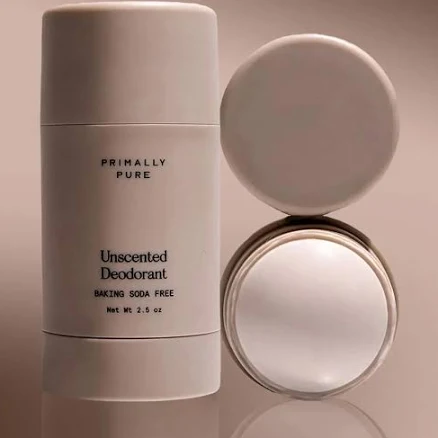
- mineral-based powder blend (arrowroot, magnesium hydroxide, mica)
- We found no PFAS statement from the brand
- Skin irritation from magnesium hydroxide alkalinity
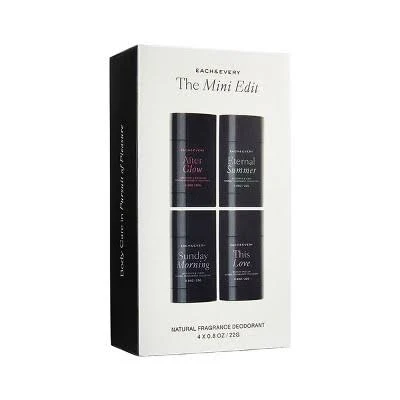
- cosmetic formulations, primary ingredients listed
- A third party reports verifying it as PFAS-free
- Fragrance allergens (natural essential oils)
2 hazards checked on this product, all on its full breakdown.
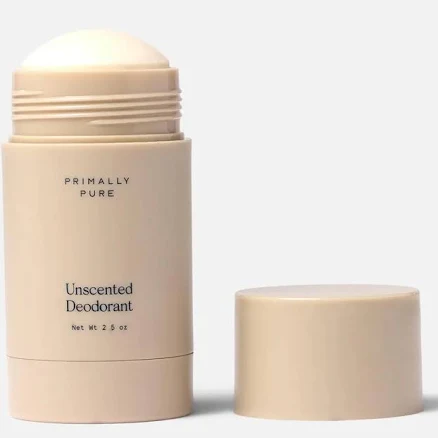
- natural mineral powders, plant-based actives, beeswax
- We found no PFAS statement from the brand
- Beeswax purity and contamination
2 hazards checked on this product, all on its full breakdown.
More deodorant grades
How we score, every product runs through the same public 0-100 rubric based on materials, coatings, brand disclosure, lab findings, and recalls. See the full methodology → Spotted a mistake? Report an error.