By PFAS Authority · Updated September 5, 2026
Top grades to buy
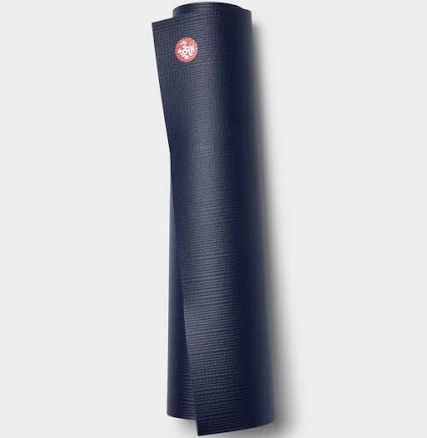
Manduka
Almost Perfect PRO Yoga Mat
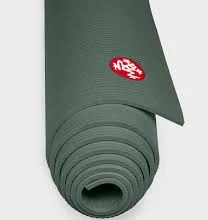
Manduka
Almost Perfect PROlite Yoga Mat
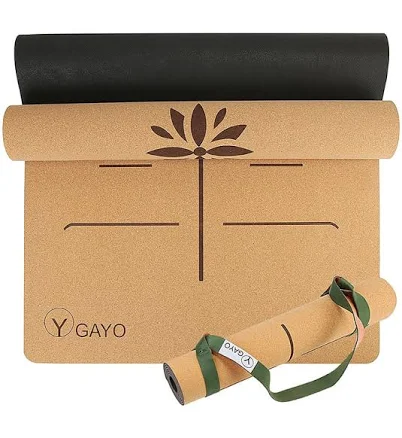
Premium Yoga Cork Mat 5mm Thick Natural Tree Rubber Base and Bigger Mat for Extra Support
Model-based grades, not lab tests. We flunk more than we pass. How grading works
PFAS in Yoga & Exercise Mats, Why Grip Coatings Are the Exception
We graded 76 yoga and exercise mats from Liforme, Jade Yoga, Manduka, adidas, Hugger Mugger, Prana, Retrospec, Iyengar Yoga and several house brands. 42 rubber, cork, TPE and foam mats with no coating on record grade 75. Three mats with a grip coating of unstated chemistry grade 40, and a Calia mat towel with a water-repellent coating grades 30, the lowest here.
None of these makers has a certification or a PFAS statement on record for the mats we graded. A high grade means lower concern based on reviewed materials, never PFAS-free and never safe.
Summary comparison table
| Product | PFAS grade | Surface as recorded |
|---|---|---|
| Liforme Yoga Mat | Excellent, 75/100 | Natural rubber, jute, cotton blend, no coating on record |
| Jade Yoga Mat 5mm | Excellent, 75/100 | Natural rubber, jute backing |
| Manduka X Yoga Mat | Excellent, 75/100 | PVC-free polyurethane and natural rubber blend |
| adidas Yoga Mat | Excellent, 75/100 | TPE or natural rubber base, uncoated |
| TPE Mat with Joint Protection | Poor, 40/100 | TPE, unspecified anti-slip coating |
| Sunny Health & Fitness Anti-Slip Mat | Poor, 40/100 | Rubber or PVC, coating unspecified |
| Calia 5mm Dry Grip Yoga Mat | Poor, 40/100 | Rubber, dry-grip coating unspecified |
| Calia No Slip Yoga Mat Towel | Poor, 30/100 | Microfiber polyester, water-repellent coating |
How we graded these
Every grade here is a model-based estimate built from publicly available product information and manufacturer disclosures, not a lab test performed by our team. A high score means lower concern based on reviewed sources, never PFAS-free and never safe. Across the 46 mats the spread is 42 at 75, three at 40 and one at 30. Look up any mat in our PFAS product finder.
A correction to this guide
An earlier version of this guide put three Liforme mats at 100, citing a MADE SAFE certification recorded as third-party PFAS-free verification. MADE SAFE does not list Liforme, and we removed that certification on 17 September 2026. The Liforme Yoga Mat, the Liforme Radiant Sun Yoga Mat and the Liforme Cosmic Moon Travel Yoga Mat now grade 75 on their materials alone, the same as every other uncoated mat in this guide.
Why 42 mats grade 75
Rubber, cork, TPE and foam mats with no coating or treatment on record earn a material credit and land at 75. This covers the full range from premium natural-rubber mats like Liforme, Jade Yoga and Manduka to budget TPE and foam mats from adidas, CAP Barbell, Retrospec and house brands. None of these makers has published a PFAS statement, so none reaches higher than 75. A high estimate here means lower concern based on current data, not a guarantee of zero PFAS content.
Why the grip-coated mats grade 40
Three mats, from Sunny Health & Fitness, Calia and a generic TPE seller, carry an anti-slip or dry-grip surface coating whose composition is not disclosed. Anti-slip coatings are a category where PFAS-related surface treatments have historically appeared, and an undescribed coating is treated the same as an unknown one by our model, which is why these three drop below the plain mats.
Why the Calia mat towel grades 30
The Calia No Slip Yoga Mat Towel is the one product in this guide with a named water-repellent coating rather than an unspecified one, which is why it grades lower than the other three coated products.
What to avoid
- Mats marketed around "dry grip" or "anti-slip" performance without naming the coating. Every mat below 75 in this guide falls short on exactly that gap.
- Assuming a natural-rubber or cork mat is automatically PFAS-free. It grades well here on materials, not on a certification.
- Trusting a third-party certification claim without checking it against the certifier's own list, as this guide had to do with Liforme and MADE SAFE.
Our pick
Based on available materials and data, any of the 42 mats at 75 represents the lowest concern in this comparison, whether that is a premium natural-rubber mat like Liforme or Jade Yoga or a budget TPE mat from adidas or a house brand. What separates them from the rest of the field is a lack of any coating on record, not a certification, so treat 75 as the ceiling for this category today rather than a finish line.
FAQ
Are yoga mats a common source of PFAS?
Plain rubber, cork and TPE mats with no coating on record are lower concern in our data. Mats marketed for extra grip or dry-grip performance are the ones to check first, since that is where an undisclosed coating shows up.
Is a MADE SAFE certification on a yoga mat something I should verify myself?
Yes. We removed a MADE SAFE claim from three Liforme mats after finding Liforme is not on MADE SAFE's own list. Check any third-party certification claim against the certifying body's published list rather than a brand's marketing page.
Does a 75/100 grade mean a mat is PFAS-free?
No. It means the mat's record shows no coating or treatment, which our model treats as lower concern. No mat in this guide has independent lab testing behind its grade, and we do not call any of them PFAS-free or safe.
Now check your own stuff
See every product we’ve graded in this category, best-graded first.
Get the graded list, free.
The products we score each week, and the best-graded alternative in every category.
No spam. Unsubscribe anytime.