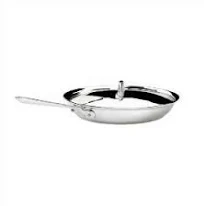
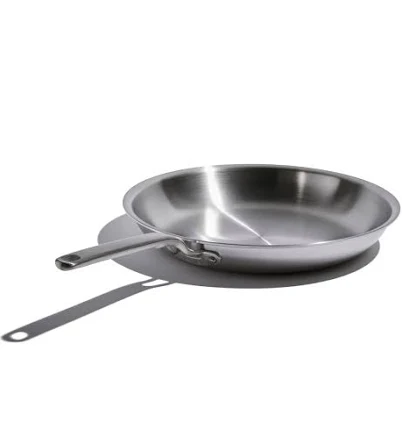
All-Clad D3 Stainless Steel Fry Pan with Lid
Lower PFAS concern; bare stainless steel cookware, no nonstick coating.
All-Clad D3 uses stainless steel with no nonstick or Teflon-family coating, reducing PFAS risk versus coated cookware. No brand PFAS claims available; bare metal construction is not associated with PFAS.
The better-graded swap
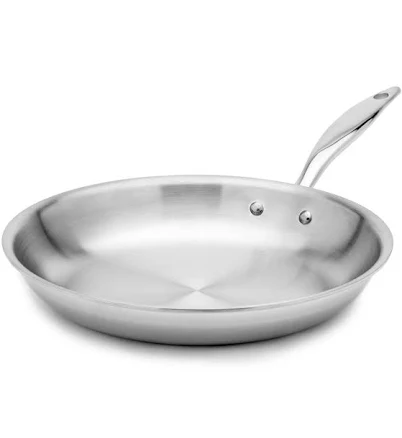
Heritage Steel
Heritage Steel Fry Pan
100/100 safety
Same rubric that flunked this product. The swap earned Excellent.
Still want this one anyway? Check the price on Amazon. We’d swap it.
Material
Stainless steel exterior, uncoated cooking surface
Lab data
No public lab test
Is All-Clad D3 Stainless Steel Fry Pan non-toxic? What it is made of
The D3 cooking surface is bare stainless steel (18/10 grade), meaning no synthetic nonstick coating, no Teflon-type coating, and no Teflon-family coating. The handle and lid hardware are stainless steel or heat-resistant composite materials. Bare stainless steel does not off-gas harmful fumes under normal cooking temperatures and does not degrade into the food over time. The "D3" designation refers to All-Clad's bonded tri-ply construction (stainless-aluminum-stainless), which is a standard industrial design that prevents aluminum from leaching into food.
What’s concerning
Category baseline
The starting point for this type of product, before anything specific to this product is counted.
No PFAS disclosure
No public statement from the brand about PFAS in this product.
Stainless steel corrosion or pitting
Pitting can occur with prolonged exposure to chloride (salt, acidic brines) but is cosmetic and does not release harmful metals into food. Proper rinsing and drying prevent this.
Lid gasket degradation or heat damage
Silicone or rubber gaskets on the lid can harden over time with repeated high-heat exposure or dishwasher use. Replacement gaskets are available; degradation does not pose a direct safety risk but compromises the seal.
What’s reassuring
Bare uncoated material
Recorded as a bare, uncoated material with no surface coating or treatment.
Aluminum leaching from tri-ply core
The aluminum in the D3 design is sandwiched between stainless steel layers and does not contact food or cooking surfaces. No reports of leaching from All-Clad D3 cookware exist in public safety literature.
Teflon-type coating or Teflon-family coating fume release
This product has a bare stainless steel cooking surface with no nonstick coating, so Teflon-type coating or related fumes are not a concern.
Lead
The D3 has no enameled interior or decorative glaze; the cooking surface is bare metal. No lead or cadmium hazard applies to this product.
Source, ATSDR ↗The full breakdown
The brand's record and disclosure
All-Clad (owned by Groupe SEB) does not publish a detailed PFAS or chemical disclosure statement, but the company has not faced recalls related to toxic coatings or leaching in this product line. The brand is known for manufacturing in the USA and maintaining consistent quality standards. All-Clad's silence on PFAS is typical of legacy cookware makers who do not use nonstick coatings; the absence of a stance reflects that their core product does not employ the chemicals in question.
How it compares in its category
Uncoated stainless steel cookware has lower concern in the cookware category compared to nonstick cookware, which carries hazards of Teflon-type coating fume release and coating breakdown. It sits in a different safety tier than ceramic-coated or hard-anodized aluminum pans, which carry independent risks. The D3 design is typical of mid-to-premium stainless steel cookware; competitors like Cuisinart or Le Creuset ceramic-coated lines carry different chemical profiles.
If you buy it
Use on medium to medium-high heat to avoid warping and to preserve the stainless surface. Hand wash or use dishwasher; stainless steel is resilient to both. Do not leave acidic or salty foods sitting in the pan for extended periods, as prolonged contact can cause pitting (cosmetic, not a safety hazard, but unwanted). Replace the lid gasket if it becomes hard or no longer seals; this is the only wear component. The cookware itself should last decades with normal care.
What we don’t know
- Basis
- Model estimate, 78% confidence, not a lab result
- Lab test
- None on record for this exact product
- Brand statement
- All-Clad has made a specific claim
Formulations change between production runs, so check the current label. How we grade.
Better-graded alternatives in Cookware
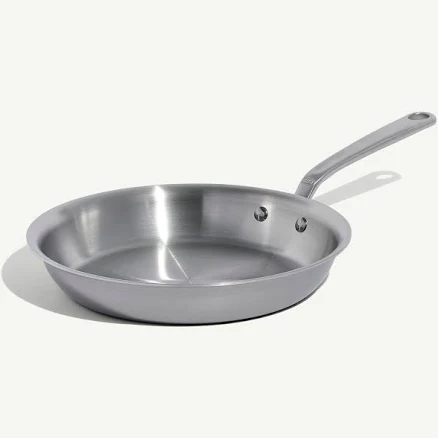
Made In
Stainless Clad Fry Pan
- Stainless steel clad construction, no nonstick coating
- The brand calls it PFAS-free, which we have not verified
- Clad separation or delamination over time
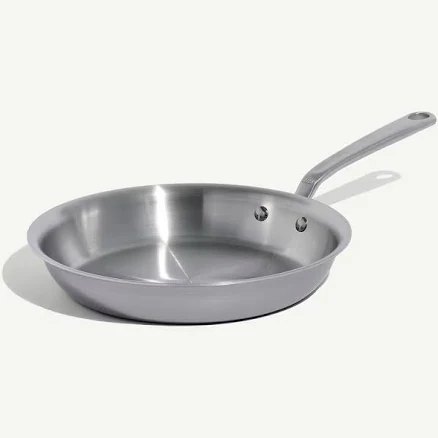
Made In
10' Stainless Clad Frying Pan
- stainless steel clad construction, no nonstick coating
- The brand calls it PFAS-free, which we have not verified
- Nickel leaching from stainless steel
3 hazards checked on this product. See all of them.
Heritage Steel
Eater Fry Pan
- Clad stainless steel, no coating
- The brand calls it PFAS-free, which we have not verified
- Metal ion release during cooking (iron, nickel, chromium)
More cookware grades
How we score, every product runs through the same public 0-100 rubric based on materials, coatings, brand disclosure, lab findings, and recalls. See the full methodology → Spotted a mistake? Report an error.