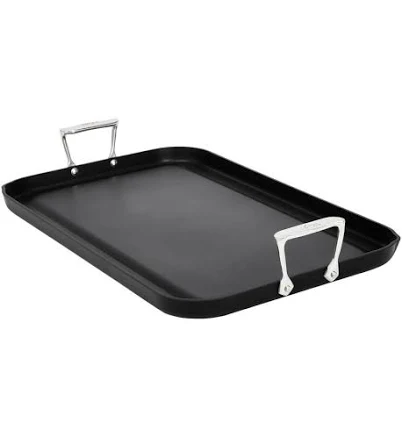
NS Pro Nonstick Cookware Double Burner Griddle, Is It Non-Toxic?
Teflon-type coating non-stick coating, disclosed by the brand.
All-Clad says its nonstick contains Teflon-type coating, and lists its HA1, Essentials, NS1, D3 and D5 nonstick lines among its Teflon-type coating coated products. Teflon-type coating is a Teflon-family coating in the PFAS family.
The better-graded swap
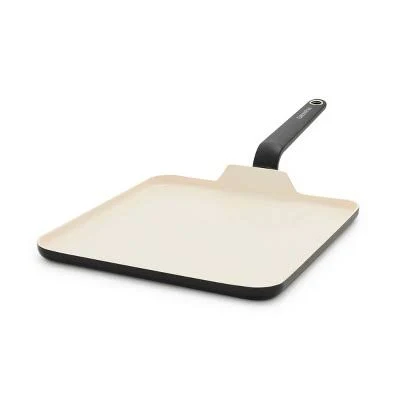
GreenPan
GreenPan Rio Advanced Ceramic Nonstick Griddle
70/100 safety
Same rubric that flunked this product. The swap earned Good.
Still want this one anyway? Check the price on Amazon. We’d swap it.
Material
Teflon-type coating non-stick coating, as disclosed by All-Clad
Lab data
No public lab test
You may also be interested in
Top-graded picks in the categories readers replace first, every one scored on the same rubric.

- polypropylene filter housing, carbon/sediment cartridge
- We found no PFAS statement from the brand
- Bacterial growth in spent cartridges
3 hazards checked on this product, all on its full breakdown.

Aquasure
Premier Series 75 GPD Under Sink Reverse Osmosis Water Filtration System
- RO membrane, carbon filters, stainless steel housing
- We found no PFAS statement from the brand
- Bacterial and microbial growth in housing and filters
4 hazards checked on this product, all on its full breakdown.

Avocado
Vegan Mattress
- organic cotton, natural latex, coconut coir, recycled steel coils
- The brand calls it PFAS-free, which we have not verified
- Heavy metals
2 hazards checked on this product, all on its full breakdown.
Is NS Pro Nonstick Cookware Burner Griddle non-toxic? What it is made of
This griddle uses Teflon-type coating (polytetrafluoroethylene, commonly known as Teflon) as its non-stick coating, applied to what All-Clad typically manufactures as a stainless steel or aluminum base. Teflon-type coating itself is thermally unstable and begins to degrade at temperatures above 500°F, releasing volatile organic compounds and potentially perfluorinated compounds into the air. The coating also degrades mechanically with use, scratching, and wear, which can expose the underlying base material and shed microscopic Teflon-type coating particles into food.
What’s concerning
No PFAS disclosure
No PFAS-free statement from the brand for this product.
PTFE / Teflon confirmed
The brand discloses a Teflon-type coating.
Category baseline
The starting point for this type of product, before anything specific to this product is counted.
Teflon-type coating fume release (thermal decomposition)
Teflon-type coating degrades above 500°F, releasing fumes that can cause acute symptoms (polymer fume fever, flu-like illness, cough, chest tightness) and chronic low-dose exposure is not well-characterized in humans. All-Clad does not specify a safe temperature ceiling for this griddle; users must rely on general Teflon-type coating safety guidance.
Coating degradation and particle shedding
Griddles are high-friction cookware; repeated scraping and washing degrade Teflon-type coating coatings, releasing microscopic particles into food. No data exists on established ingestion levels of Teflon-type coating particles; long-term accumulation is not understood.
Aluminum or base metal leaching (if aluminum core exposed)
If the griddle has an aluminum base layer and the Teflon-type coating fails or chips, acidic or alkaline foods may contact bare aluminum and promote leaching. All-Clad's typical multi-ply construction likely includes stainless steel barriers, reducing this risk, but is not explicitly confirmed for this model.
PFAS
All-Clad's silence on PFAS content, phase-out plans, or testing reflects broader industry lack of transparency; Teflon-type coating itself contains or may contain PFAS precursors, and the brand offers no reassurance or alternative products.
Source, ATSDR ↗What’s reassuring
Lead
No recalls or public testing reports indicate lead or cadmium contamination in All-Clad cookware; the brand's U.S. manufacture and quality reputation suggest low concern, though independent verification is not available.
Source, ATSDR ↗How is this PFAS grade calculated?
The brand's record and disclosure
All-Clad discloses the use of Teflon-type coating non-stick coating on this product but provides no public statement on PFAS awareness, phase-out timelines, or alternatives they may be developing. The brand has not published third-party testing results, safety certifications (such as GOTS or Bluesign for textiles, irrelevant here, or equivalent cookware testing), or independent confirmation of fume-release thresholds. No recalls specific to this griddle model for coating degradation or fume release are on public record, though Teflon-type coating non-stick cookware as a category has been associated with consumer complaints about overheating and fume events.
How it compares in its category
Teflon-type coating-coated griddles dominate the affordable-to-mid-range non-stick market; All-Clad's version is positioned as a premium option with multi-ply construction. Alternatives include ceramic non-stick coatings (lower fume risk but less durable), cast iron or stainless steel (no synthetic coating, higher friction, require seasoning or oil), and newer ceramic-type or hard-anodized surfaces from brands like Caraway or GreenPan (mixed durability and non-stick performance, less established long-term safety data). Most Teflon-type coating griddles carry similar thermal stability concerns; All-Clad's stainless construction may offer slightly better underlying durability if the coating fails, but does not reduce fume risk during normal use.
If you buy it
Never heat this griddle above 500°F (check manufacturer guidance; many recommend 400°F maximum for non-stick longevity). Use on medium to medium-high heat, ensure adequate kitchen ventilation (range hood or open window), and never preheat empty. Inspect the coating regularly for scratches, peeling, or discoloration; discard or repurpose the griddle if coating damage is visible. Hand wash only; do not use metal utensils, abrasive scrubbers, or dishwasher, which accelerate coating wear. Replace within 3-5 years if the coating shows significant wear or performance loss, as deterioration increases particle shedding risk.
What is not known about PFAS in this product?
- Basis
- Model estimate, 35% confidence, not a lab result
- Lab test
- None on record for this exact product
- Brand statement
- All-Clad has made a specific claim
Formulations change between production runs, so check the current label. How we grade.
What are the PFAS-free alternatives to NS Pro Nonstick Cookware Double Burner Griddle?
- Ceramic-based nonstick coating
- The brand calls it PFAS-free, which we have not verified
- Coating degradation and substrate exposure
3 hazards checked on this product, all on its full breakdown.
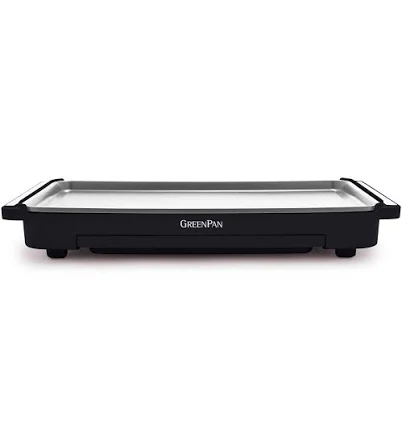
- Non-stick coating (type unspecified)
- The brand calls it PFAS-free, which we have not verified
- Non-stick coating degradation and leaching
4 hazards checked on this product, all on its full breakdown.
Find an alternative on Amazon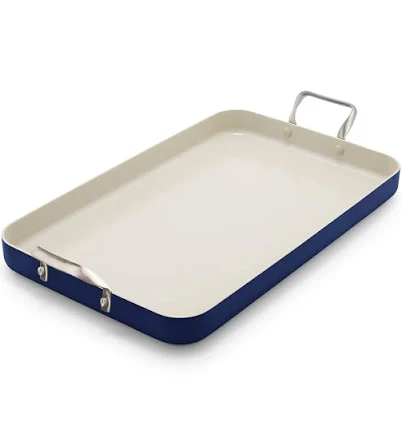
- Nonstick coating (composition not disclosed)
- The brand calls it PFAS-free, which we have not verified
- Nonstick coating composition (unknown chemistry)
4 hazards checked on this product, all on its full breakdown.
Find an alternative on AmazonMore griddle pans grades
How we score, every product runs through the same public 0-100 rubric based on materials, coatings, brand disclosure, lab findings, and recalls. See the full methodology → Spotted a mistake? Report an error.