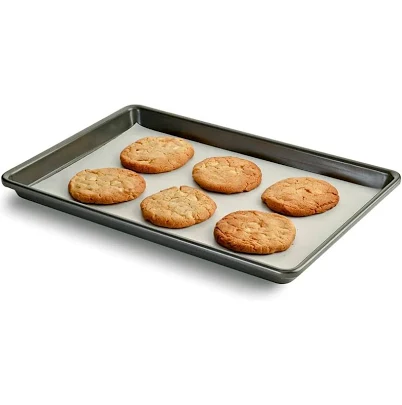
· Parchment Paper & Baking Liners
Non-stick Parchment Paper Roll 90 Sq Ft - Oven Safe To 425°f For
Avoid until the brand discloses coating chemistry or provides PFAS-free verification.
The brand' parchment paper claims non-stick and heat resistance but does not disclose what coating achieves this, a major red flag for PFAS risk. Parchment papers traditionally use Teflon-family coating coatings for grease resistance.
The better-graded swap
If You Care
If You Care Baking Paper, Parchment, 70 Square Feet
90/100 safety
Same rubric that flunked this product. The swap earned Excellent.
Still want this one anyway? Check the price on Amazon. We’d swap it.
Material
Paper with non-stick and grease-resistant coating (unspecified)
Lab data
No public lab test
What Non-stick Parchment Paper Roll 90 Sq Ft is made of, ingredients and materials
This product is paper substrate with a non-stick and grease-resistant coating of undisclosed chemical composition. The coating is the only potential hazard vector; paper itself is inert. The 425F temperature rating suggests a silicone-based or wax-based coating rather than Teflon-family coating, but the brand does not publicly specify which, leaving PFAS content ambiguous. Heat stability of the coating is the primary safety consideration.
What’s concerning
Category baseline
The starting point for this type of product, before anything specific to this product is counted.
No PFAS disclosure
No public statement from the brand about PFAS in this product.
Non-stick, chemistry undisclosed
Marketed as non-stick without stating the coating chemistry.
PFAS
Coating chemistry is not disclosed by the brand. If coating is Teflon-family coating-based, PFAS presence is likely; if silicone or wax, less likely. No test data available for this specific product.
Source, ATSDR ↗Thermal degradation of coating above rated temperature
Use above 425F may cause coating breakdown, peeling, or off-gassing. No independent testing of fume profile is on record for this brand.
Microplastic or coating particle shedding into food
Worn or damaged coating can release particles onto food contact surfaces. Risk increases with repeated reuse and mechanical wear.
What’s reassuring
Bleaching residues or additives in paper substrate
No specific concerns documented for parchment paper; standard food-grade parchment is chlorine-free by FDA guidance. However, the brand does not publish substrate sourcing or processing details.
Ink or printing dyes on packaging
Not a direct food contact hazard, but no safety data on inks used on the roll packaging itself has been disclosed.
The full breakdown
The brand's record and disclosure
The brand has no published statement on PFAS content in any parchment paper product and does not provide third-party testing data or material declarations for this item. The brand has faced no major recalls or public controversies specific to parchment paper safety. This silence on coating chemistry is the key gap; competitors like If You Care and Kirkland have begun PFAS-free certifications or disclosures, whereas the brand has not.
How it compares in its category
Standard parchment paper poses lower PFAS risk than non-stick cookware because it does not reach the high temperatures that trigger Teflon-type coating fume release, and it is not a long-term durable good. However, many premium alternatives now explicitly market PFAS-free coatings or rely on unbleached paper with beeswax or plant-based silicone, offering clearer safety profiles. The brand' lack of transparency is a competitive weakness in a category where disclosure is becoming standard.
If you buy it
Adhere strictly to the 425F limit; exceeding it risks coating degradation and potential fume release. Do not reuse sheets heavily; discard if coating shows visible wear, spots, or peeling. Store in a cool, dry place away from direct sunlight to prevent coating brittleness. For frequent baking, consider rotating to a PFAS-free certified parchment paper brand to reduce long-term exposure uncertainty.
What we don’t know
- Basis
- Model estimate, 35% confidence, not a lab result
- Lab test
- None on record for this exact product
- Brand statement
- has made a specific claim
Formulations change between production runs, so check the current label. How we grade.
Better-graded alternatives in Parchment Paper & Baking Liners
If You Care
Baking Paper, Parchment, 70 Square Feet
- silicone-coated parchment paper
- The brand calls it PFAS-free, which we have not verified
- Paper degradation and particulate shedding
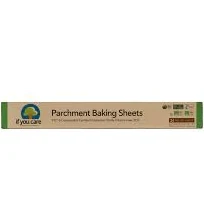
If You Care
Parchment Baking Sheets
- unbleached paper with silicone coating
- The brand calls it PFAS-free, which we have not verified
- Silicone coating degradation at high heat
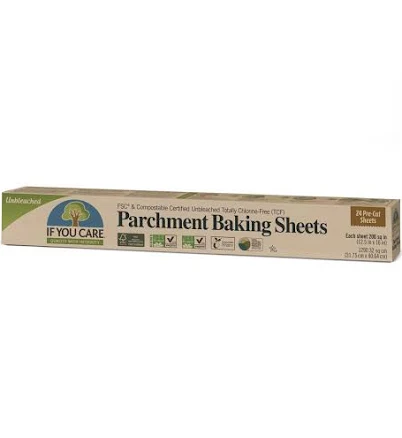
If You Care
Parchment Baking Sheets
- bleached paper with silicone coating
- The brand calls it PFAS-free, which we have not verified
- Paper degradation and fragmentation
More parchment paper & baking liners grades
How we score, every product runs through the same public 0-100 rubric based on materials, coatings, brand disclosure, lab findings, and recalls. See the full methodology → Spotted a mistake? Report an error.